
Last updated September 20, 2026
Free on-site gate assessment - hinges, posts, and your LiftMaster or Nice gate operator checked before anything is quoted
The assessment is free and the quote is the invoice.
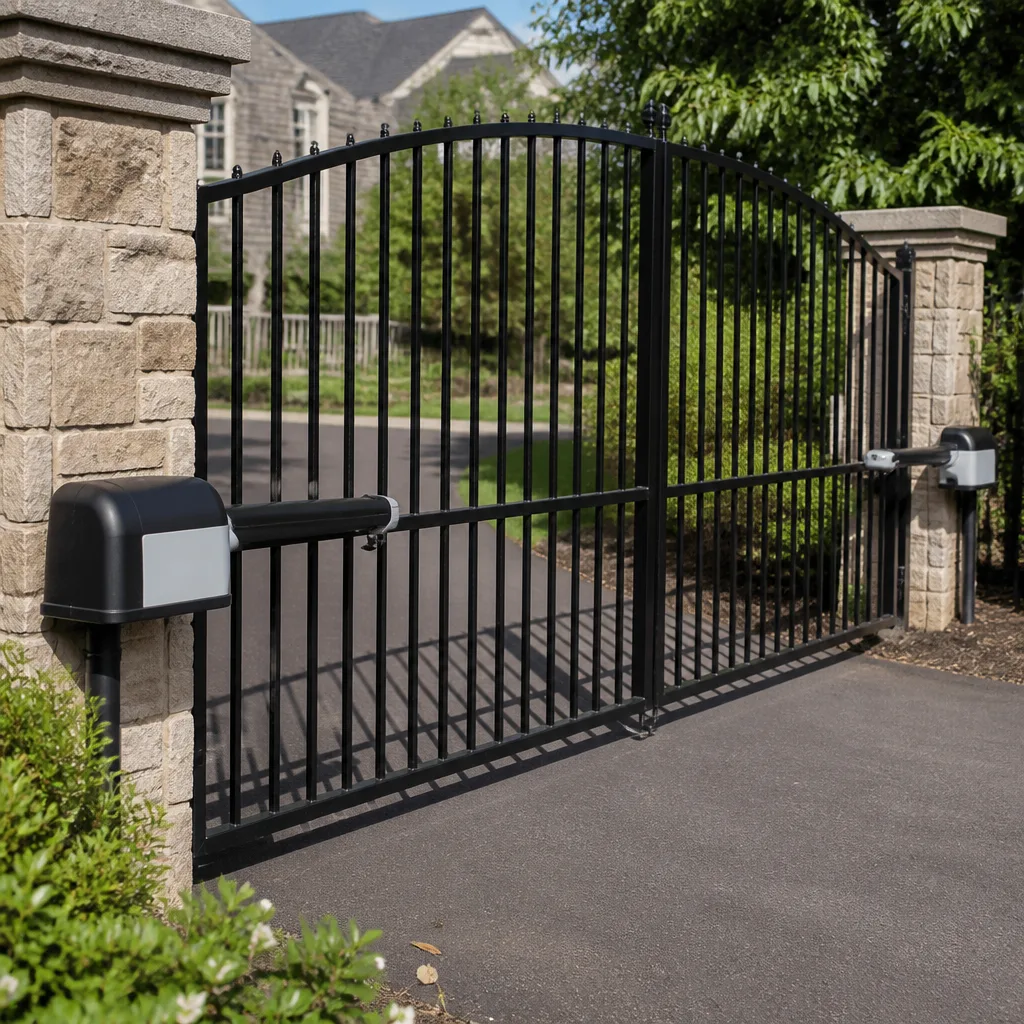
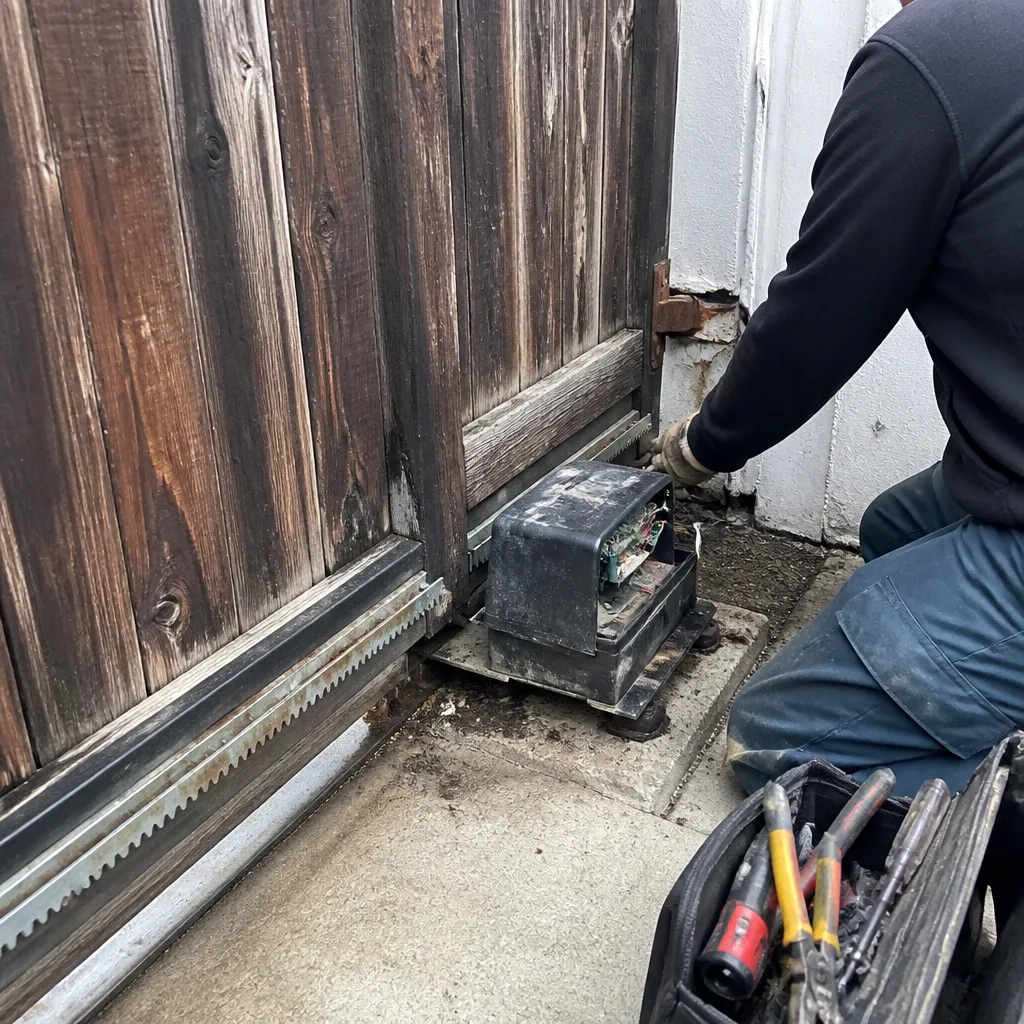 Before
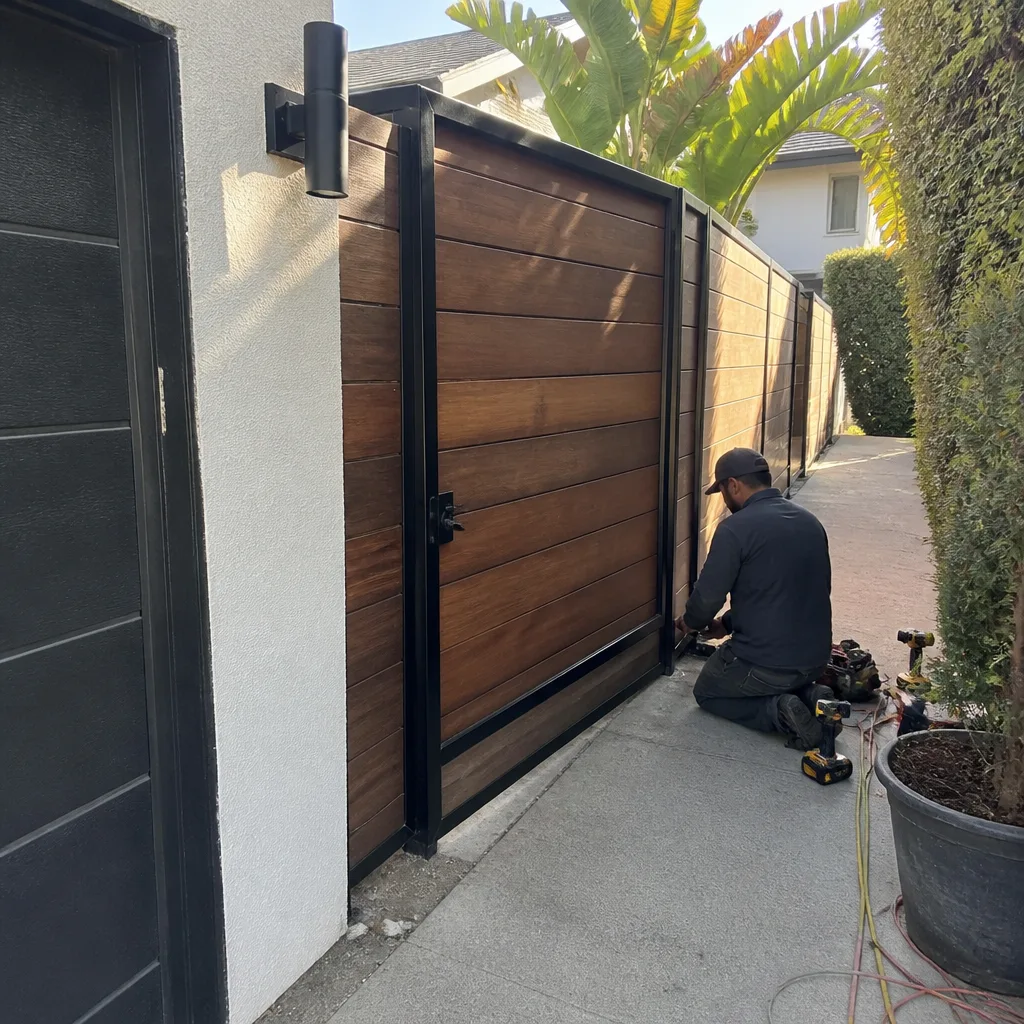 After
After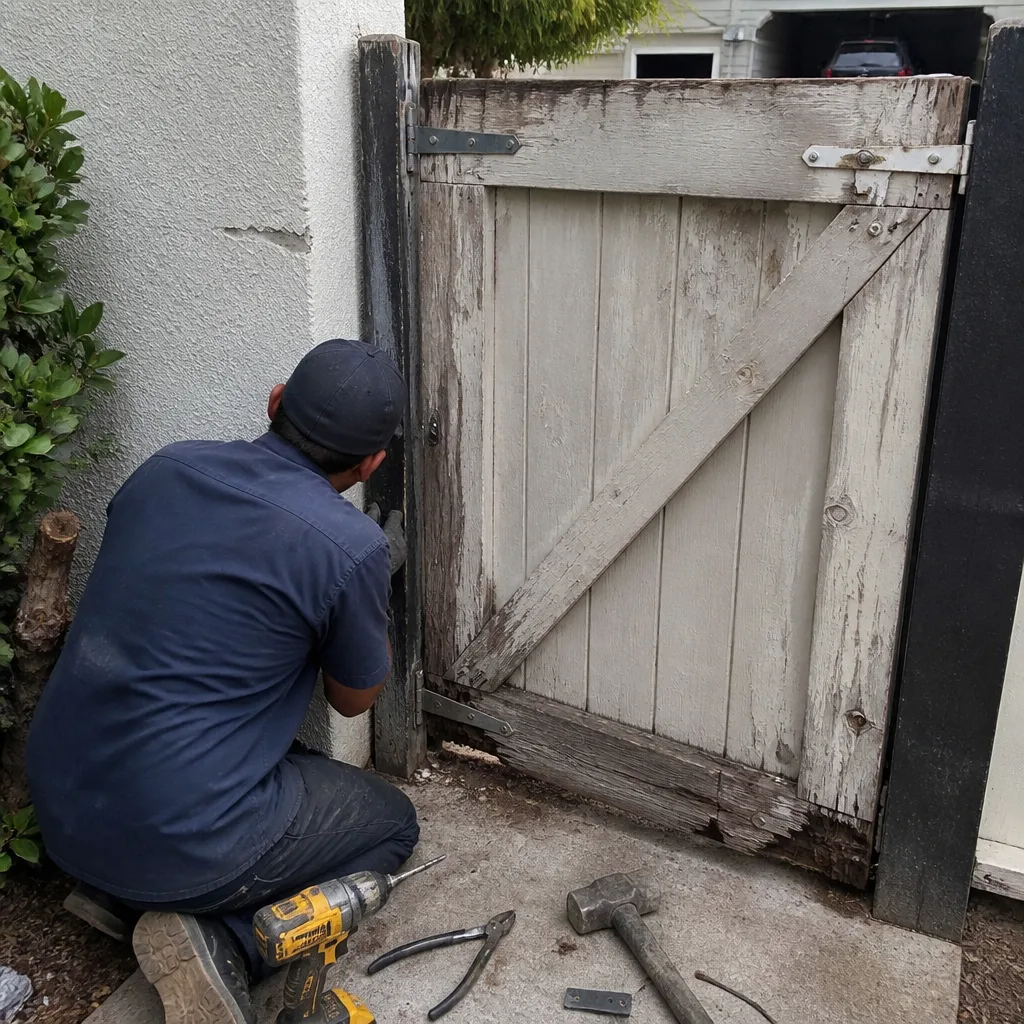 Before
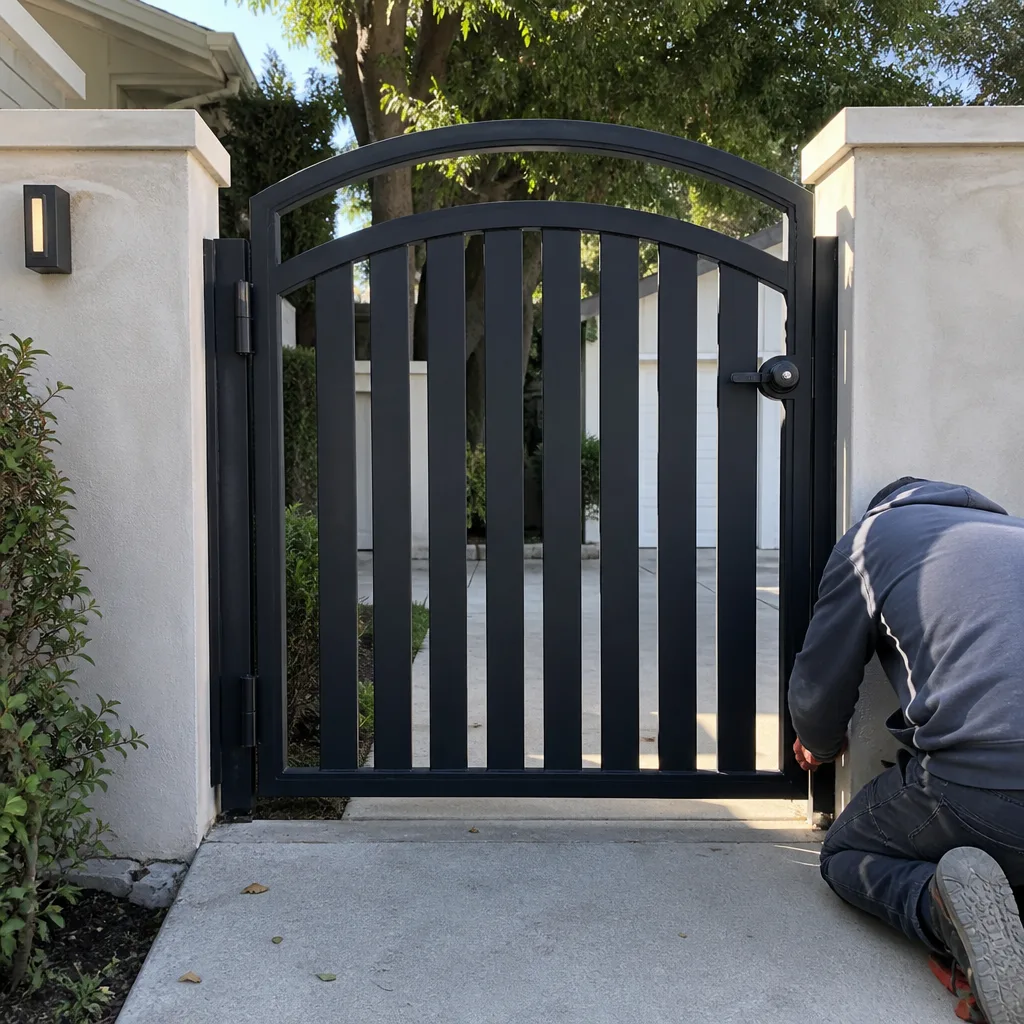 After
After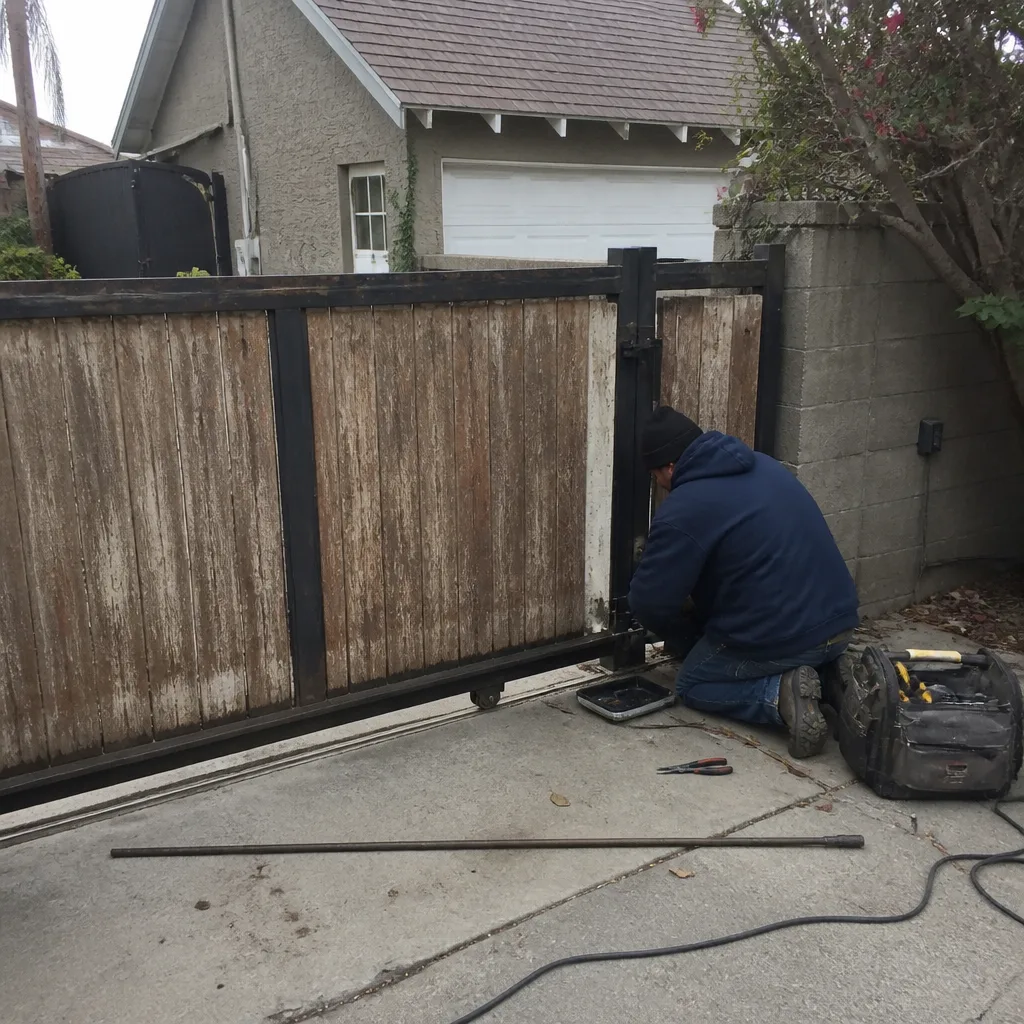 Before
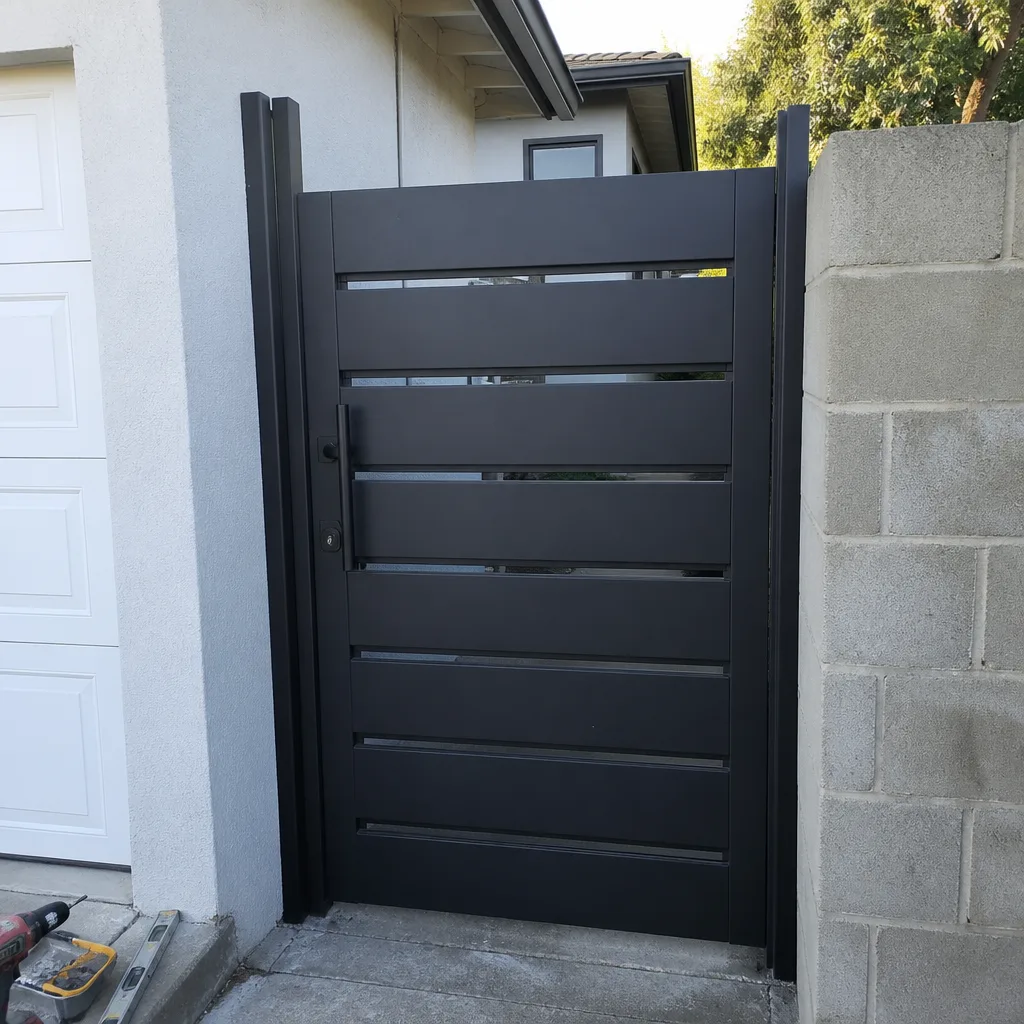 After
AfterGate Repair Warning Signs: A Venice Homeowner’s Reference Guide
Most Venice homeowners describe every gate problem the same way: “it’s acting up.” But a gate that groans when it opens and a gate that stops mid-travel and reverses are two entirely different animals. One usually points to a dying hinge or a dry bearing. The other almost always means the entrapment sensor is reading something that isn’t there, or the limit switch has drifted out of adjustment. The distinction matters because one is a $75 service call and the other can run north of $600 if the control board gets misdiagnosed. This guide maps the specific warning signs to their specific causes, with real Venice pricing attached, so you know what you’re looking at before anyone shows up with a tool bag. For professional help, see our Gate Repair services.
Quick Answer
The most common gate repair warning signs in Venice are slow or jerky movement, grinding or squealing noises, the gate reversing before it fully opens or closes, sagging or misalignment, rust and corrosion at welds and hinges, intermittent operation, and remote or keypad failures. Each symptom points to a different mechanical or electrical cause, and the repair cost in Venice ranges from about $75 for a limit-switch adjustment to $900 or more for a control-board replacement. The single most important distinction is operator failure versus structural failure, because fixing the wrong one creates a second service call.
Table of Contents
- Symptom-to-Cause Table: The Eight Warning Signs That Matter
- Operator Failure vs. Structural Failure: Why the Distinction Decides the Bill
- Venice-Specific Damage: What Marine-Layer Corrosion Looks Like
- What to Monitor for 30 Days vs. What Needs Service This Week
- How to Document a Warning Sign With Your Phone Before the Technician Arrives
- What Each Warning Sign Costs to Fix in Venice
- Brand-Specific Warning Signs: Viking, Ghost Controls, DoorKing, Elite
- Common Mistakes to Avoid
- When to Call a Professional
- Frequently Asked Questions
- The Bottom Line
BeforeAfterSymptom-to-Cause Table: The Eight Warning Signs That Matter
A warning sign is only useful if it tells you something actionable. The table below is the one we use internally at Vance Gate Repair Venice home when a homeowner calls and describes a symptom over the phone. It maps what you observe to what is actually happening mechanically or electrically, and what a Venice technician should investigate first.
| What You Observe | Most Likely Cause | Secondary Possibility | Typical Venice Repair Range |
|---|---|---|---|
| Gate hesitates before moving, then opens normally | Limit switch drifted out of position; motor is searching for the closed reference point | Capacitor starting to fail, especially on older Viking and Elite units | $75-$180 |
| Gate hesitates and then reverses mid-travel | Entrapment sensor (photo-eye or edge sensor) misaligned or obstructed | Control board receiving intermittent false readings; on DoorKing units, a failing loop detector can mimic this | $85-$450 depending on whether it’s an adjustment or a board |
| Grinding or metallic squeal during travel | Dry or worn hinge bearing, or the drive chain/belt has lost tension | On slide gates, the track rollers are shot; on Ghost Controls swing arms, the gearbox is running dry | $95-$350 |
| Gate sags or scrapes the ground at the latch side | Hinge weld fatigue or hinge pin wear; the gate leaf has shifted on its post | Post has settled in Venice’s sandy soil, especially near the canals or beach-adjacent lots | $150-$600 depending on whether it’s a hinge replacement or a post reset |
| Rust blooming at welds, hinges, or the bottom rail | Marine-layer moisture ingress; the factory powder coat has been compromised | Standing water pooling at the base of a slide gate track | $100-$400 for grinding, treatment, and repainting; more if structural steel needs replacing |
| Gate works sometimes, not others | Loose wire connection at the terminal block, or a failing relay on the control board | Moisture in the junction box; Venice’s salt air accelerates corrosion at every exposed connection | $90-$500 depending on whether it’s a tightened terminal or a new board |
| Remote works only at close range, or keypad is unresponsive | Receiver antenna damaged or corroded | Keypad membrane failing from sun and salt exposure; Ghost Controls receivers are prone to antenna fatigue | $65-$250 |
| Gate moves slower than it used to, but smooth | Capacitor degrading; motor is underpowered for the gate’s current weight | Gate has gained weight: wet wood infill, added decorative steel, or accumulated debris in the bottom rail | $110-$400 for capacitor replacement; higher if a motor swap is indicated |
We’ve seen every one of these symptoms on gates within a mile of the Venice Canals. The climate here is not neutral. More on that in the corrosion section below.
Operator Failure vs. Structural Failure: Why the Distinction Decides the Bill
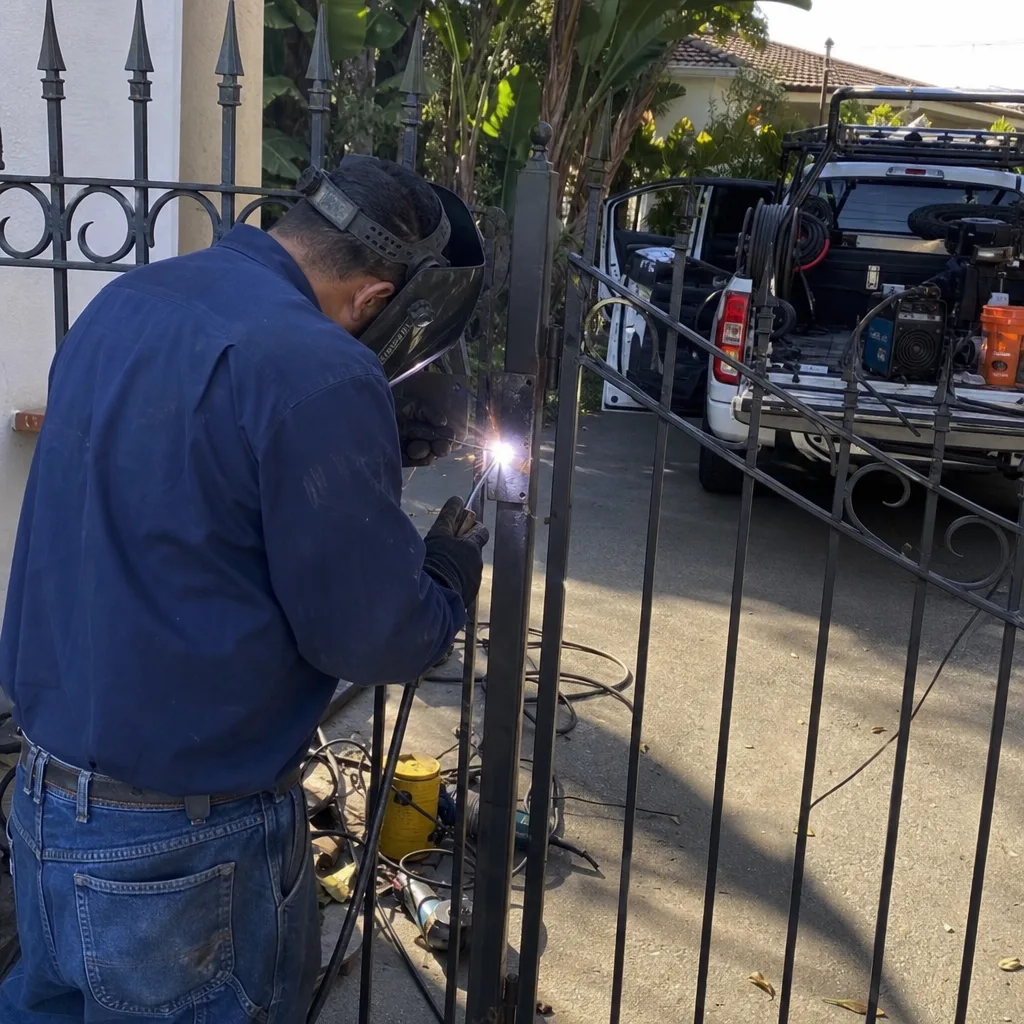
The single most expensive mistake a Venice homeowner can make is replacing a gate motor when the actual problem is a failing hinge, a bent track, or a gate leaf that has shifted on its post. A new motor attached to a structurally compromised gate will strain against the same resistance that was killing the old one. It will run hot, trip its thermal overload, and fail again, often within a year. And the homeowner pays twice: once for the unnecessary motor, once for the structural repair that should have been done first.
Operator failure means the problem is in the motor, control board, transformer, or wiring. Structural failure means the problem is in the gate itself: hinges, posts, track, rollers, or the physical alignment of the leaf.
How to tell the difference before you call anyone:
- Disengage the operator. Most residential gate motors have a manual release. Disengage it and push the gate by hand. If it moves freely and smoothly, the structural side is likely fine, and the problem is in the operator.
- Push the gate through its full travel and listen. A grind or a hitch that you feel in your hands, not through the motor, points to a physical issue: a dry hinge bearing, a worn roller, a bent section of track.
- Watch the gate for sag at the latch side. With the operator disengaged, if the latch side droops or the gate doesn’t close square against the stop, the hinge or post is the problem, and no amount of motor adjustment will fix it.
- Check for lateral play. Grab the gate at its midpoint and try to move it side to side. More than a quarter inch of lateral movement usually means a worn hinge pin or a loose post mount.
In our experience working Gate Repair in Venice, roughly one in four motor replacements we are called to inspect turns out to have been unnecessary. The original motor was fine. The gate it was bolted to was not. A good technician checks the structure first, because the structure is the foundation the operator works against. That is why the Haven Standard requires a written diagnosis before a written price: no one should pay $700 for a motor when a $175 hinge repair solves the symptom.
Venice-Specific Damage: What Marine-Layer Corrosion Looks Like
Venice is a salt-air environment. The marine layer rolls in most nights, deposits a fine film of moisture and salt on every metal surface, and burns off by mid-morning. Over a period of years, that cycle does specific, predictable things to driveway gates. The damage pattern is different from what a gate in, say, the Valley or Pasadena experiences, and it is worth knowing the difference because the repair approach changes.
Signs of marine-layer corrosion on a Venice gate:
- White or gray powdery residue at weld joints and bolt heads. This is aluminum or steel oxide forming under the paint. It is cosmetic at first, but it means the protective coating has failed at that point, and the metal underneath is now actively corroding.
- Red-brown rust staining that runs down from a specific point. This is the classic “rust weep” from a compromised weld or a scratch that went down to bare steel. In Venice’s damp air, it progresses faster than inland.
- Paint bubbling or flaking along the bottom rail. Moisture wicks up from standing water under the gate, especially on slide gates where the track sits in a channel that holds dew and irrigation overspray.
- Green corrosion on brass or copper components. Gate hinges with brass bushings, older keypads with copper contacts, and exposed grounding lugs all show green oxidation. It looks alarming but is usually cleanable unless the corrosion has eaten into the contact surface.
- Fasteners that have “frozen.” Stainless steel bolts in aluminum frames can galvanically seize in salt air. If a technician cannot remove a bolt without snapping it, that is a corrosion-driven failure, not a skill issue.
What marine-layer corrosion looks like versus mechanical wear: corrosion is uneven, localized, and has visual signatures, powder, pitting, staining. Mechanical wear is smooth and even: a polished wear mark on a track, a hinge pin that has worn uniformly around its circumference, a chain that has stretched evenly across all its links. If the damage looks like it was caused by chemistry, treat it with corrosion control: grind, treat, prime, repaint. If it looks like it was caused by friction, treat it mechanically: replacements, bushings, lubrication, tensioning.
One more Venice-specific note: gates within a few blocks of the beach, and especially those west of Lincoln Boulevard, get the heaviest salt exposure. We recommend an annual inspection for any gate in that zone, even if it is operating fine. The inspection costs less than the rust repair you’ll face if you wait three years.
What to Monitor for 30 Days vs. What Needs Service This Week
Not every warning sign is an emergency. Some are early indicators that can be watched for a month to see if the symptom is consistent or transient. Others are ticking clocks that will cause secondary damage if ignored. Here is the practical breakdown we give Venice homeowners over the phone, and you can find more guides & resources on our blog.
Safe to monitor for 30 days:
- Occasional slow opening on cold or damp mornings. If the gate is slow only on the first cycle of a foggy morning and then runs normally, the capacitor may be marginal but not failed. Note the behavior and see if it worsens.
- Light surface rust at a single bolt head or weld. Surface rust that has not pitted the metal can be treated with a rust converter and paint touch-up. If it does not return within 30 days, you’ve bought yourself time.
- Remote range that is inconsistent but not gone. If the remote works at 40 feet one day and 15 the next, the antenna or receiver may be starting to degrade. It’s not urgent unless you rely on remote-only entry.
- A faint squeak that comes and goes. Dry hinge bearings often quiet down after rain or dew. If the squeak is intermittent and faint, you can schedule at your convenience.
Needs service this week to avoid secondary damage:
- The gate reverses every time it tries to close. This often means the entrapment sensor is misaligned. But every reversal cycle puts torque spikes through the operator, and repeated reversals can burn out a control board relay.
- The gate slams or drops at the end of travel. A failed limit switch means the motor doesn’t know when to stop. The gate can crash into the stop, the latch, or a vehicle, bending the frame and stressing the motor mounts.
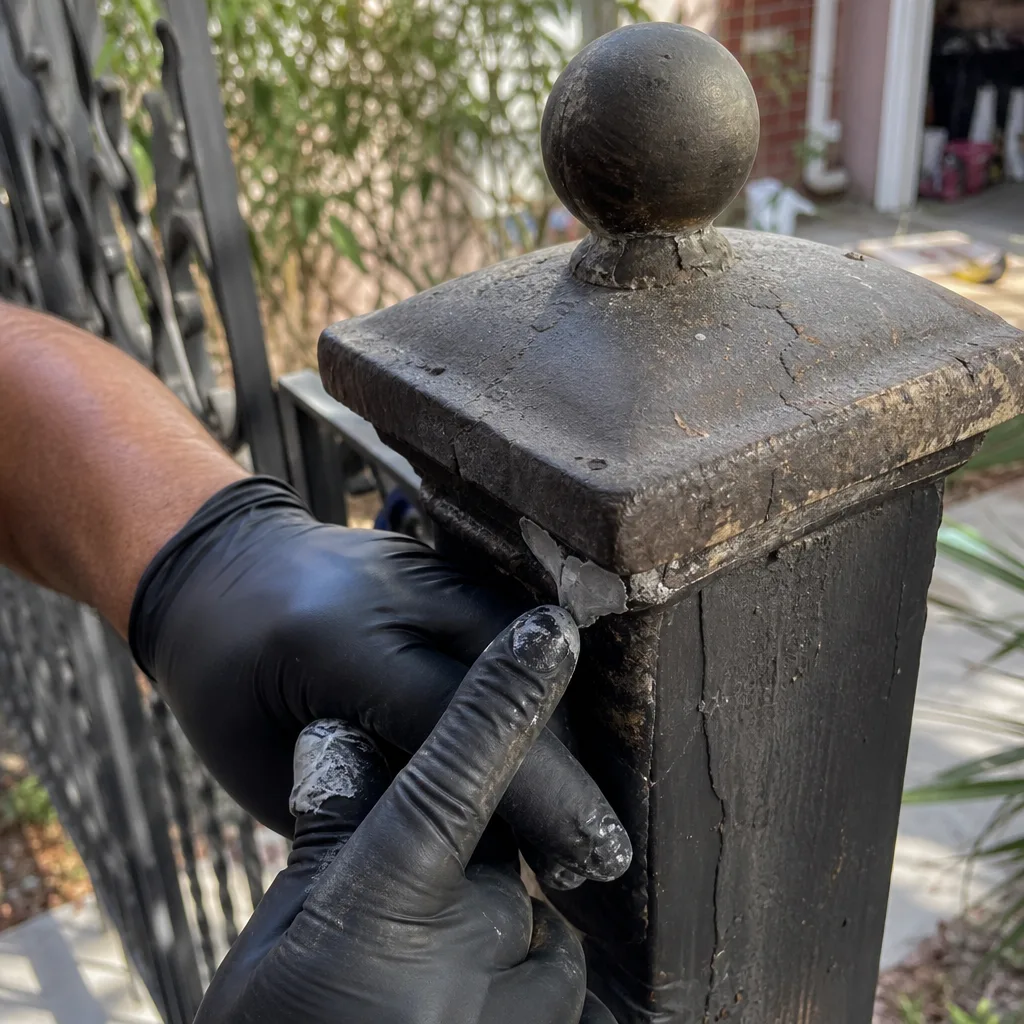
- You can see the gate leaf shift or tilt when it moves. A loose hinge or post means the gate’s weight is being carried unevenly. Every cycle worsens the stress, and a hinge that fails completely can drop a 400-pound gate leaf.
- Electrical smell, tripped breaker, or the operator is hot to the touch. Heat is the enemy of every component in the operator: motor windings, control board, transformer. If the operator is running hot, something is drawing excessive current, and it will not self-correct.
- Visible exposed wire or a junction box that is cracked or open. Venice’s damp air and exposed low-voltage wiring are a bad combination. Moisture in a junction box causes intermittent shorts that can take a control board down with them.
The rule is simple: if the symptom involves the gate’s ability to stop, start, or hold position, schedule it sooner. If it is a noise or a cosmetic issue, you have breathing room.
How to Document a Warning Sign With Your Phone Before the Technician Arrives
When you call a gate company about a problem, the technician who answers wants specific information. A 30-second video is worth more than a 5-minute verbal description, but only if you capture the right things. Here is what actually helps a diagnostician, and what is a waste of your time and storage space.
What to capture:
- One full cycle of the specific failure. If the gate hesitates and reverses, film it from a wide enough angle to show the entire gate leaf and the operator arm. Hold the phone still. A shaky 10-second clip is enough.
- The sound. Audio is as important as video. Grinding, squealing, clicking, or a motor that hums but does not move – each sound maps to a different cause. Get the phone close to the motor housing and the hinge points.
- Close-up photos of the operator. The brand nameplate, the model number, and the general condition of the unit. This tells the technician what parts are likely involved before they arrive.
- Close-up photos of hinges, welds, and the latch side. Shot straight-on, in daylight. Not artsy angles. The goal is a record a technician can zoom in on to look for cracking, rust, or misalignment.
- The gate’s closed position, from the side. This shows whether the gate is square in its opening or has sagged. A slight sag is much easier to see in a side-profile photo than in person.
What does not help:
- Footage of the gate working normally. If the symptom is intermittent and the gate is functioning fine when you film it, the video only confirms it works sometimes, which you already know.
- Long panoramic videos of the entire driveway. Context is useful, but 90 seconds of slow panning wastes the technician’s time. Keep clips under 15 seconds, focused on the area of concern.
- Photos of the remote control. The remote is almost never the problem. The receiver is. Unless the remote is physically damaged, skip it.
- Audio of you narrating what you think is wrong. Your observations over the phone are welcome. But a video where the audio track is mostly your explanation crowds out the mechanical sounds the technician needs to hear.
- Limit switch adjustment or replacement: $75-$180. If the switch has drifted, it is an adjustment and a short labor charge. If it has failed electrically, the part is inexpensive and the labor is straightforward.
- Photo-eye realignment or replacement: $85-$250. Realignment is cheap. Replacement is more, especially on older DoorKing and Viking units where the sensor is model-specific.
- Hinge bearing replacement: $150-$400 per hinge, depending on gate weight and access. Canal-side properties with tight access sometimes cost more because the technician has to work in a confined space.
- Capacitor replacement: $110-$250. The part itself is often under $40. The labor is what you’re paying for, plus the diagnostic time to confirm the capacitor is the actual culprit and not a symptom of a bigger motor issue.
- Control board replacement: $350-$900. This is the big-ticket item. Board cost varies by brand: DoorKing and Elite boards tend to run higher than Ghost Controls boards. Labor involves removing, replacing, and reprogramming the operator’s travel limits and safety settings.
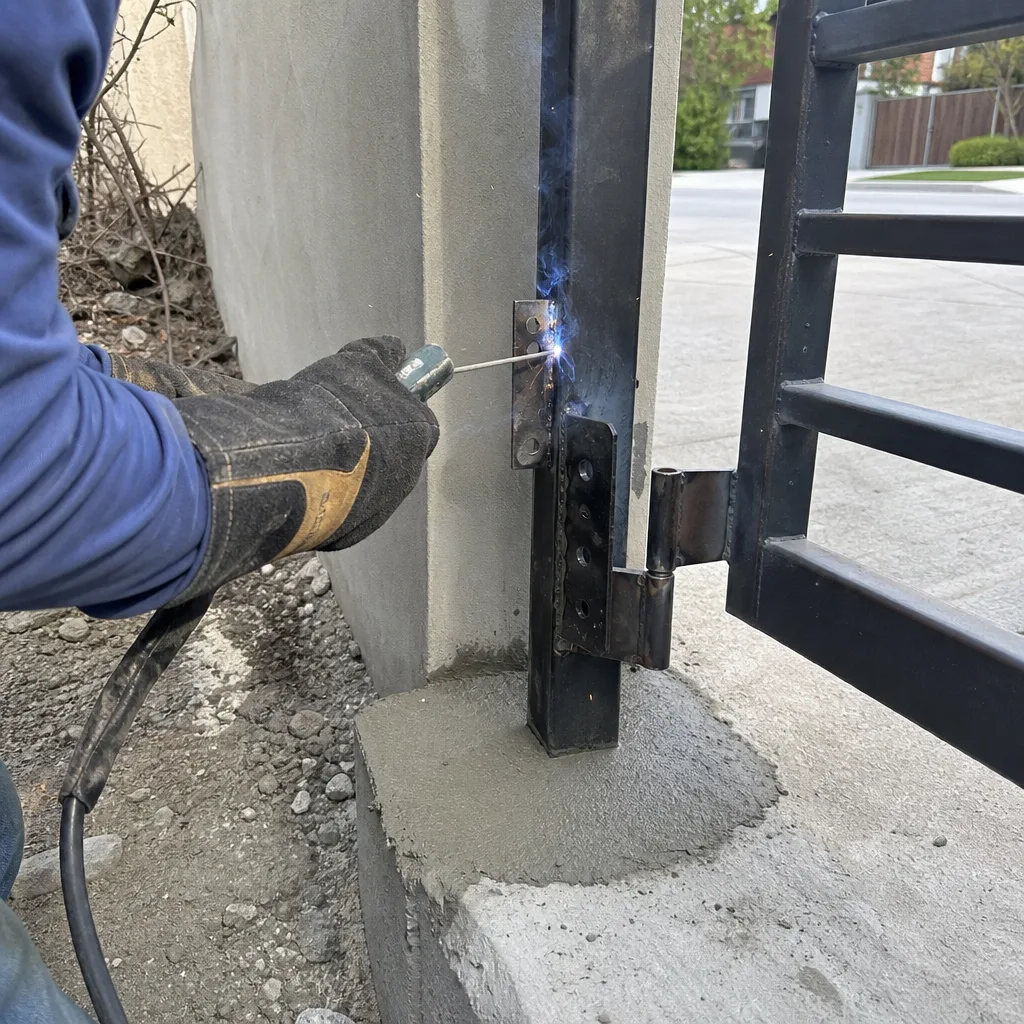
- Weld repair (small crack): $150-$350. Includes grinding the crack, welding, and re-painting the repair area. Larger structural repairs involving post replacement can run $500-$1,200.
- Full corrosion treatment (grind, treat, prime, repaint): $400-$1,500 depending on gate size and corrosion severity. A 10-foot driveway gate that has been in Venice’s salt air for a decade will often need two days of work.
- Receiver or antenna replacement: $65-$250. Simple swap for most brands. If the receiver is integrated into the control board, the board cost applies instead.
- Viking: Viking swing-arm operators are robust, but their limit switches are prone to drift over time, especially on gates that have been through several marine-layer seasons. If a Viking gate starts hesitating or over-traveling at the stops, the limit switch is the first suspect. The capacitor on older Viking units is also a known failure point: if the gate is slow but smooth, that’s where we look first.
- Ghost Controls: Ghost Controls sells a lot of DIY-installed systems, and we see two recurring issues. The first is antenna fatigue: the receiver antenna is thin and exposed, and after a couple of Venice winters, range drops noticeably. The second is motor gearbox wear from gates that were never properly balanced. If a Ghost Controls arm is grinding, the gearbox has usually been working against a misaligned gate for a while.
- DoorKing: DoorKing is a commercial-grade brand that ends up on a lot of higher-end Venice residential gates. Their boards are durable but expensive, so a board diagnosis deserves a second look before replacement. We also see loop-detector faults on DoorKing systems where the underground loop wire has been cut by tree roots or driveway settling; this shows up as the gate opening and closing erratically with no visible cause.
- Elite: Elite slide-gate operators are common on Venice properties with narrow driveways or alley access. Their weak point in this climate is the drive chain and tensioner. Salt air accelerates chain stretch and roller wear, and a loose chain on an Elite unit produces a distinctive slapping sound at startup that is worth recording and addressing early.
- Ignoring a gate that hesitates and reverses a few times a week. Every reversal cycle stresses the operator. What starts as a misaligned photo-eye becomes a burned relay over four to six months. The $85 fix becomes a $450 board.
- Lubricating everything in sight. Spraying WD-40 or white lithium grease on a gate’s hinges, track, and chain can feel proactive, but aerosol lubricants attract dust and sand. On Venice gates, the result is a gritty paste that accelerates wear. Use the right grease for the right component, or let a technician do it.
- Replacing the remote batteries before checking anything else. Remote batteries are rarely the problem. If the remote LED lights up when you press the button, the battery is fine and the issue is in the receiver, antenna, or control board.
- Tightening bolts without knowing the torque spec. Overtightening a hinge bolt can compress a bearing and create the exact grinding problem you were trying to fix. More Venice gates are damaged by well-meaning over-tightening than by loose bolts.
- Assuming an old gate is automatically a candidate for replacement. A well-built steel gate with a rusted hinge is a $400 repair. A cheap aluminum gate with a failed operator can be fixed with a motor replacement. Replacement is a last resort, not the default recommendation from a repair-focused company.
- Waiting to document the failure. The best diagnostic evidence is captured while the problem is happening. If the gate fails intermittently, keep your phone handy and film the moment it acts up. A video from yesterday that shows the exact failure beats a technician’s best guess.
- Choosing the cheapest bid without asking what it includes. In Venice, a bare-bones quote may not include corrosion treatment, limit-switch calibration, or the photo record. You are not buying a part; you are buying a repair that is documented and done right. The Haven Standard exists because too many homeowners have paid twice to rediscover the same problem.
Under Clause 4 of the Haven Standard (Evidence on every job), every technician who works on a Venice gate through Gate Motor & Opener in Venice leaves a documented photo record: what was found, what was adjusted, what was replaced. Your pre-visit footage becomes the “before” in that file. The combination of your observation and our documentation means no future technician has to guess at what happened previously.
What Each Warning Sign Costs to Fix in Venice
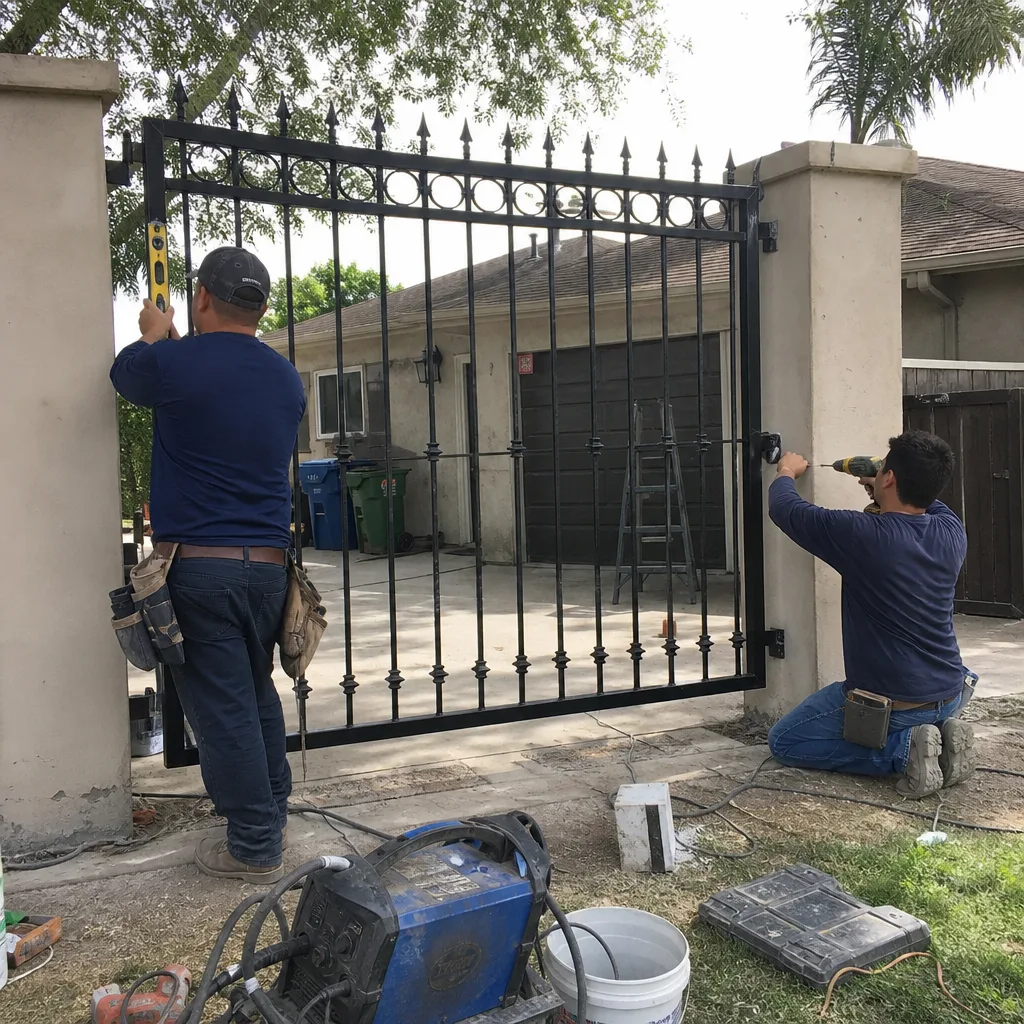
Here is the section most guides skip. Venice gate repair pricing is influenced by local labor rates, parts availability for the big automation brands, and the salt-air maintenance premium. These ranges are what we quote for common repairs in Venice, and they are handed over in writing before any work starts, per Haven Standard Clause 1. No invoice surprises, ever.
We price every job in writing before we begin. The price you agree to is the price you pay, whether the job takes one hour or four. For a no-obligation written estimate on Gate Installation in Venice or any repair, call (213) 267-6777. A live person answers at any hour.
Brand-Specific Warning Signs: Viking, Ghost Controls, DoorKing, Elite
Different automation brands fail in different, often predictable ways. If you know what brand is on your gate, you can often narrow the diagnosis before anyone opens the operator housing. Here are the patterns we see most often on four of the brands we service regularly in Venice.
If you don’t know what brand is on your gate, the nameplate is usually on the side or underside of the operator housing. A photo of that plate, taken in good light, saves the technician a trip to inventory and gets the diagnosis moving faster.
Common Mistakes to Avoid
When to Call a Professional
Some gate issues are straightforward enough that a careful homeowner can note the symptom, watch it for a week, and call when convenient. Others demand a technician sooner rather than later. Call a professional today if your gate reverses every cycle and cannot close, if it slams at the end of travel, if the operator smells hot or trips a breaker, or if you see the gate leaf visibly shift or tilt during movement. These are not cosmetic problems; they are structural and electrical failures in progress, and each day of operation adds to the repair bill. Vance Gate Repair Venice offers free written estimates to Venice homeowners, and a live person answers the phone 24/7 at (213) 267-6777. Not sure who to call? Read our guide on How to Hire a Gate Repair Contractor in Venice: A Step-by-Step Guide. The price is written before any work starts, and every visit ends with a photo record of exactly what was done.
Frequently Asked Questions
Most gate repairs in Venice run between $75 and $900 depending on the symptom and cause. A limit-switch adjustment or photo-eye realignment is usually under $200, while a control-board replacement can run $350 to $900. The exact price is written and handed over before any work starts. Call (213) 267-6777 for a free estimate with no obligation.
In many cases, yes, especially for urgent issues like a gate that will not close or a failed limit switch causing the gate to slam. A live person answers the phone 24/7 at (213) 267-6777, and we schedule emergency repairs with no after-hours markup in Venice.
Disengage the operator and push the gate by hand. If it moves freely, the structure is likely fine and the operator is the problem. If you feel resistance, grinding, or the gate sags when pushed, the hinges, post, or track are failing, and no motor replacement will fix it. This 30-second test saves homeowners hundreds in misdiagnosed repairs.
Almost always worth repairing. A quality steel gate can last decades in Venice with proper corrosion treatment, and replacing an operator is usually far cheaper than a full gate and operator replacement. We recommend replacement only when the structural steel is compromised by rust through the frame or the gate no longer meets current safety standards.
Annual corrosion inspection, especially if you are west of Lincoln Boulevard or within a few blocks of the beach. See our Seasonal Gate Repair Care for Venice: Year-Round Homeowner’s Guide for a full maintenance calendar. This includes checking welds and bolts for rust bloom, treating surface rust before it pits, verifying hinge lubrication, and testing limit switches for drift. The inspection costs less than the rust repair you will face if you wait three years.
We service nine major gate-automation brands including Viking, Ghost Controls, DoorKing, and Elite, so we can work on whatever motor is already on your property rather than steering you toward a replacement. If your brand is not listed on this page, call (213) 267-6777 and we will tell you honestly whether it is something we work on.
The Bottom Line
Gate warning signs are only useful when they are specific. A Venice gate that hesitates and then reverses is telling you something precise about its entrapment sensor; a gate that grinds is telling you something about its hinges or gearbox. Learn to read the difference, document what you see, and get a written price before anyone picks up a tool. The goal is to make one informed call to a technician, not to guess your way through a three-figure misdiagnosis. And if the gate ever becomes a safety issue, a live person is on the line at (213) 267-6777, any hour, any day, ready to send a named, background-checked technician with the price in writing before the work begins.
Written by Adrian Vance, Owner at Vance Gate Repair Venice, serving Venice since 2014.