
Last updated September 20, 2026
Free on-site gate assessment - hinges, posts, and your LiftMaster or Nice gate operator checked before anything is quoted
The assessment is free and the quote is the invoice.
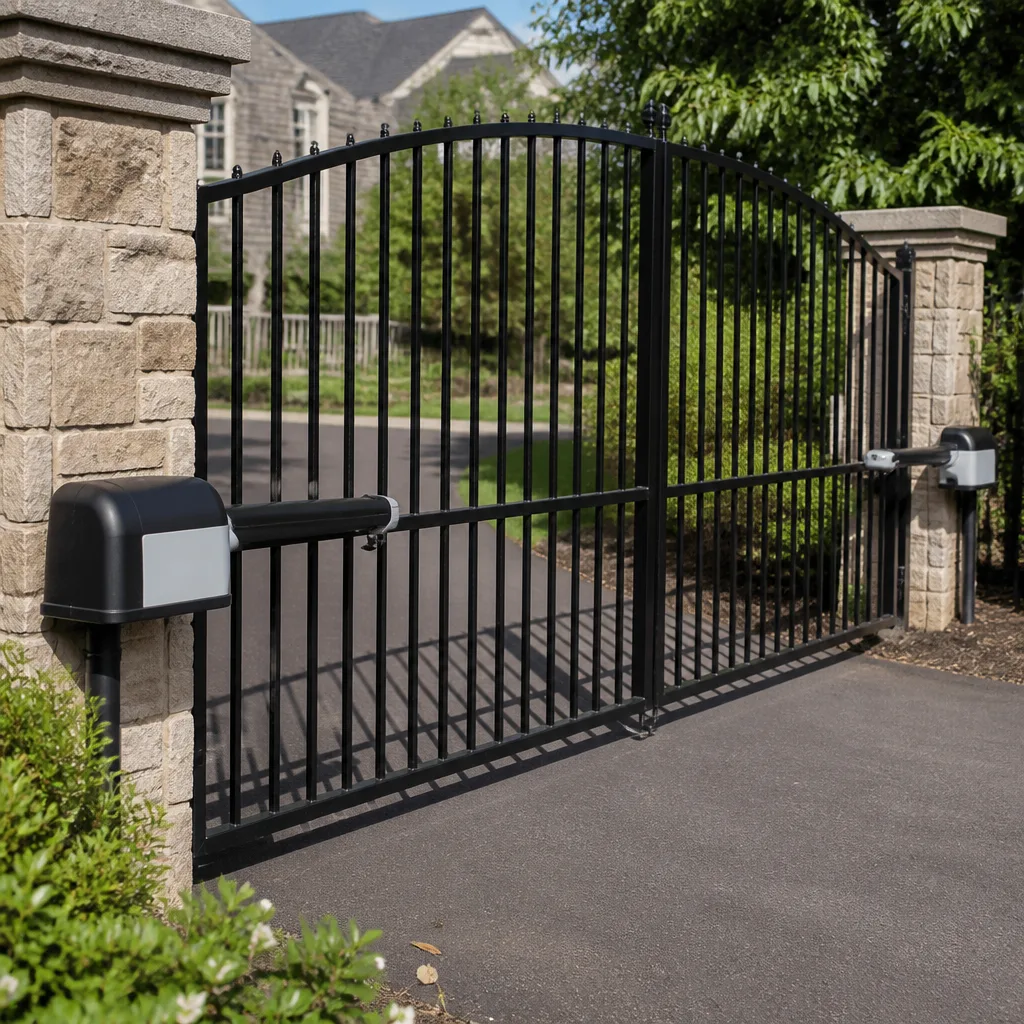
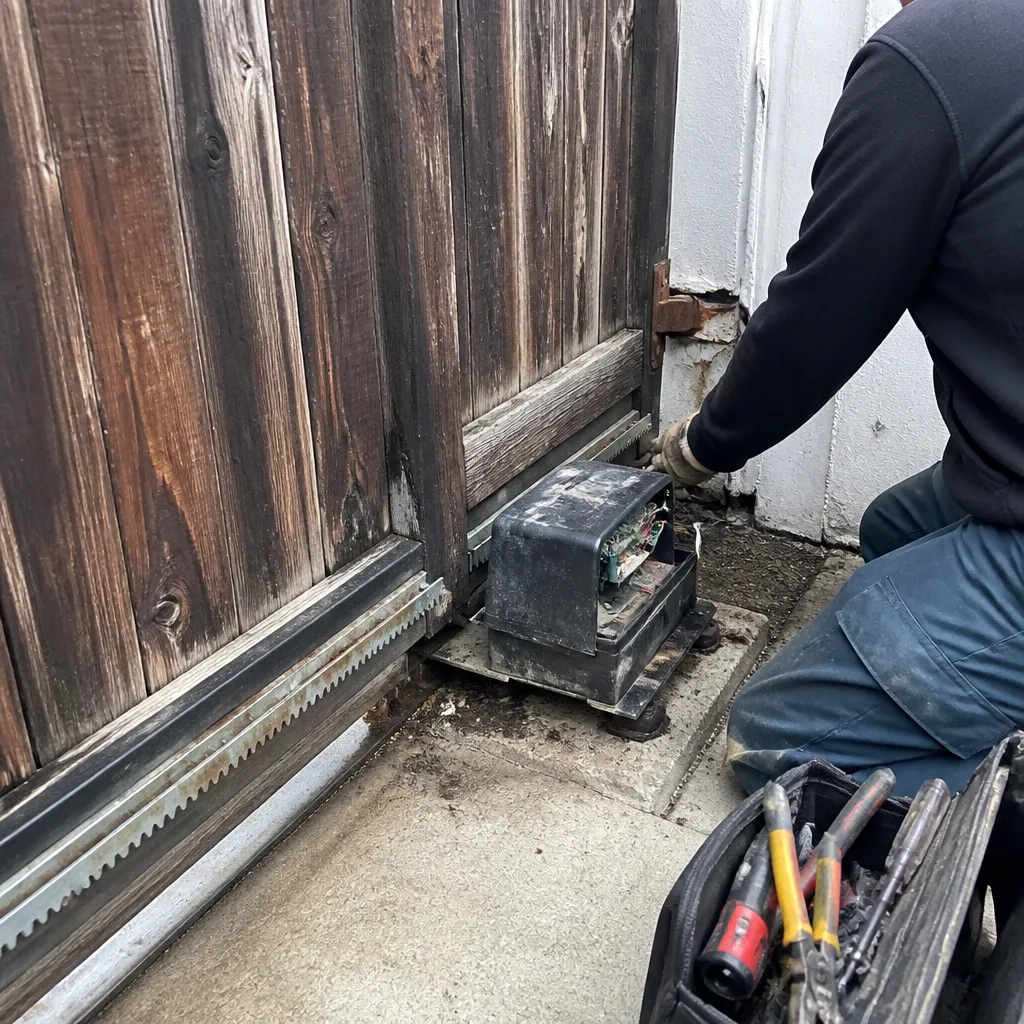 Before
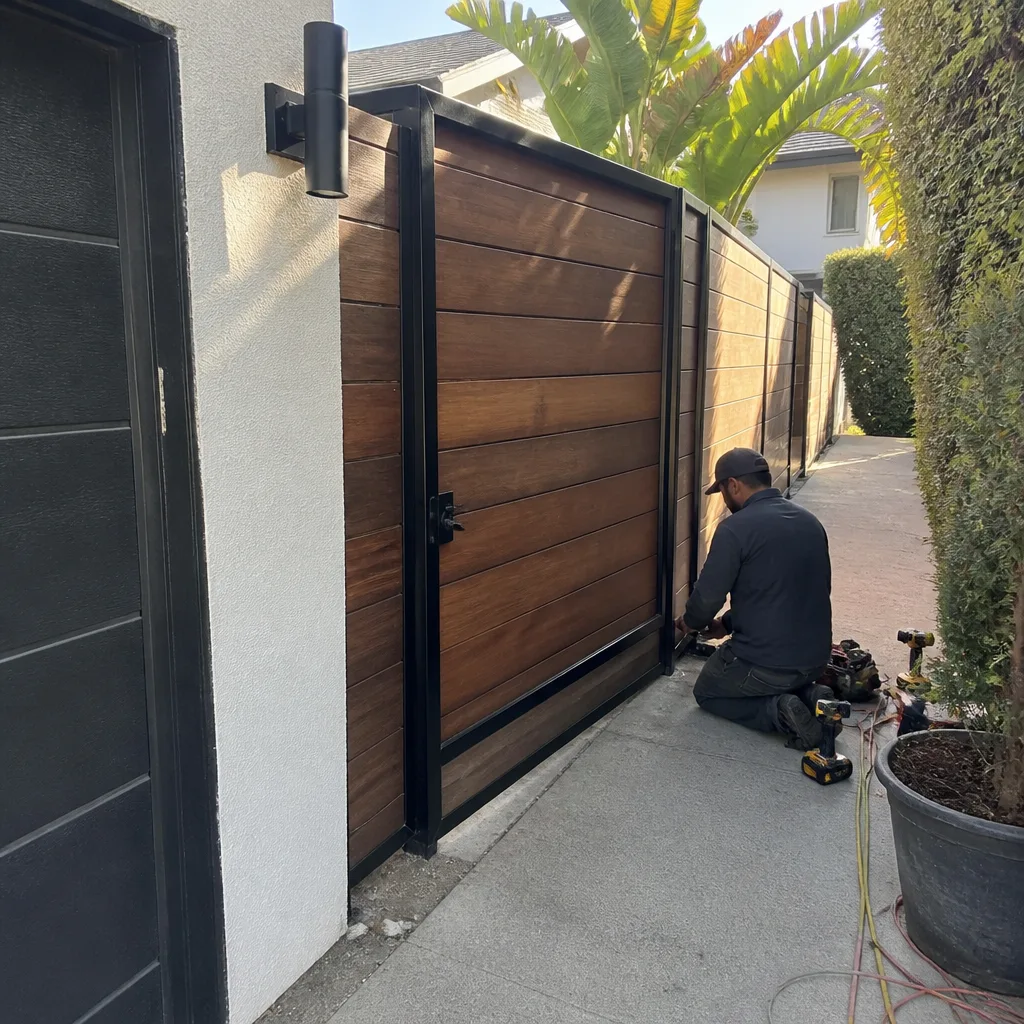 After
After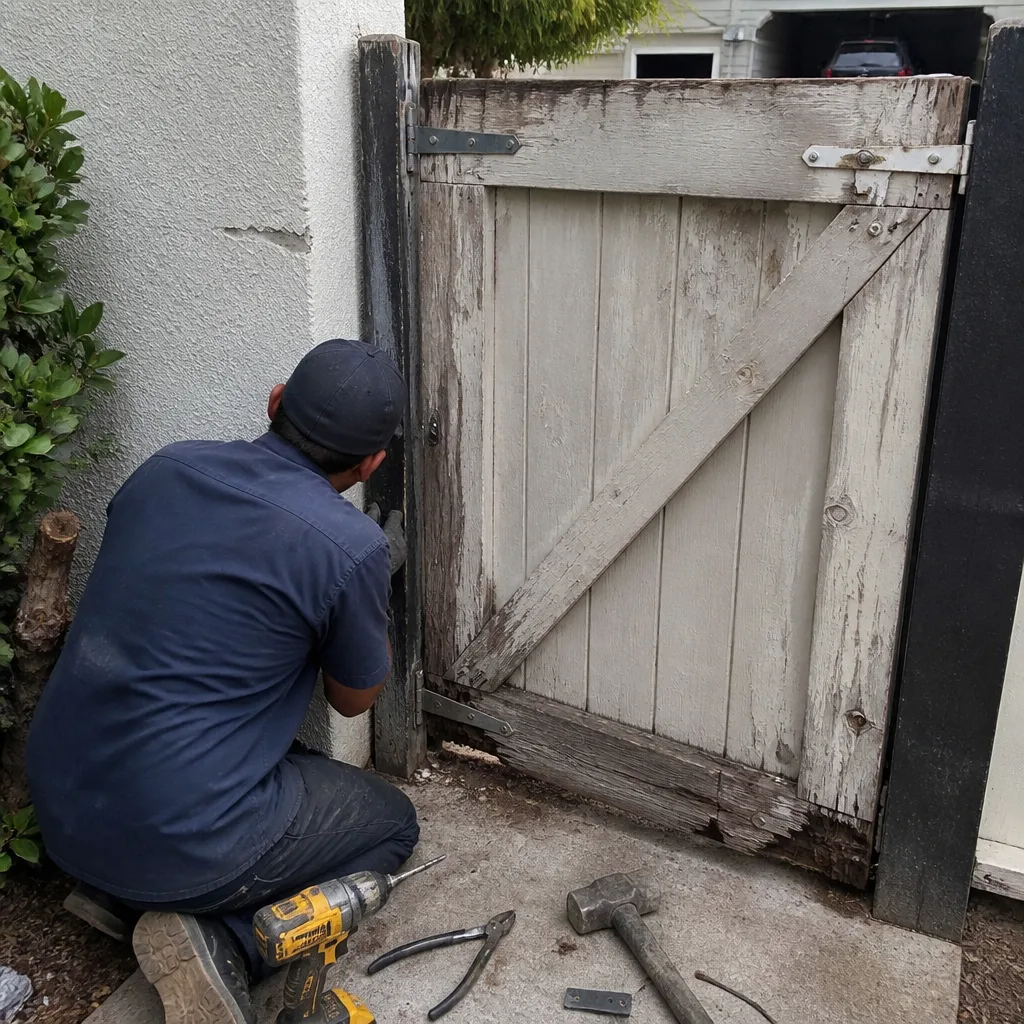 Before
 After
After Before
 After
AfterSeasonal Gate Repair Care for Venice: Year-Round Homeowner’s Guide
June Gloom is a weather inconvenience for most Venice residents and a corrosion accelerator for every unpainted ferrous hinge and uncoated terminal block on your gate. The moisture doesn’t need rain to do damage. Ninety percent relative humidity at 60°F for six consecutive weeks is enough to start electrolytic action on dissimilar metals, swell the wood fibers in a cedar gate slab, and creep into every connector that was never sealed. This guide schedules gate maintenance around the actual Venice climate cycle, not a generic four-season template, and pairs well with The Complete Guide to Gate Repair in Venice for deeper context. You’ll learn what to inspect in April, what fails in June, what to recalibrate in October, and how to keep a running log of it all so no seasonal problem surprises you twice.
Quick Answer
Seasonal gate care in Venice means timing your maintenance to two distinct stress periods: the May-June marine layer, which attacks electrical connections and ferrous hardware through sustained humidity, and the September-October Santa Ana season, which dries wood slabs and shifts loop detector sensitivity. The highest-return tasks: inspect and coat all hardware in April, clean and seal electrical terminations before the marine layer peaks, and check for wood shrinkage plus loop drift in October. Most seasonal damage is preventable on a four-visit-per-year schedule completed in under two hours total.
Table of Contents
- The Venice Climate Profile: What Actually Stresses Your Gate
- April: The Pre-Marine-Layer Inspection That Prevents June Failures
- May Through July: What the Marine Layer Does to Electrical Connections
- Salt-Accelerated Corrosion vs. Ordinary Wear: How to Tell the Difference
- September Through November: Wood Shrinkage, Loop Drift, and the Dry-Season Problem Set
- The Venice Gate Log: A Seasonal Record That Makes Year-Over-Year Comparison Possible
- Common Mistakes to Avoid
- When to Call a Professional
- Frequently Asked Questions
BeforeAfterThe Venice Climate Profile: What Actually Stresses Your Gate
Venice sits in a narrow climate band where the ocean moderates temperature but delivers persistent moisture on a reliable calendar. The marine layer does not arrive randomly. It forms when warm inland air rises and pulls cool, saturated ocean air across the coast. In Venice that happens most consistently from late May through July, with June as the peak month. Humidity at the coast during these weeks routinely holds above 85% for twelve or more consecutive hours at a time, often without a single drop of rain.
That distinction matters for your gate. Rain is episodic, visible, and followed by drying. Marine layer humidity is continuous, invisible, and followed by exactly nothing except another day of 90% humidity. It soaks into unfinished wood, condenses on metal surfaces that stay cool from the ocean breeze, and accelerates galvanic corrosion anywhere two different metals touch. Steel hinges and aluminum gate frames are a classic Venice pairing. So are zinc-plated screws driven into steel posts without sealant.
September flips the pattern. The marine layer retreats and Santa Ana winds arrive, blowing from the high desert toward the coast. Relative humidity can drop below 10% for days at a time. Wood gate slabs that spent June through August absorbing marine moisture then dry rapidly, and the shrinkage is measurable. Cedar and redwood each move along their grain differently than across it, which is why gate frames can rack slightly out of square even when every hinge bolt is tight. Loop detectors embedded in the driveway also respond to soil moisture changes. A loop that reads reliably in damp June soil can drift enough by October to miss a motorcycle or take an extra three seconds to open for a car.
Understanding these two stress periods is the foundation of seasonal care. Everything else in this guide hangs from that structure: prepare in April, monitor through June and July, correct in October.
April: The Pre-Marine-Layer Inspection That Prevents June Failures
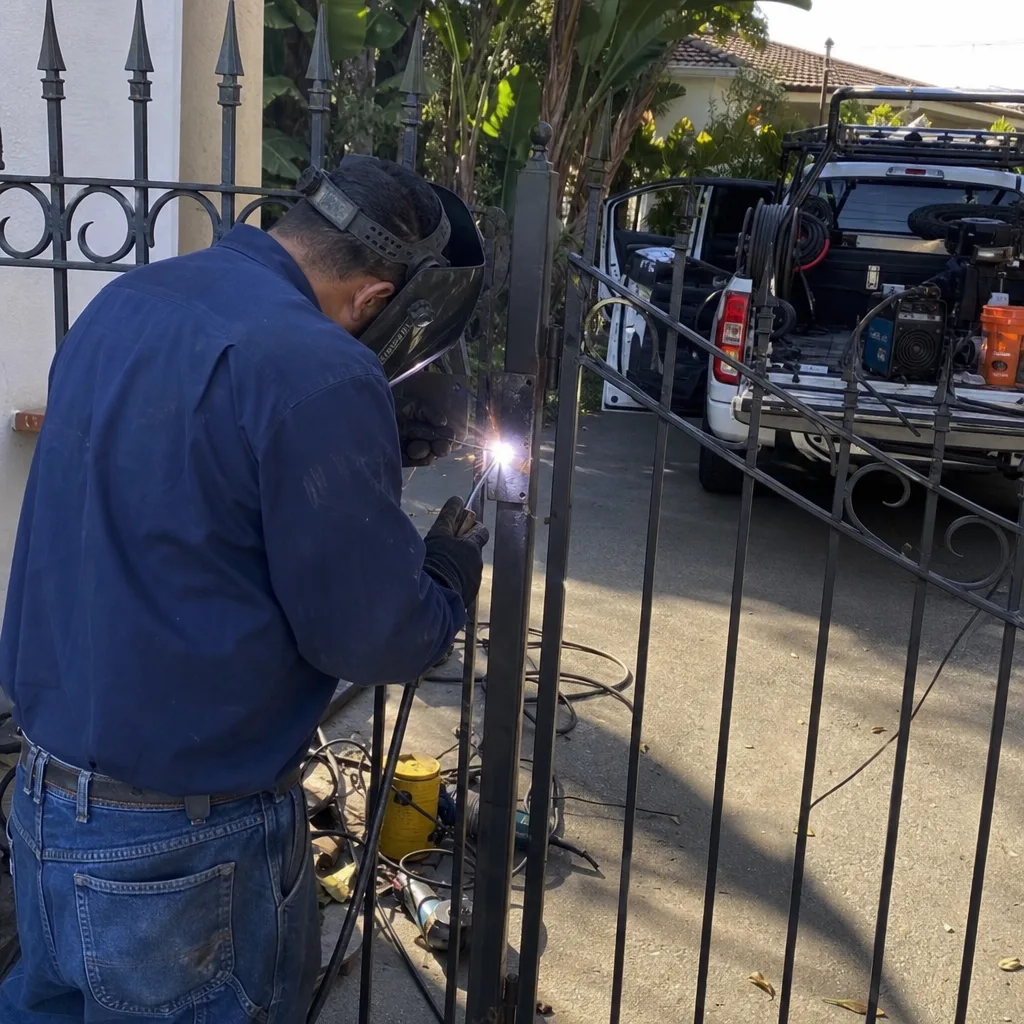
April is the highest-leverage maintenance month in Venice. The marine layer has not yet locked in for weeks at a time, the air is warm enough for coatings to cure properly, and every problem you address now is one you will not be diagnosing in June when a salt-saturated breeze is blowing through the job site. The work breaks into three categories: coat, measure, and replace.
Coat
Any unpainted ferrous metal on the gate needs a protective coat before humidity season starts. That includes hinge pins, hinge barrels, latch mechanisms, chain links on chain-drive operators, bare steel on a custom gate frame, and screw heads anywhere they broke through a painted surface. Use a marine-grade anti-corrosion coating rated for continuous salt fog. A light machine oil is not adequate. It migrates, dries, and leaves the metal bare within a few weeks. A wax-based coating or a dedicated corrosion inhibitor compound is better. Apply it after cleaning the metal with a wire brush or solvent, not on top of existing rust.
Measure
Take three measurements in April every year and write them down:
- Gate travel time from fully closed to fully open, in seconds, with the operator running normally.
- Gate slab level measured at the latch side, using a level placed on the top rail with the gate closed.
- Limit switch positions if your operator has visible cams or digital readouts. Record the numeric value, not just “looks fine.”
These three numbers are your baseline. When something drifts in August or January, you will know exactly what “normal” looked like in April, and the fix is often a simple reset back to the recorded value rather than a parts replacement. The Gate Installation in Venice page has detail on what a properly installed gate should read for these values when measured on day one.
Replace
Two specific components should be replaced in April if they show any sign of age, because both are inexpensive and both fail at the worst possible moment in Venice: during the marine layer peak when you are out of town for a weekend. The gate battery backup should hold a charge under load, not just a meter reading. A battery that powers the opener for five cycles on a bench test is nearing the end of its useful life. And the safety edge or photo-eye seals, where the rubber or silicone meets the housing, should be flexible and crack-free. Hairline cracks in a photo-eye gasket let salt fog into the electronics throughout June and July, and the first hard failure often shows up in August.
May Through July: What the Marine Layer Does to Electrical Connections
This is where Venice gate failures cluster. In our experience at Vance Gate Repair Venice home, the majority of June and July service calls share one root cause: moisture on an unsealed electrical connection. The failure sequence is predictable. Humidity condenses on a terminal block or wire splice overnight. Salt particles from the ocean air dissolve into that condensation and form a weak electrolyte. The electrolyte slowly bridges terminals that were never designed to carry current between them. That creates a low-resistance path that can trigger phantom faults, cause the operator to detect an obstruction that is not there, or pull enough current to scorch a control board over weeks of exposure.
The solution is not to avoid moisture; in Venice that is not possible. The solution is to make sure every termination that lives outside the motor housing is sealed. A proper seal uses dielectric grease on the contact surfaces, heat-shrink tubing with a sealed interior, and a connector body that closes without gaps. Wire nuts alone are not enough. Vinyl electrical tape alone is not enough. The assembly needs to survive sustained high humidity, not just a splash.
What you can do in May before the peak:
- Open the operator cover and look for signs of condensation pitting on terminals, white powder on wire insulation, or a green tint on copper.
- Check the photo-eye alignment. A beam that works in February can drift out of alignment when the gate slab picks up moisture and shifts a few millimeters, because the photo-eye is mounted on the gate or the adjacent post. A misaligned pair is the most common single fix we make in early summer.
- Look at the manual release mechanism. It should move smoothly without binding. Salt air attacks the short chain or cable on many residential operators, and a corroded release means you cannot open the gate manually when the power drops.
Salt-Accelerated Corrosion vs. Ordinary Wear: How to Tell the Difference
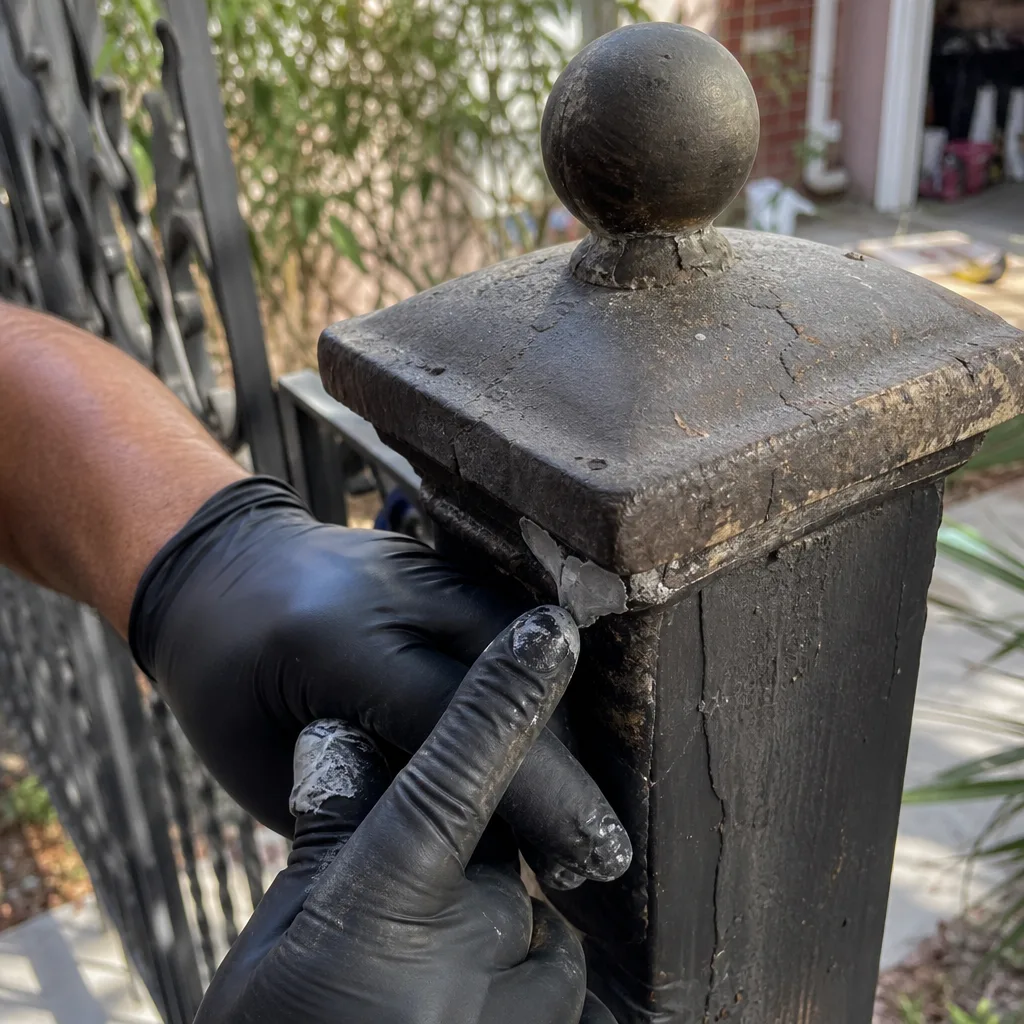
You can stand in front of a gate in Venice and see rust, but knowing whether that rust is climate-driven or installation-driven changes what you do about it. Climate-driven corrosion is a maintenance problem: clean it, treat it, coat it, and schedule the next inspection. Installation-driven corrosion is a workmanship problem: the wrong materials were used for a salt-air environment, and recoating them every season is a losing battle. The gate will keep corroding no matter how often you treat the surface because the underlying material choice is wrong, a distinction explored in DIY vs Professional Gate Repair: The Venice Homeowner’s Decision Guide.
Specific tells we look for, and you can look for too:
- Galvanic corrosion at metal pairs. When a steel screw passes through an aluminum bracket, the aluminum corrodes preferentially and leaves white powdery residue around the fastener. That is salt-accelerated galvanic action. It tells you the materials are mismatched and the joint needs an insulating washer or a different fastener metal.
- Surface rust on exposed steel. If a hinge barrel shows orange on the surface but the metal is still solid underneath, it is ordinary wear from salt air. Wire brush, coat with a wax-based inhibitor, and repeat next April. That hinge in a coastal Venice location will need the treatment every year regardless of brand.
- Deep pitting or material loss. If rust has eaten into the metal and left craters, or if the hinge pin is visibly thinner at the pivot than at the ends, the component is end-of-life. This is not a recoating job; it is a replacement. A hinge that fails under a moving gate can drop the slab on a car or a person, so if you are unsure whether pitting is cosmetic or structural, a professional inspection is the responsible call.
- Corrosion on the motor housing. A sealed Nikel-and-painted steel housing should not corrode in the first three years in Venice. If you see paint bubbles or flaking on an operator that is a few years old, the unit was either not rated for coastal use or the housing was scratched at installation and never touched up.
September Through November: Wood Shrinkage, Loop Drift, and the Dry-Season Problem Set
When the Santa Anas arrive, Venice gates face the opposite problem set from June. Wood slabs dry, shrink, and pull at the frame. The hinges stay in position, so a shrinking slab develops small gaps or slight racking at the latch side. A gate that latched perfectly in July may now rattle or fail to close fully because the latch no longer lines up with the strike. The second recurring issue is loop detector drift. Driveway loops are induction coils embedded in the pavement. Their calibration depends partly on the soil’s dielectric properties, which change with moisture content. A loop calibrated in damp June soil can read differently in dry October soil. The symptom is usually a gate that opens fine for a car but does not detect a bicycle or motorcycle, or a gate that stays open a beat too long and closes late.
October tasks:
- Check the latch alignment. With the gate closed, look at where the latch tongue meets the strike. If it is off by more than a sixteenth of an inch vertically, the dry-season shrinkage has moved something. A small adjustment to the hinge or the strike is often all it needs, but make the adjustment and record it in the gate log so you can compare next October.
- Re-test loop sensitivity per your operator’s manual. Most residential operators from BFT or FAAC have a simple sensitivity adjustment accessible at the control board. Note the new setting.
- Inspect the gate for new gaps along the picket or slat lines where boards have shrunk. Small gaps are cosmetic. Gaps wide enough to let a hand through at shoulder height, or gaps where a child could get fingers caught, are safety items and should be addressed before the holidays bring visitors.
- Re-verify the photo-eye after any hinge or latch adjustment. Any movement at the hinge changes the photo-eye’s aim if it is mounted on the gate.
The Venice Gate Log: A Seasonal Record That Makes Year-Over-Year Comparison Possible
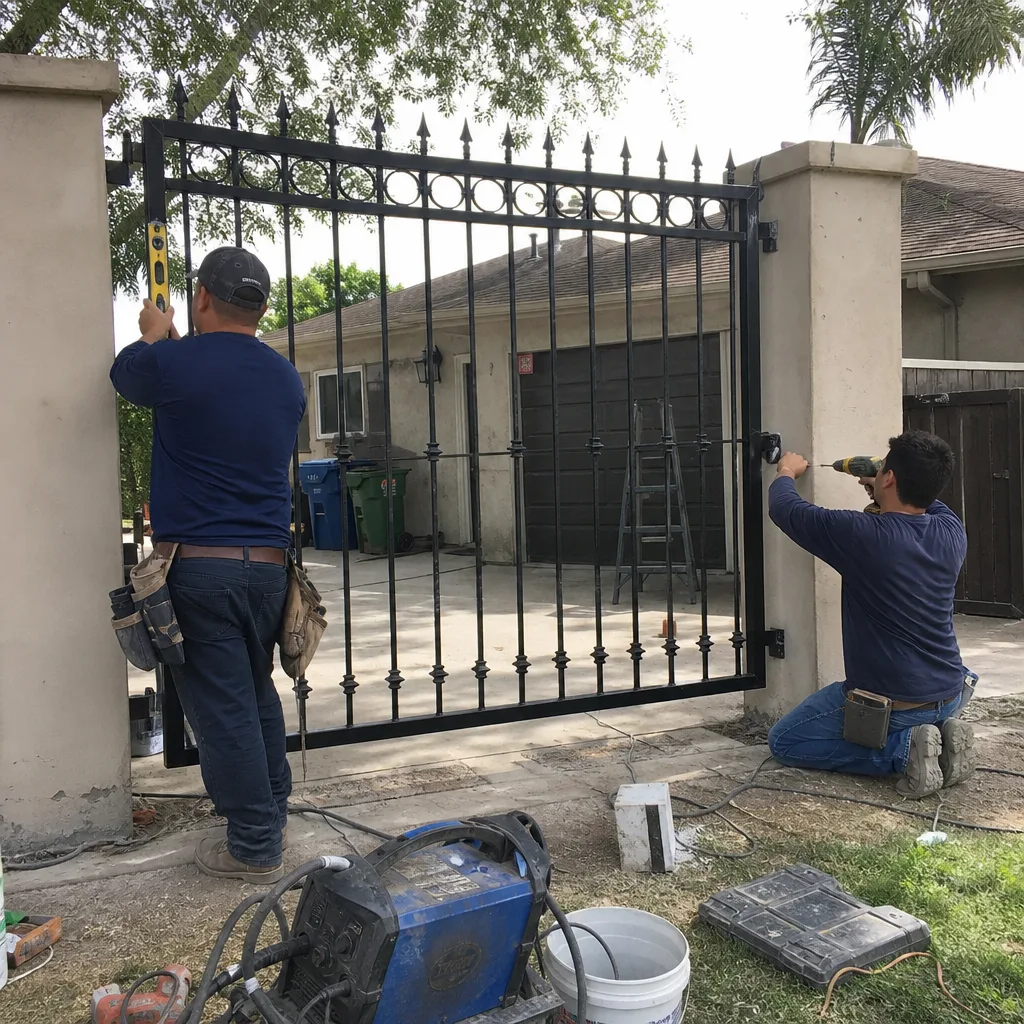
Most homeowners treat gate maintenance as a series of unconnected events: something squeaks, someone sprays it; something sticks, someone adjusts it. That approach is why the same bolt gets tightened three times before someone replaces it. A seasonal gate log changes the pattern. It turns “the gate seems slower than usual” into “travel time increased from 12 seconds in April 2025 to 14 seconds in June 2025, with no temperature change,” which is a much narrower problem to diagnose.
The log does not need to be a form. A note on your phone or a page in a notebook works. What matters is taking the same four readings at the same four points in the year:
- April: travel time in seconds, gate slab level at latch, limit switch positions, battery condition.
- June or July: photo-eye alignment pass/fail, any condensation inside the operator housing, manual release operation.
- October: latch alignment pass/fail, loop sensitivity setting, any new wood gaps, photo-eye re-check.
- January: general hardware check for corrosion bloom, hinge pin wear, operator motor noise.
When a technician from any company works on the gate, ask for the values they measured before and after. Our own practice is to photograph the limit switch positions and the control board wiring on every job, then leave those photos with the homeowner as a record. That way the next visit starts from a known point rather than a guess. The team at Gate Repair in Venice follows the same documentation standard on every residential service call.
Common Mistakes to Avoid
- Skipping the April inspection because the gate works fine. A functional gate in April is the best candidate for preventive care. The marine layer does not announce itself, and once it arrives you are working on a wet, cold job that takes three times as long.
- Treating every rust spot as terminal. Salt-air corrosion on ferrous hardware is expected in Venice. Most of it is surface-level and responds to cleaning plus coating. Replacing hardware that only needed treatment is the most common unnecessary expense we see.
- Ignoring photo-eye misalignment as a nuisance rather than a safety issue. A misaligned photo-eye means the gate cannot reliably detect an obstruction. That is the exact scenario in which a gate closes on a child’s bicycle or a delivery person. Reset alignment the moment the gate shows intermittent obstruction faults.
- Recoating over rust without removing it first. Anti-corrosion coating preserves the rust as well as the metal. Wire-brush the surface, remove the loose oxide, then coat. The coating cannot salvage metal that is already deeply pitted.
- Not recording anything. Unwritten measurements vanish. When the gate fails in October and you cannot remember what the April travel time was, a technician has to start from scratch. That costs more time and more money.
- Assuming wooden gates from inland suppliers behave the same in Venice. The moisture gradient between June and October causes more dimensional change in a wood gate than a supplier in, say, the Valley would design for. A gate built for a drier climate moves too much here. Ask suppliers about the moisture content of the wood at the time of construction.
- Delaying a manual release check until the power goes out. A manual release that has never been operated is a manual release that will be stuck when you need it. Test it in April, not during a winter wind event.
When to Call a Professional
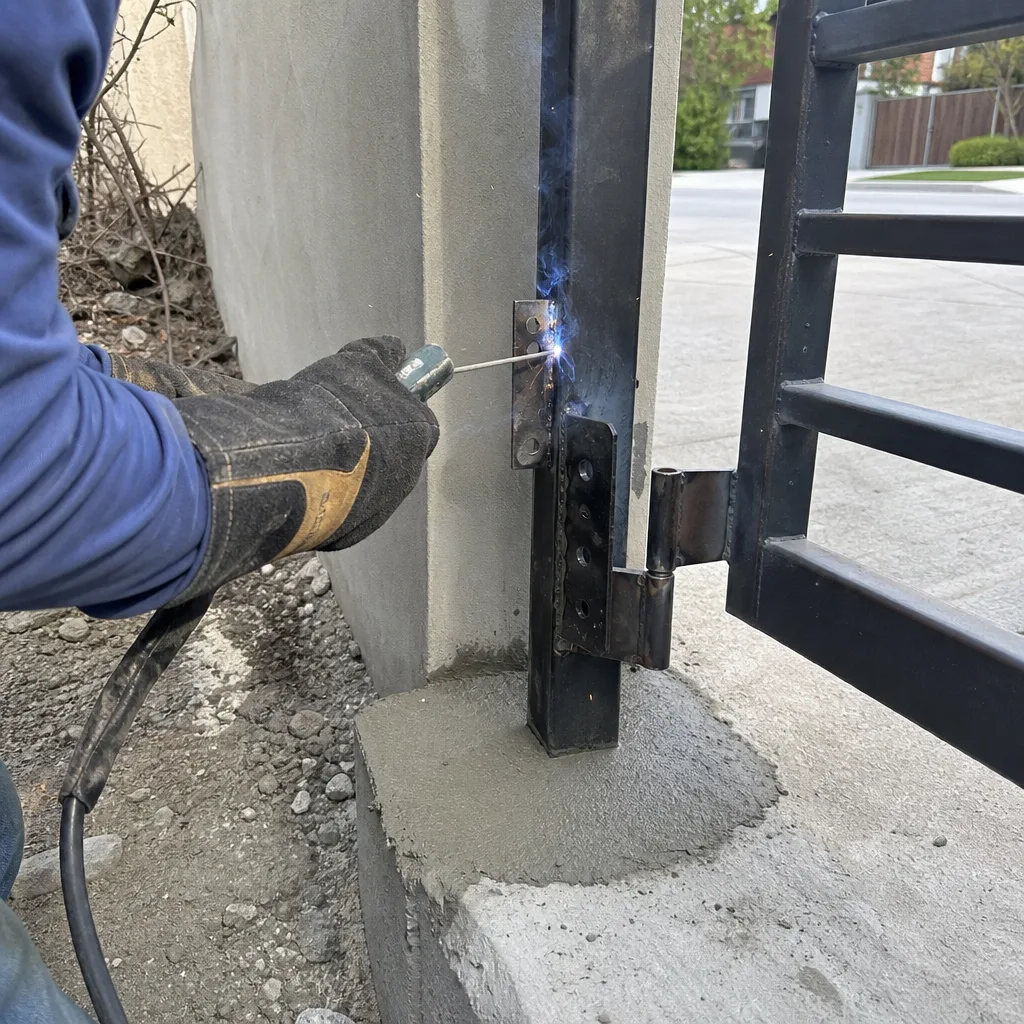
Some seasonal observations are informational; some require a trained technician on site. Call a professional if the gate is making a grinding or clunking sound from the operator, if the slab is visibly sagging more than half an inch at the latch side, if the photo-eye keeps losing alignment within days of a reset, or if you find deep pitting on any hinge or pivot hardware. High-tension springs and gate operators under load are dangerous to work on without training; we do not recommend disassembling either on a DIY basis. Vance Gate Repair Venice offers Gate Repair services with free estimates in Venice - call (213) 267-6777. A technician can verify seasonal readings, adjust or replace worn parts, and leave you with the written record and photographs that make next season’s inspection faster.
Frequently Asked Questions
Most seasonal maintenance visits in Venice run between $120 and $260 when no parts need replacement: that covers cleaning and coating hardware, verifying photo-eye alignment, testing the battery backup, checking the manual release, and recording the measurements for your gate log. If the visit turns up worn hinges or a corroded terminal block, the parts are priced in writing before any work starts. Call Gate Repair in Venice at (213) 267-6777 for a written price on your specific gate.
Yes. A live person answers the phone at (213) 267-6777 around the clock, and same-day dispatch is available for gate issues in Venice. June and July are our busiest months for salt-moisture electrical faults, so the sooner you call, the sooner a technician is en route with the photo-eye, terminal block, and dielectric grease already on the truck.
A full motor replacement includes removal of the old operator, installation of the new unit, adjustment of limit switches to the gate’s actual travel path, alignment of any photo-eyes or safety edges, battery backup testing, and a written record of every setting and part number installed. For Venice homes we recommend coastal-rated operators with sealed electronics. See Gate Motor & Opener in Venice for a breakdown of what to expect and what it costs in this area.
Yes. When we replace or upgrade a gate operator, the scope includes the low-voltage power run from the house to the operator location, the safety edge installation or photo-eye wiring, and the ground bonding for the control board. Everything is documented in writing and photographed before we leave. Call (213) 267-6777 to schedule a free estimate.
Yes, and in fact that is the best time to start. A gate that is two or three years old in Venice has already been through two marine layer seasons and two Santa Ana cycles. Catching the first signs of corrosion now means a $150 maintenance visit instead of a $900 motor replacement in three more years. The April baseline measurement is easiest to take when the installation is recent and the original settings are still documented.
The Haven Standard is the practice we follow on every job at Vance Gate Repair Venice: a written price before work starts, a documented photo record on every visit, and a 365-day promise to make any repair right at no additional charge. On a seasonal maintenance visit that means you get the inspection findings in writing, photos of every adjustment, and the same guarantee covering the work. The idea is simple: no one should pay twice for the same problem.
The Bottom Line
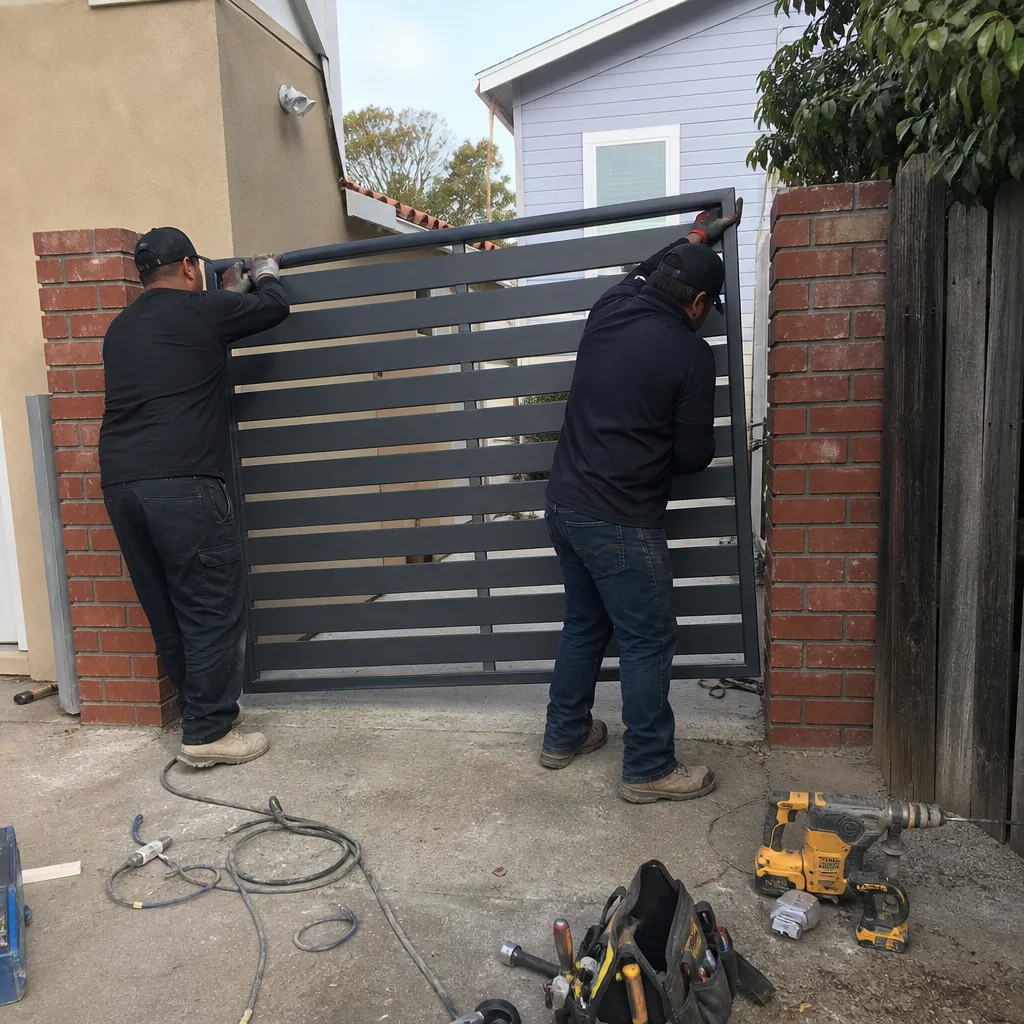
Venice gate care is not a generic four-season effort. It follows the local moisture calendar. Prepare in April by coating ferrous metal, recording baseline measurements, and replacing aging batteries and seals. Monitor through June and July for photo-eye drift and terminal block corrosion, the two most common marine layer failures. Check wood shrinkage, latch alignment, and loop sensitivity again in October when the Santa Anas dry everything out. Keep the readings in a simple log. Four short inspections a year prevent most emergency service calls in Venice. When a repair is beyond what you can safely do yourself, call (213) 267-6777 for a written price and a documented record on every visit. Vance Gate Repair Venice home is open around the clock, and spring and summer are the right seasons to get ahead of the marine layer before it gets ahead of you.
Written by Adrian Vance, Owner at Vance Gate Repair Venice, serving Venice since 2014.