
Last updated September 20, 2026
Free on-site gate assessment - hinges, posts, and your LiftMaster or Nice gate operator checked before anything is quoted
The assessment is free and the quote is the invoice.
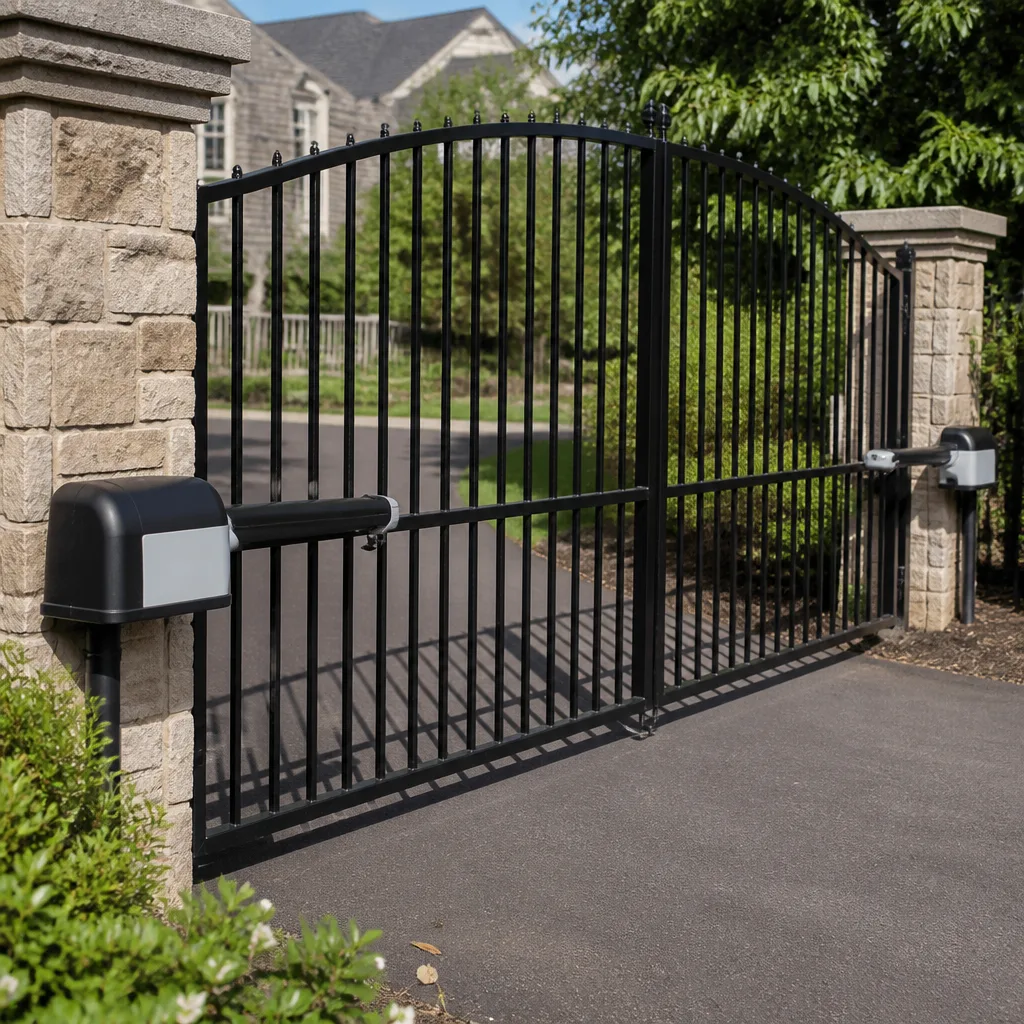
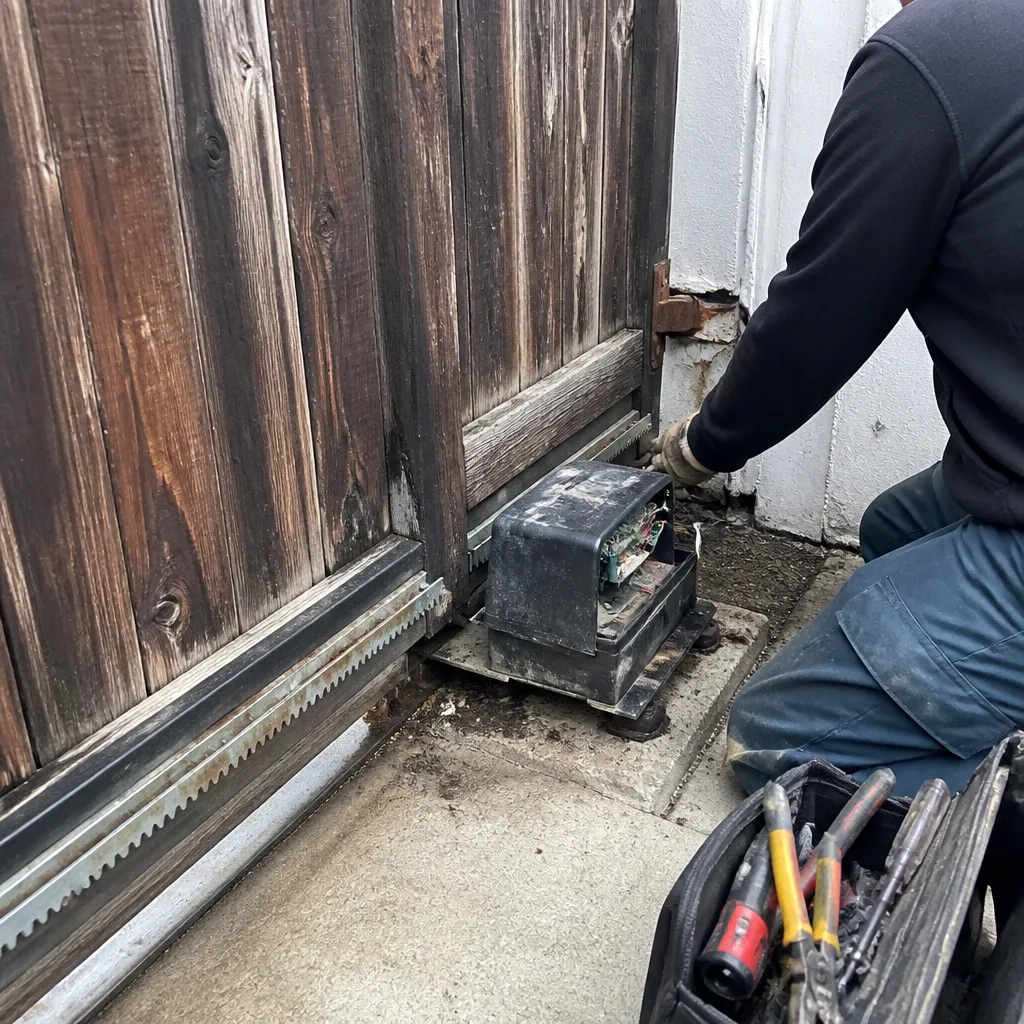 Before
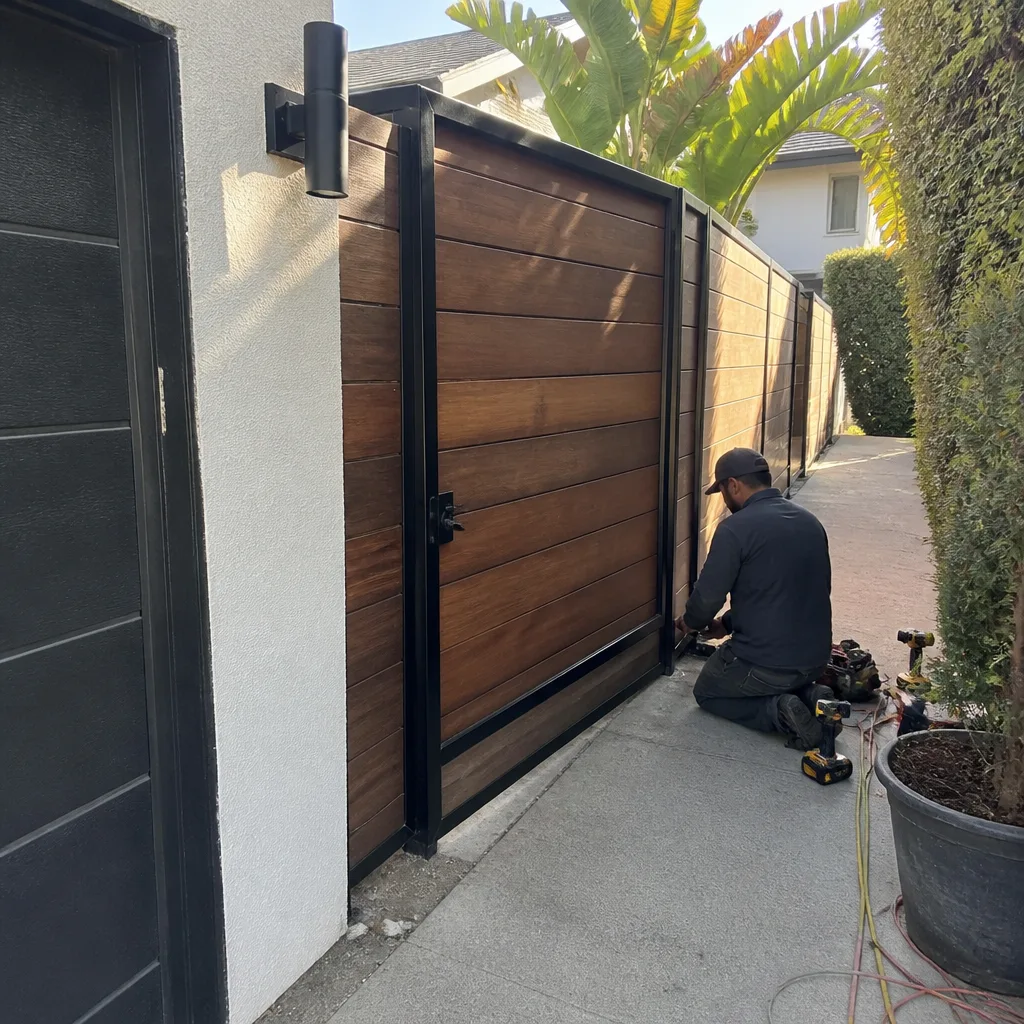 After
After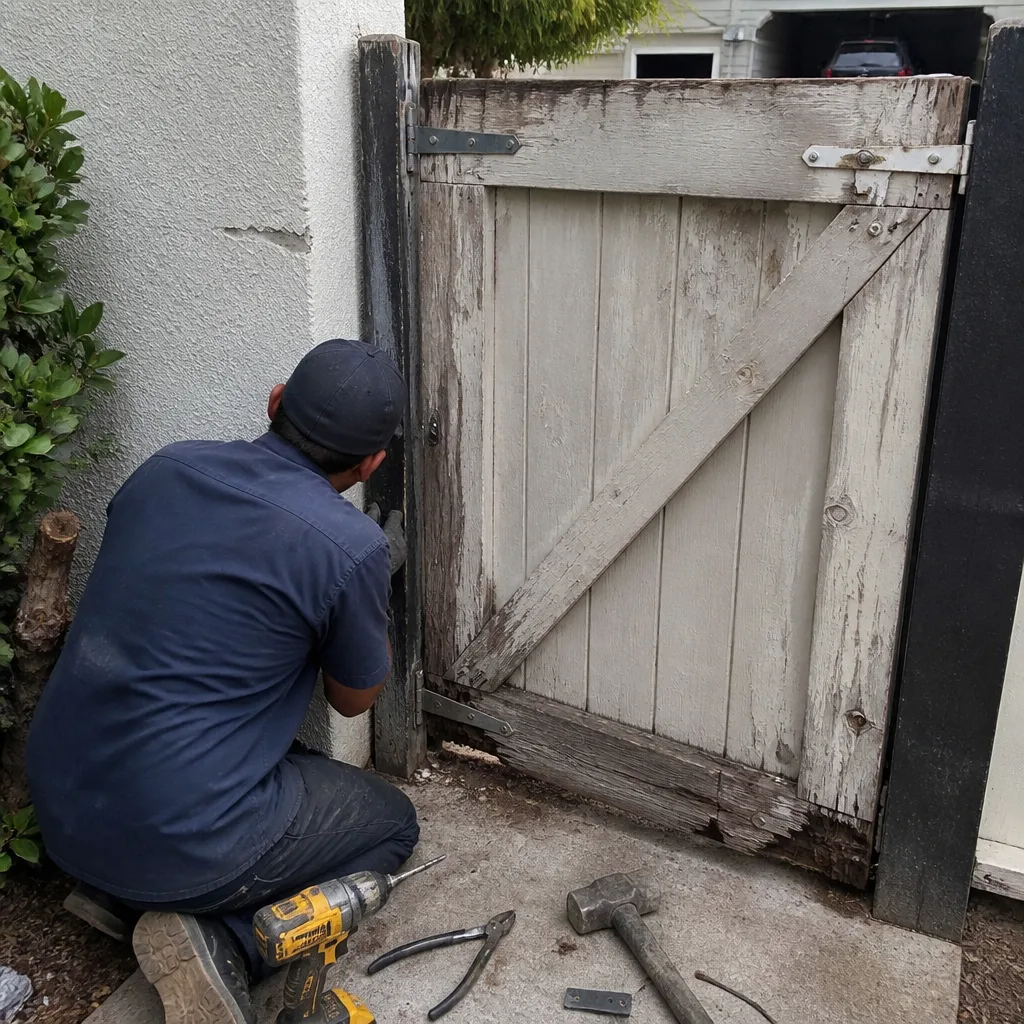 Before
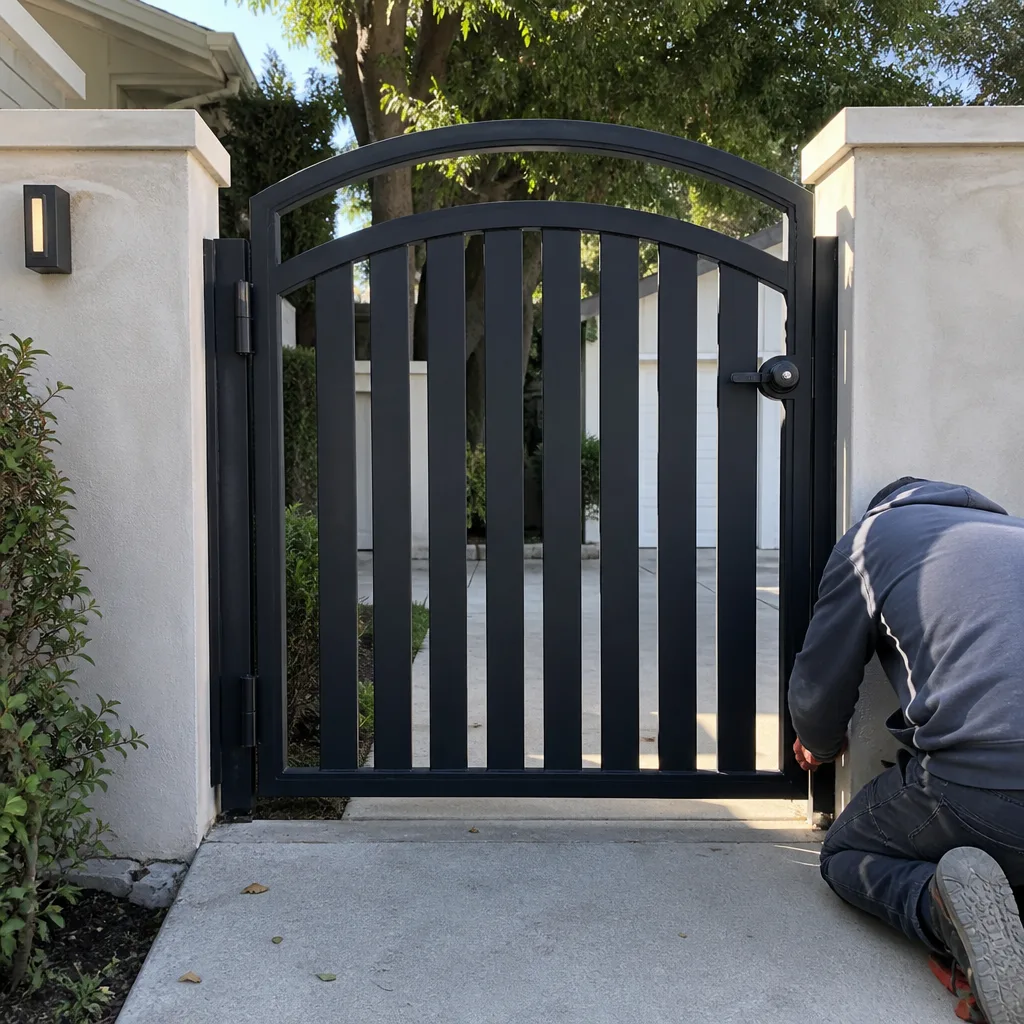 After
After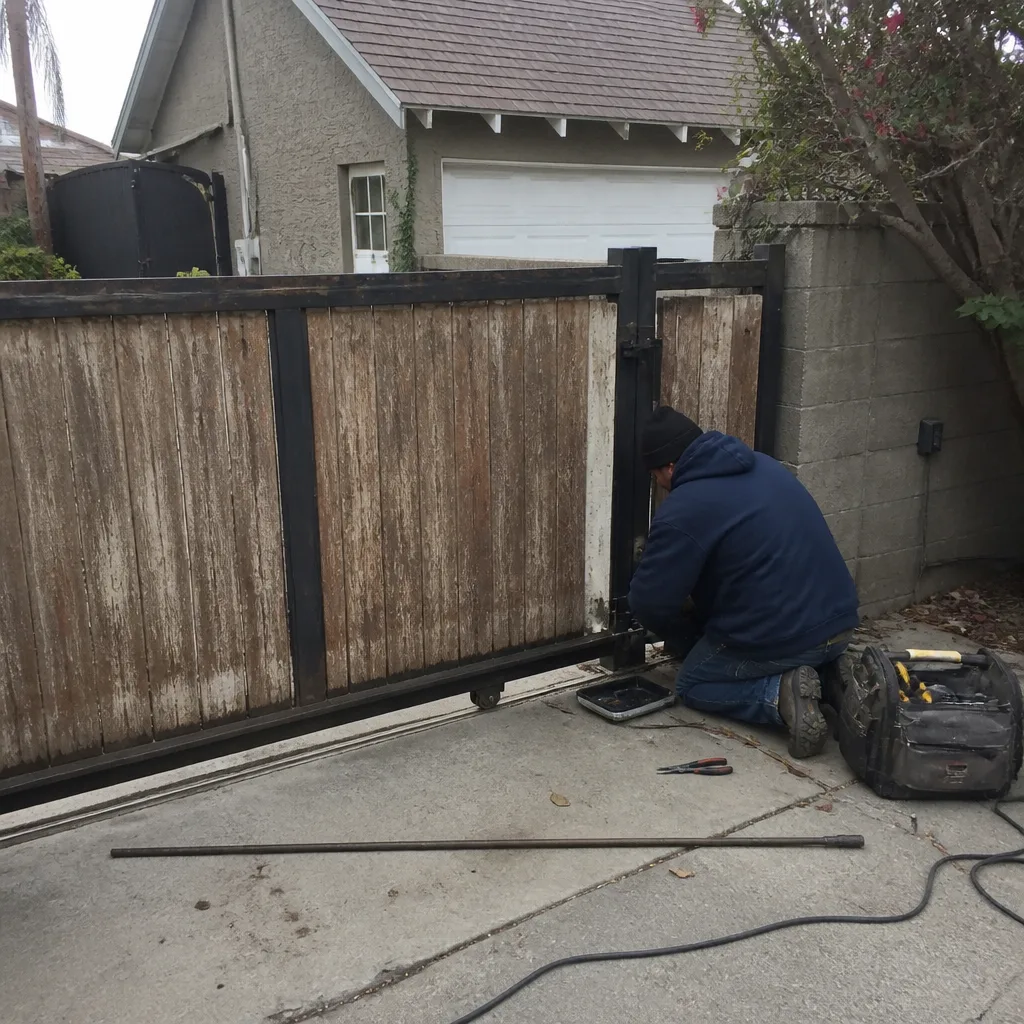 Before
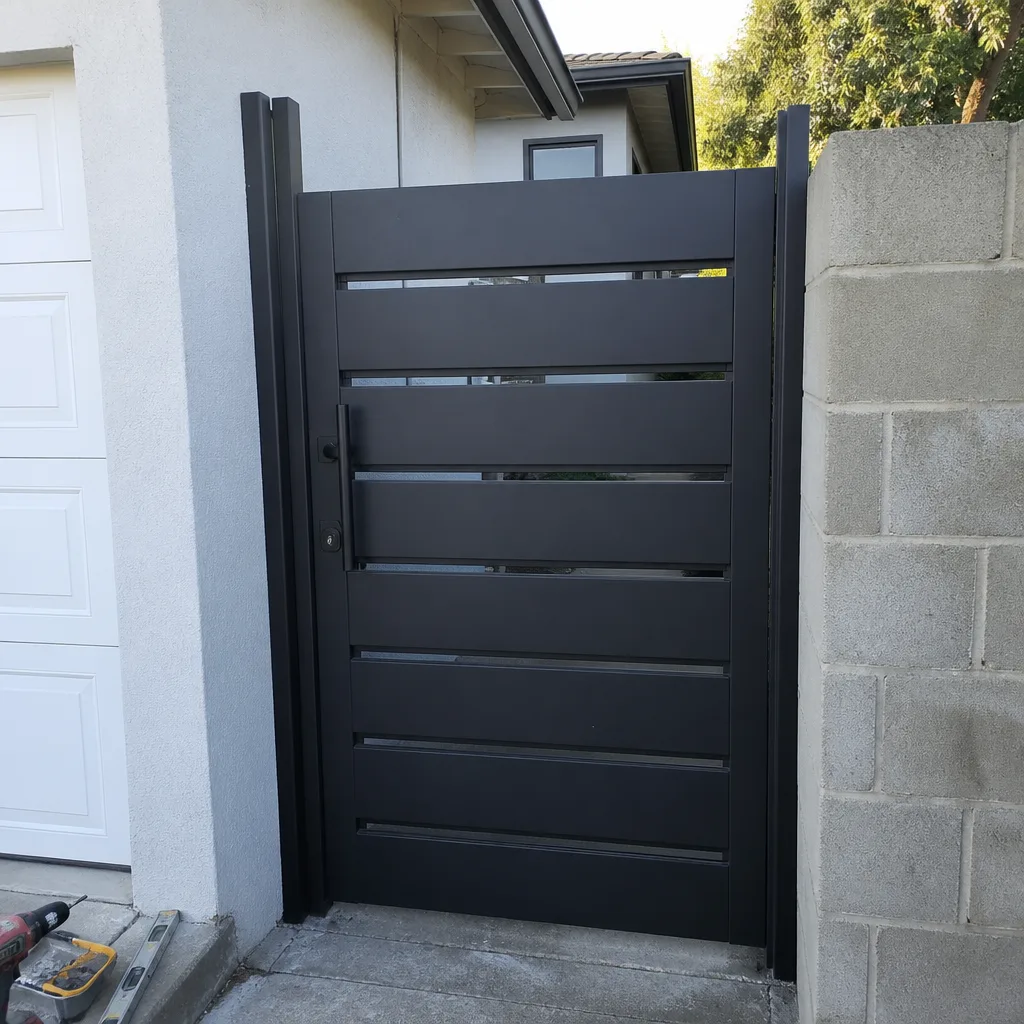 After
AfterGate Repair Permits, Codes & Inspections in CA: What You Need to Know
Most homeowners in California who have an automated driveway gate on their property are operating outside permit compliance right now, and they have no idea. The gate opens, the gate closes, and the remote works, so the assumption is that everything is fine. The reality is that California’s Title 24 building standards and UL 325 safety requirements apply to your gate whether or not anyone ever filed paperwork with the county. We see this weekly in Venice, where the same salt air that corrodes gate hinges also corrodes the assumption that a working gate is a compliant gate. This guide lays out exactly what triggers a permit, what does not, what inspectors look for, and how to protect yourself if the work was already done without one.
Quick Answer
Like-for-like gate repair work, such as replacing a failed motor with the same model, welding a cracked hinge, or replacing a broken wheel, does not require a permit in most California jurisdictions, including Los Angeles County. What does require a permit is any work that changes the gate’s footprint, adds automation to a manual gate, runs new electrical service, or substantially alters the structure. Automated gates must comply with UL 325 entrapment protection standards regardless of permit status, and the homeowner carries liability if the sensors are not code-compliant when an incident occurs. A permit is also generally required when the gate post footings are being poured, when the gate’s width or height changes the driveway approach, or when the automation system includes a new circuit run from the panel.
Table of Contents
- The Actual Permit Threshold in California: What Triggers One and What Does Not
- UL 325 Entrapment Protection: The Code That Applies Even When No Permit Was Pulled
- LA County Gate Permits: What the Process Actually Looks Like
- What Happens During a Gate Permit Inspection
- Unpermitted Gate Work: How to Retroactively Document and Protect Yourself
- Contractor Disclosure Obligations Under California Law
- Permit Fees and Real-World Costs in the Venice Market
- Common Mistakes to Avoid
BeforeAfterThe Actual Permit Threshold in California: What Triggers One and What Does Not
The line between a repair and an improvement is where most confusion lives, and it is worth getting precise about it. In Los Angeles County, a permit is triggered when the work involves new construction, alteration of a structure’s footprint, or the addition of electrical service. A gate that already exists and needs a replacement part, even a major part like the motor or a section of steel frame, falls under maintenance and repair when the replacement does not change the gate’s dimensions, location, or power draw. Replacing an existing automated motor with a different brand that has a higher amp rating can blur the line, because the electrical circuit was sized for the old load. A technician who knows what they are doing will check the nameplate on the old motor before sizing the new one.
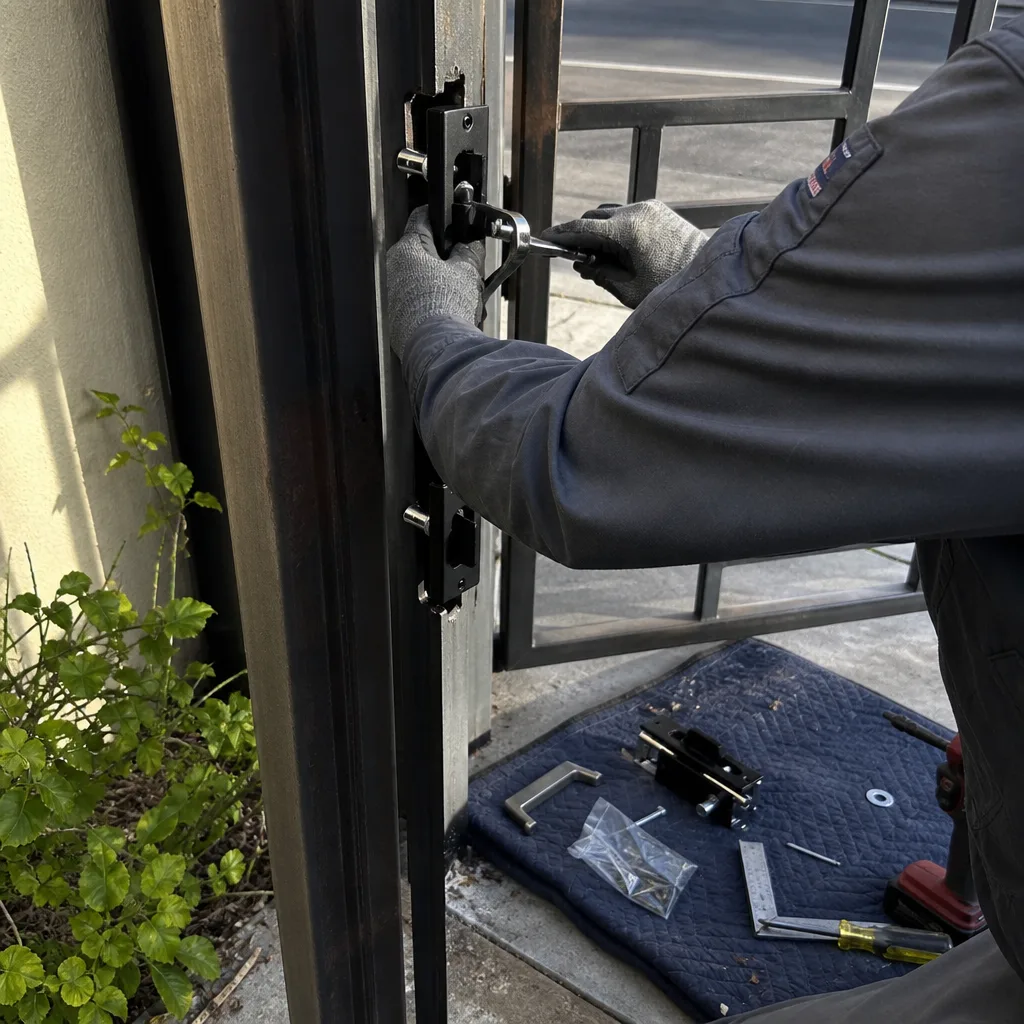
Here is what we see day to day in Venice: a homeowner with a manual driveway gate decides they want automation. That is a permit-triggering event, full stop. Adding a motor to a gate that never had one requires new electrical work, which requires a permit. Pouring new footings for a wider gate or moving the gate line closer to the street? Permit. Installing a pedestrian gate where none existed? Permit. On the other side of the line: replacing a broken hinge, welding a cracked rail, swapping a photo-eye sensor, replacing a gate wheel, adjusting the limit switches, and installing a new remote receiver are all repair work that does not require a permit. The distinction the county uses is whether the work alters the structure or adds new electrical load. If the answer to both is no, you are in repair territory.
The problem is that many contractors blur this line or ignore it entirely. A gate company that offers to “add a motor while we’re out” without mentioning the permit requirement is putting the homeowner’s liability on their own shoulders. The homeowner is the one who will answer for it at resale or after an entrapment incident, not the contractor who did the work. In our experience, roughly half the automated gates we are asked to service in Venice were automated without a permit, and the homeowner only finds out when they try to sell or when the gate injures someone. See Gate Repair Warning Signs: A Venice Homeowner’s Reference Guide for what to watch for. This is why the written record matters as much as the work itself.
UL 325 Entrapment Protection: The Code That Applies Even When No Permit Was Pulled
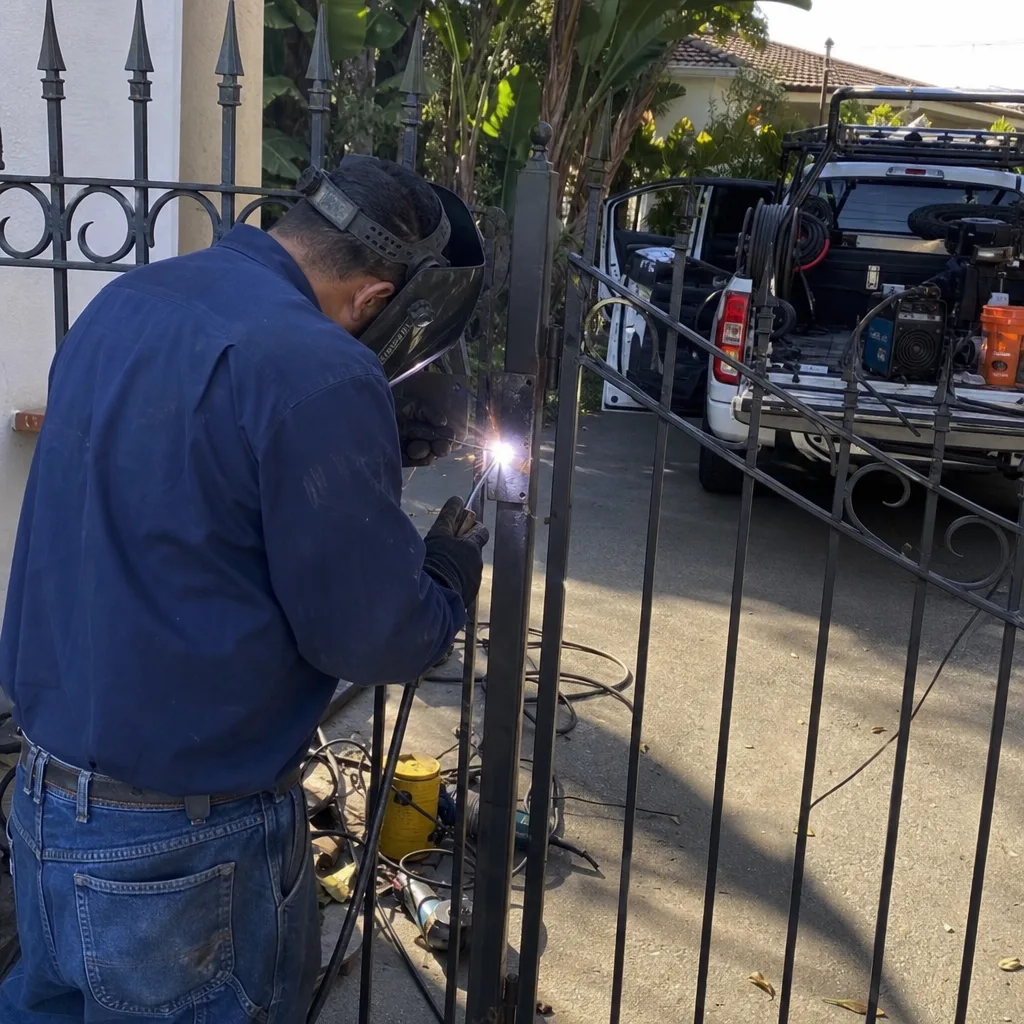
Here is the part most homeowners never hear: California’s Title 24 incorporates UL 325 as the mandatory safety standard for automated gate systems, and compliance is required regardless of whether a permit was ever issued. UL 325 exists to prevent entrapment, the word used for what happens when a person or animal is caught between the moving gate and a fixed object. Automated gates are heavy enough to kill, and UL 325 is the engineering response to that fact. The standard requires a minimum of two independent entrapment protection devices on every automated gate, and they must be tested at installation and checked regularly after that.
The primary device is typically the inherent entrapment sensor built into the motor, which reverses the gate when it meets resistance. The secondary device is usually a set of photo-eyes, the infrared beam sensors mounted near the ground on either side of the gate opening, or a set of contact edges that mount to the leading edge of the gate itself. On a swing gate, the photo-eyes must be positioned to cover the open and close paths of the gate, which in practice means monitoring both the pull-to-open swing arc and the push-to-open swing arc. On a slide gate, UL 325 requires photo-eyes or contact edges covering the full travel path, plus a secondary device that detects a person standing in the path of the gate. That second requirement is where many installations go wrong, because the original installer put in one set of photo-eyes across the driveway and called it done.
What UL 325 testing actually looks like: a compliant gate must reverse on contact with a test object, and the photo-eyes must stop and reverse the gate when the beam is broken. The gate must also stop and reverse if the photo-eye wiring is severed, not just when the beam is interrupted. We test this on every automated gate we service in Venice, and the failure rate on gates installed before roughly 2016 is higher than most homeowners would believe. The fix is often simple, a realignment or a new sensor, but until it is done, the homeowner is carrying an active safety defect. Salt air accelerates the problem here, corroding sensor housings and wiring connections faster than inland locations.
LA County Gate Permits: What the Process Actually Looks Like
If your gate project does require a permit, the process in Los Angeles County goes through the Department of Building and Safety. For most residential gate projects, the permit falls under the “residential” category and is handled at the local field office or through the online ePermit system. The process starts with a site plan showing the gate’s location relative to the property line, the driveway, the street, and any easements. The county wants to verify that the gate does not block a public right-of-way, does not create a hazard for pedestrians, and complies with the fire department’s access requirements. A driveway gate that opens outward across a sidewalk, for example, will not pass without a set-back that keeps the swing arc off the public path.
The next piece is the electrical plan. Any new automation system requires a dedicated circuit from the panel, usually 20-amp, with either a GFCI-protected outdoor receptacle near the motor or a hardwired connection in a weatherproof junction box. The county inspector will want to see that the conduit is buried to the correct depth, typically 18 inches for PVC conduit under a driveway, and that all outdoor-rated boxes and connectors were used. Low-voltage systems that run on 12V or 24V DC still require a permit when they are part of a new automation installation, because the transformer that supplies them is line-voltage. This confuses a lot of homeowners, who assume “low-voltage means no permit.” The transformer is the trigger, not the gate motor’s operating voltage.
After the permit is issued, the work is completed, and an inspector comes out to verify. The inspection covers the gate’s structural attachment, the electrical connection, and the UL 325 entrapment protection devices. The cost for a residential gate permit in LA County typically runs between $250 and $600 depending on the scope and the valuation of the work, and the permit is valid for one year from the date of issuance. If the work is not completed within that window, a renewal is required. Most gate companies in the Venice area will handle the permit application as part of the job, but some explicitly do not, and that is a question worth asking before any contract is signed.
What Happens During a Gate Permit Inspection
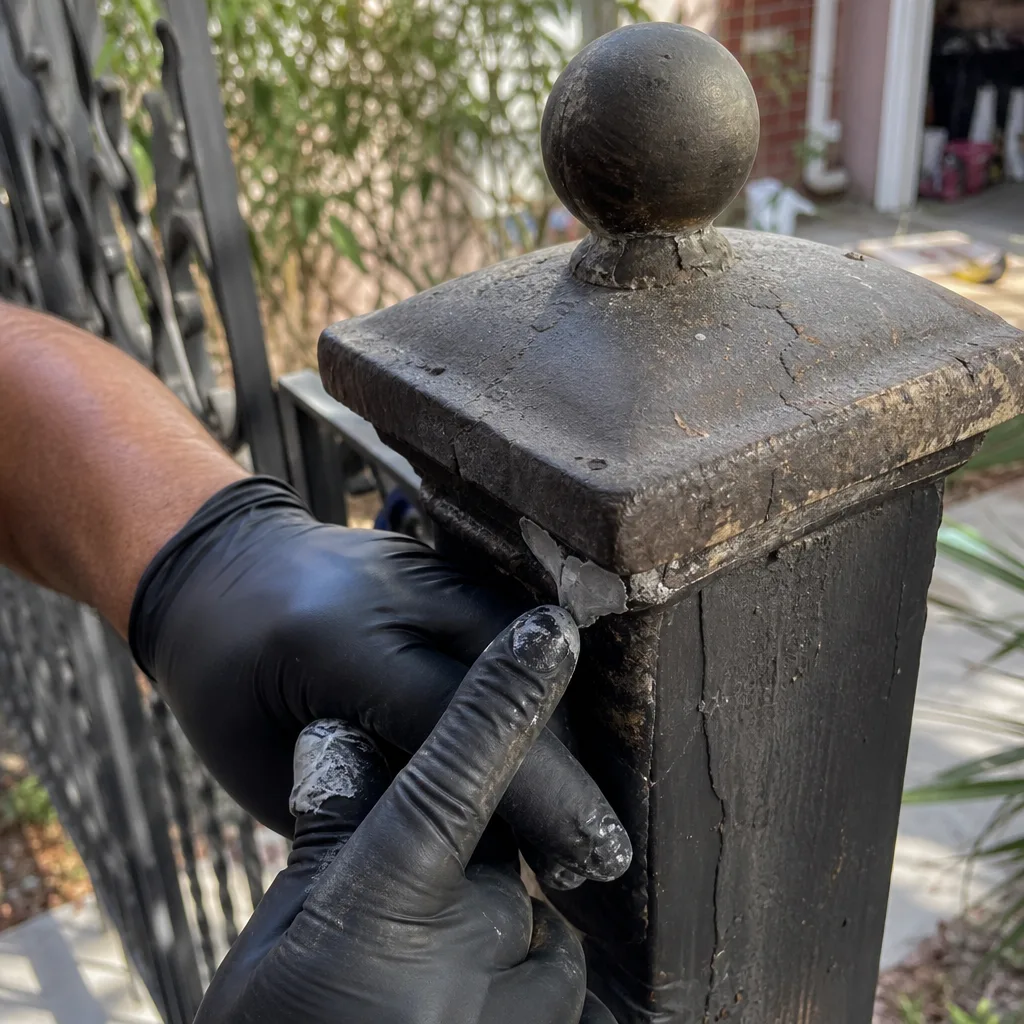
A gate permit inspection in Los Angeles County takes about 20 to 30 minutes, and the inspector is working from a specific checklist. The first thing they check is the gate’s location relative to the property line and the public right-of-way, because an encroaching gate is a code violation separate from the gate itself. The second check is the footings, which must be the correct depth for the gate’s weight and size, typically 24 to 36 inches in this region, with the posts set in concrete. The third check is the electrical connection, which must show a dedicated circuit, proper grounding, and weatherproof enclosures. The fourth check, and the one that fails most often in our experience, is the UL 325 entrapment protection testing.
The inspector will test the gate’s primary entrapment reversal by placing a test object, usually a 2×4 or a purpose-built test block, in the gate’s path and verifying that the gate reverses within two seconds of contact. They will test the photo-eyes by breaking the beam and confirming the gate stops and reverses. On slide gates, they will test the secondary entrapment device and check that the gate cannot close on a person standing in the travel path. If any of these tests fail, the inspection fails, and the homeowner is responsible for the correction and a re-inspection fee. No gate company can “talk the inspector out of it,” and any company that promises the inspection will be easy is probably not being straight with you.
What we have learned from sitting through these inspections in Venice is that the UL 325 portion fails most often on gates that were originally installed without automation and retrofitted later. The original gate structure was not designed for the safety hardware, and the installer took shortcuts to make the sensors fit. The inspector sees this immediately. The correction usually involves repositioning the photo-eyes, adding a contact edge, or rerunning the wiring, and it is always cheaper to do it right the first time than to pay for a re-inspection. The Haven Standard applies here as much as anywhere: the written record of what was installed and how it was tested travels with the homeowner, and when the inspector asks for it, the answer is already prepared.
Unpermitted Gate Work: How to Retroactively Document and Protect Yourself
The most practical question we get asked, and the one least often answered honestly, is what to do when the unpermitted work is already done. The gate is automated, the sensors may or may not be right, and the homeowner wants to know if they can fix the compliance gap without tearing everything out. The answer in most cases is yes, but it takes a specific sequence. The first step is to have the system evaluated by a licensed contractor who understands UL 325, not just a handyman who knows how to wire a motor. The evaluator should test the entrapment protection devices, confirm the electrical circuit is correct, and document what they find in writing with photographs.
The second step is to obtain a permit for the existing work through a process called “as-built permitting” or, in some cases, a “permit after the fact.” LA County does not advertise this process heavily, but it exists exactly for situations like this. The homeowner files the permit application, pays the fee, which is often doubled for after-the-fact permits, and schedules an inspection of the existing installation. If the gate passes inspection, the permit is issued retroactively, and the homeowner now has a compliant, documented gate. If the gate fails, the inspector will list the corrections, and the homeowner has a clear path to compliance. The cost of doing nothing is higher: an unpermitted gate can stall a real estate transaction, void a homeowners insurance claim after an injury, and leave the property owner personally liable for any damages.
The third step, and the one most people skip, is to create the record that should have existed from the start. A written summary of what was installed, what tests were performed, which part numbers were used, and when the gate was last serviced. This is the documentation habit Adrian Vance developed in commercial access-control work starting in 2014, where logbooks are not optional, and it applies just as directly to a residential driveway gate. If a future buyer asks whether the gate is permitted, the homeowner can answer with paperwork instead of a shrug. If an incident ever occurs, the record shows the gate was tested and compliant at the last service date, which is the strongest position a homeowner can be in after the fact.
Contractor Disclosure Obligations Under California Law
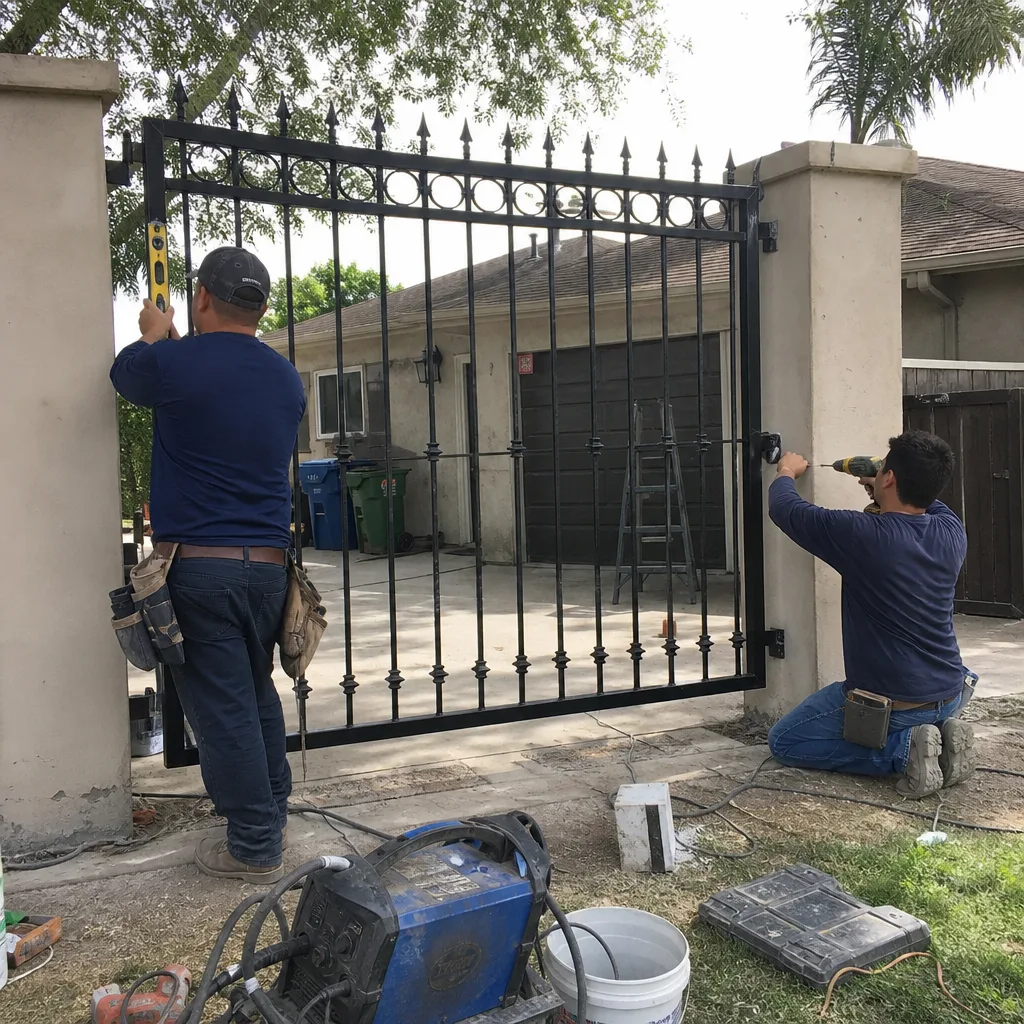
California Business and Professions Code requires contractors to perform work to code and to disclose when a permit is required for the work being performed. This is not a suggestion or a best practice. A licensed contractor who performs work that requires a permit without obtaining one is subject to discipline by the Contractors State License Board, including citation, fine, and in egregious cases, license suspension or revocation. The homeowner’s recourse is to file a complaint with the CSLB, which will investigate and may require the contractor to correct the work at their own expense. For guidance on vetting contractors upfront, see How to Hire a Gate Repair Contractor in Venice: A Step-by-Step Guide. In practice, this is a slow process, and the homeowner is still living with an unpermitted gate while it runs its course.
What a contractor must do, legally, is tell you that a permit is required and either obtain it or decline the work. What a contractor cannot do is suggest you skip the permit “to save money” without disclosing that the work will not be code-compliant. The phrase “you don’t need a permit for that” is either a statement of fact about a repair that genuinely does not require one, or a red flag. The homeowner’s best protection is to ask the question in writing and get the answer in writing. A text or email that says “no permit needed for this” becomes evidence if the work later proves to have needed one. A verbal assurance disappears the moment the conversation ends.
We will say plainly, as a gate company in Venice that works with homeowners on exactly this question, that the permit conversation should happen before any work begins. Our written scope includes the permit status of the job, and our written price lists the permit fee as a line item when one is required. This is Haven Standard Clause 1, the written price before work starts, applied to the permit conversation. If a gate company cannot tell you whether your specific job needs a permit before they start, they are not the right company for that job.
Permit Fees and Real-World Costs in the Venice Market
Permit fees for residential gate work in Los Angeles County run from about $250 for a simple automation addition to $600 or more for a full gate replacement with new footings and electrical service. After-the-fact permits typically run 1.5 to 2 times the standard fee. The permit is a separate cost from the labor and materials, and it should be itemized separately on any written estimate. A gate company that includes the permit fee in the quote without labeling it is doing the homeowner no favors, because the homeowner cannot verify what they paid for. In Venice, where the housing stock includes a mix of original beach cottages and newer teardown rebuilds, the gate permitting picture varies by property, and a one-size-fits-all answer is usually wrong.
The real cost picture looks like this for a typical automated driveway gate in this market:
- Standard permit fee for gate automation addition: $250-$400
- Standard permit fee for full gate replacement with new footings: $400-$600
- After-the-fact permit (existing unpermitted work): $500-$1,200
- Re-inspection fee after a failed inspection: $100-$200
- UL 325 sensor correction (photo-eye realignment or replacement): $150-$350
- Full documentation record with testing log: $0-$150, depending on whether the service call includes it
These are the numbers we write on invoices in Venice, and they are stable enough to quote with confidence. The permit fee goes to the county, not the contractor, and the contractor should be able to show you the receipt if you ask to see it. The documentation record, the testing log, the photographic evidence, those are the items most gate companies in this market simply do not provide, and they are the items that matter most when the gate is inspected, sold, or involved in an incident. Find more guides & resources on our blog. Eight of nine gate-automation brands we service, including BFT and Linear, share the same UL 325 requirements, so brand does not change the permit picture, only the parts cost.
Common Mistakes to Avoid
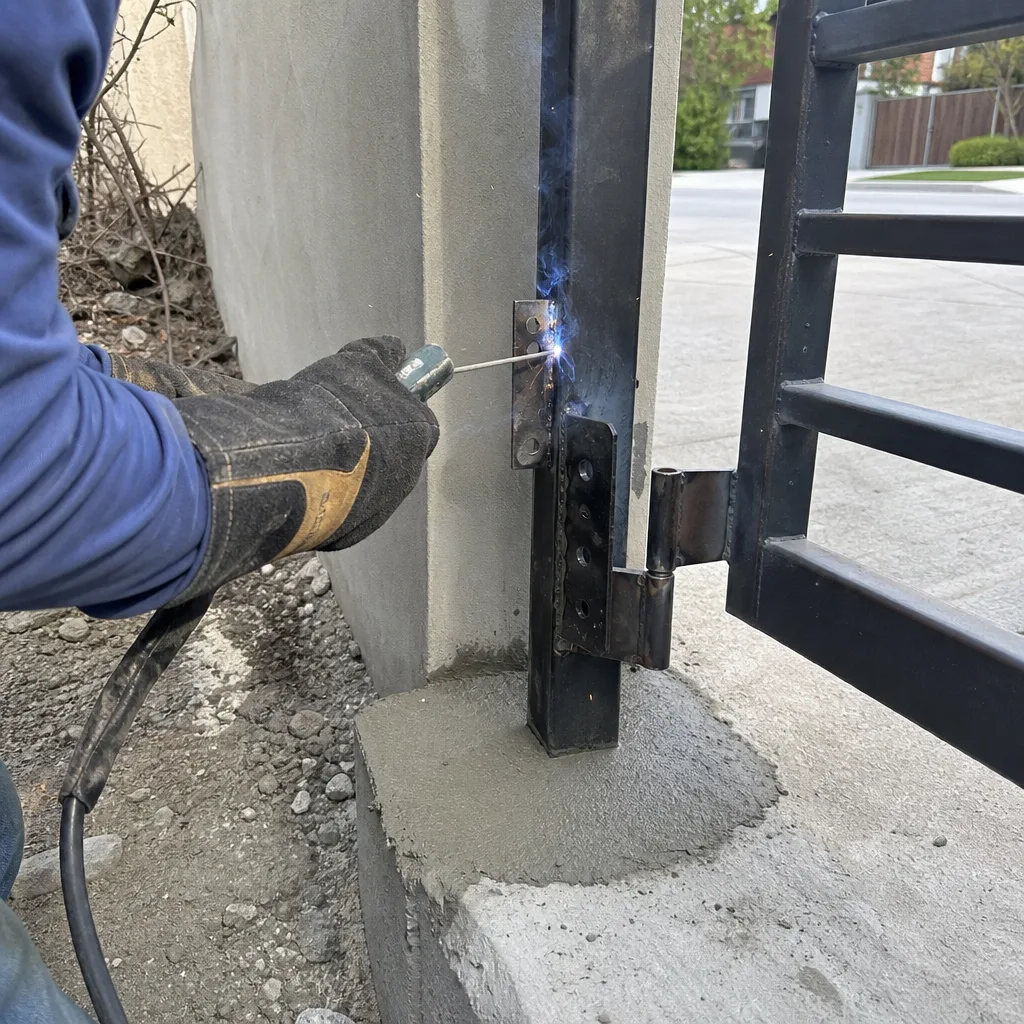
- Assuming a working gate is a compliant gate. A gate that opens and closes on command can still fail every UL 325 entrapment test. The sensors may be misaligned, the reversal force may be set too high, or the secondary device may be missing entirely. In Venice, where many original gates were manual and later automated, this is the most common compliance gap we find.
- Treating “low voltage” as “no permit.” The gate motor may run on 12V or 24V DC, but the transformer that powers it is line-voltage, and the permit requirement attaches to the electrical service being added. If new wiring runs from the panel to the gate, the permit conversation is not optional.
- Letting the contractor decide the permit question without documentation. If the contractor says no permit is needed, get it in writing. If they will not put it in writing, that is the answer. The permit is ultimately the homeowner’s responsibility, not the contractor’s, no matter who installs the gate.
- Skipping the UL 325 test at installation. The test takes minutes and requires a test object, not special equipment. A gate installer who does not test the entrapment reversal and the photo-eyes in front of the homeowner is leaving before the job is actually finished.
- Waiting until resale to address an unpermitted gate. The least expensive time to fix the compliance gap is now. After-the-fact permitting doubles the fee, and a gate that fails inspection during escrow can delay or crash a sale. Documenting the gate now, even if the permit cannot be retroactively obtained, gives the homeowner something to show at the closing table.
- Mixing brands and sensors without checking compatibility. A Viking motor paired with photo-eyes from a different manufacturer can create an integration gap where the motor does not recognize the sensor signal. The result is a gate that closes on the beam break instead of stopping, which is exactly the failure UL 325 exists to prevent.
- Pouring footings without calling in the post location. In Venice, property lines are tight, and a gate post set two inches onto the public right-of-way is an encroachment that the county can require be moved at the homeowner’s expense. The time to verify the survey is before the concrete goes in the ground.
When to Call a Professional
You need a gate professional when the question is no longer “what is wrong with my gate” but “is my gate safe and compliant,” because those are different questions with different answers. If your gate was automated by a previous owner and you have no paperwork, call for a compliance evaluation. If your gate failed a permit inspection, call for the correction work. If your gate has ever closed on a car, a pet, or a person and failed to reverse, that is an immediate call, not a next-week project. And if you are preparing to sell and the gate is unpermitted, call before you list, because the disclosure paperwork will ask the question directly. Vance Gate Repair Venice offers free estimates in Venice; call (213) 267-6777 and ask for the compliance evaluation, which includes the UL 325 test, a written record of what we found, and a clear statement of what the permit picture looks like for your specific gate.
Frequently Asked Questions
No, like-for-like repairs do not require a permit. Replacing a failed motor with the same or equivalent model, welding a cracked frame member, replacing hinges, wheels, or sensors, and adjusting limit switches all qualify as maintenance and repair under LA County rules. A permit is triggered only when the work changes the gate’s structure, adds new electrical service, or adds automation to a manual gate. If you are uncertain whether your specific repair crosses the line, call Vance Gate Repair Venice at (213) 267-6777 and we will tell you in writing before any work begins.
UL 325 is the national safety standard for automated gate systems, incorporated into California’s Title 24 building code, and it applies to every automated gate in California regardless of when it was installed or whether a permit was pulled. It requires at least two independent entrapment protection devices, such as an inherent motor reversal sensor and a set of photo-eyes or contact edges, and it requires that these devices be tested at installation and maintained thereafter. In Venice, where many gates predate the standard, we regularly find gates operating with only one functional entrapment device, which is a code violation and a liability exposure.
Gate permits in Los Angeles County typically cost between $250 and $600 depending on the scope of the work, with automation additions at the low end and full gate replacements with new footings at the high end. After-the-fact permits for existing unpermitted work run 1.5 to 2 times the standard fee. Permit fees are paid to the county and should be itemized separately on any gate company’s written estimate. Call (213) 267-6777 for a written price that includes the permit fee if one is required for your job.
An unpermitted gate does not automatically block a sale, but the seller must disclose it on the transfer disclosure statement, and a buyer can use it to negotiate a price reduction or demand correction. The strongest position is to obtain an after-the-fact permit before listing, which requires an inspection of the existing installation and correction of any code deficiencies. The alternative is to have a licensed contractor document the gate’s compliance with UL 325 and provide a written record, which answers the buyer’s safety question even when the permit cannot be retroactively obtained.
All automated gate systems sold in the United States, including the brands we service most often in Venice such as BFT, Linear, Viking, and Ghost Controls, are subject to UL 325. The standard does not vary by brand, only by the gate’s configuration, with swing gates and slide gates carrying different sensor requirements. The brand matters for parts availability and repair cost, not for the safety standard itself.
You can perform basic operational checks, but a full UL 325 compliance test requires specific test objects and a working knowledge of the standard’s reversal force and timing requirements. More importantly, the documentation matters as much as the test itself. A professional evaluation produces a written record that can be shown to an inspector, a buyer, or an insurance adjuster. In Venice, Vance Gate Repair’s written scope and photo record, the Haven Standard, includes the UL 325 test results and the sensor positions, so the homeowner has the evidence, not just the assurance. Call for a free estimate on the Vance Gate Repair Venice home page.
The Bottom Line
The gate permit reality in California is simple once the threshold is understood: repairs do not need permits, additions and structural changes do, and UL 325 compliance applies to everything automated, permitted or not. The homeowner carries the liability for code compliance, which means the homeowner needs the documentation, not just the work. Get the permit question answered in writing before any job starts, get the UL 325 test performed and documented, and keep the record. If you are in Venice and need a clear answer on your specific gate, Gate Repair in Venice is a call away, or if you are planning new work, see our Gate Installation in Venice page for the full scope of what we do. For automation questions specifically, our Gate Motor & Opener in Venice page covers the UL 325 compliance picture in more detail. Call (213) 267-6777 and ask for the compliance evaluation, the answer will be specific, written, and free.
Written by Adrian Vance, Owner at Vance Gate Repair Venice, serving Venice since 2014.