
Last updated September 20, 2026
Free on-site gate assessment - hinges, posts, and your LiftMaster or Nice gate operator checked before anything is quoted
The assessment is free and the quote is the invoice.

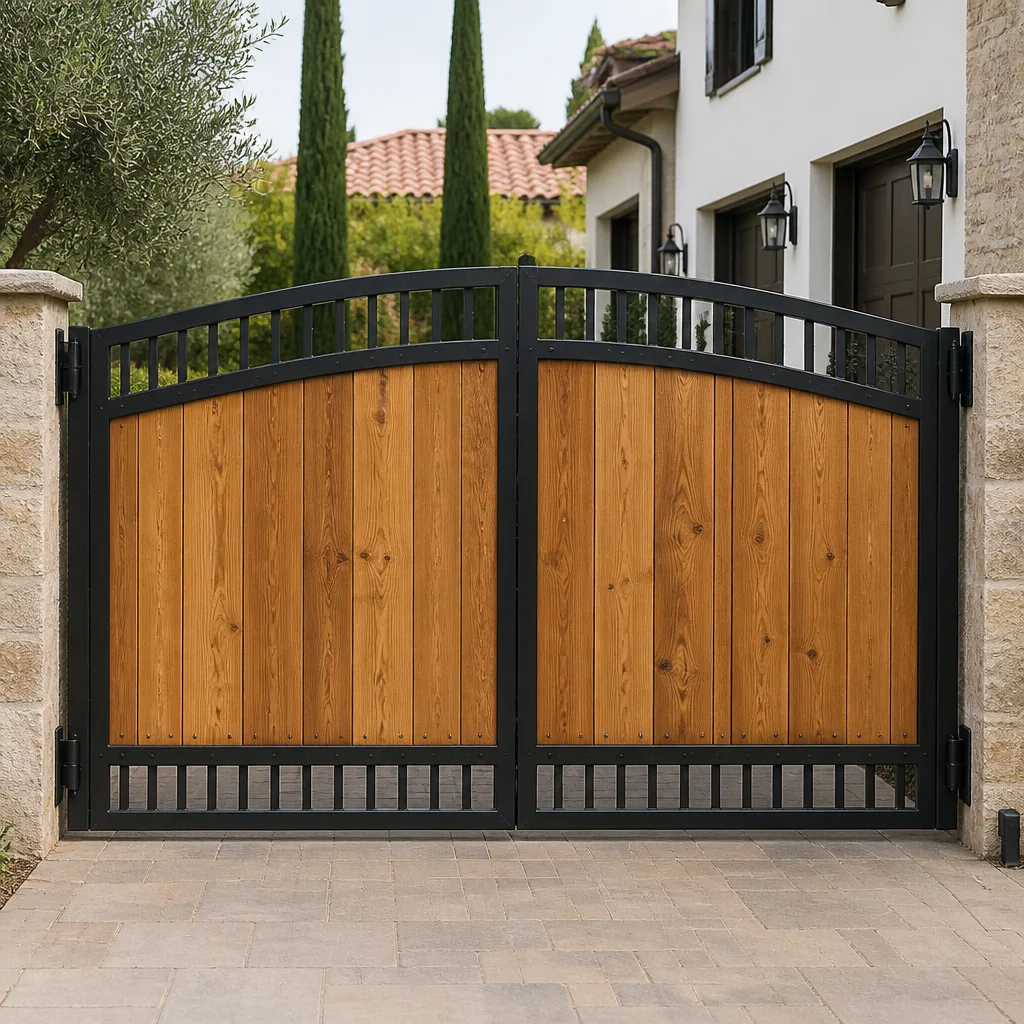
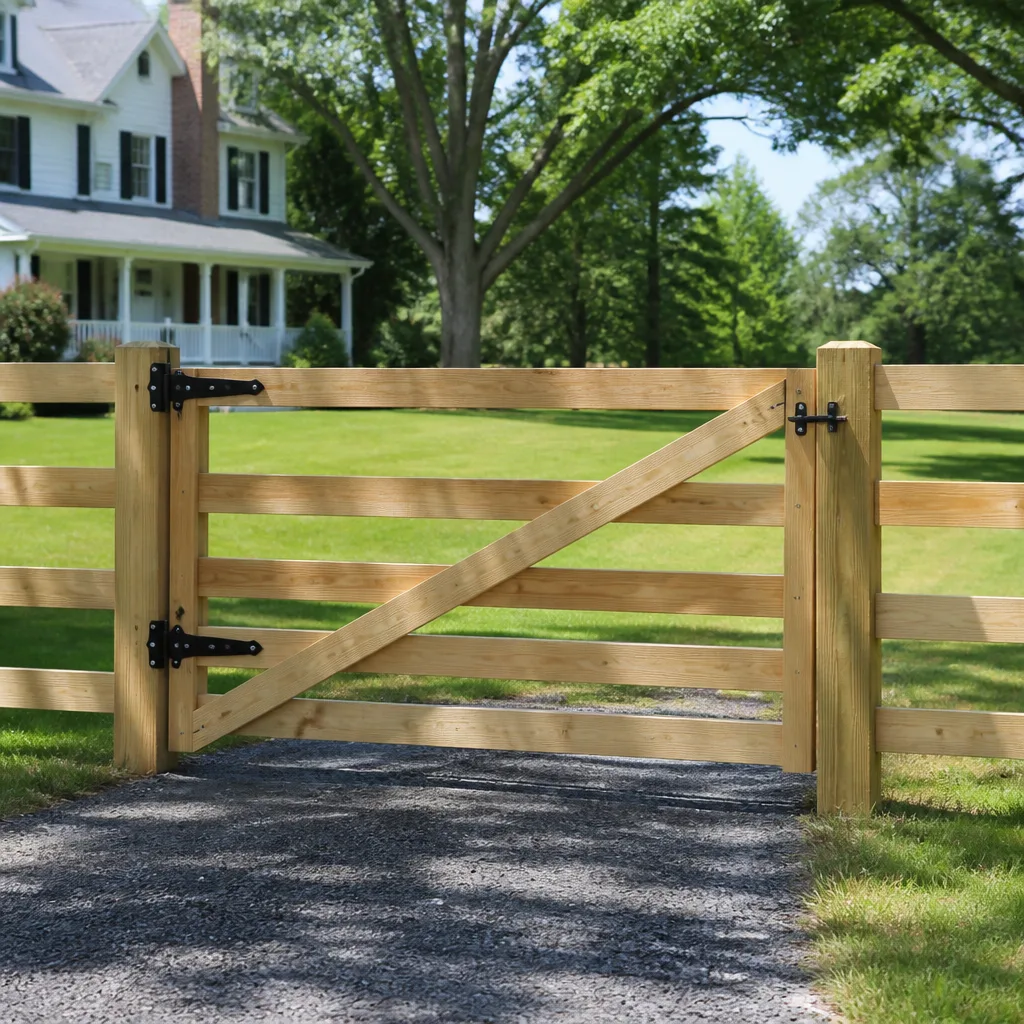
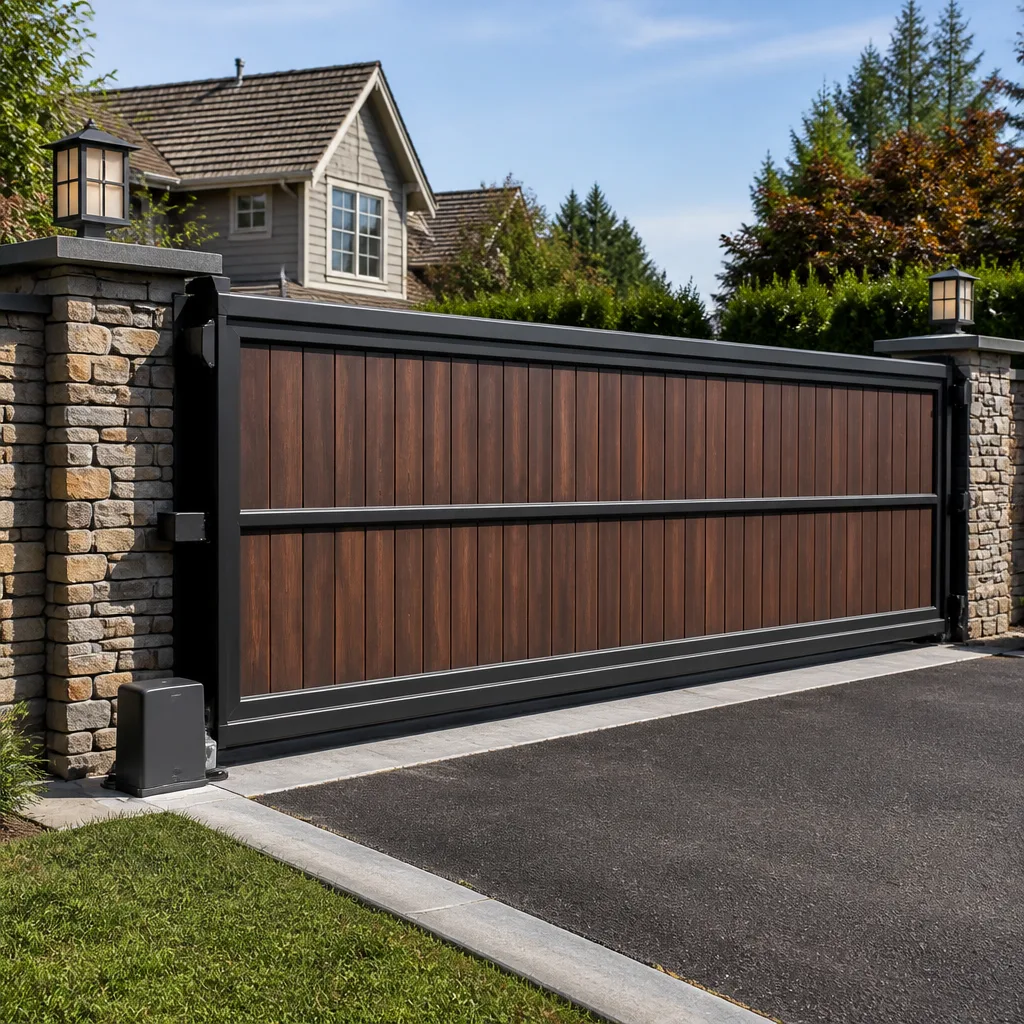
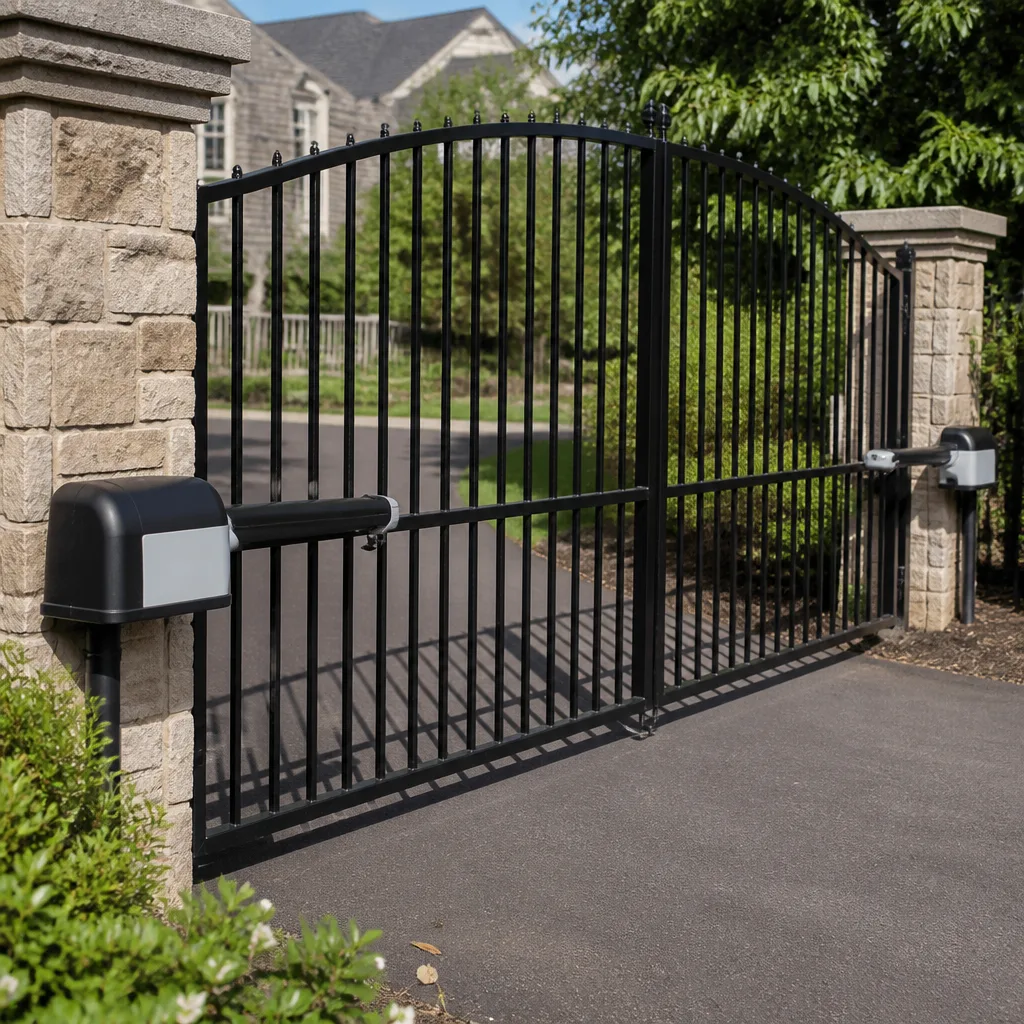
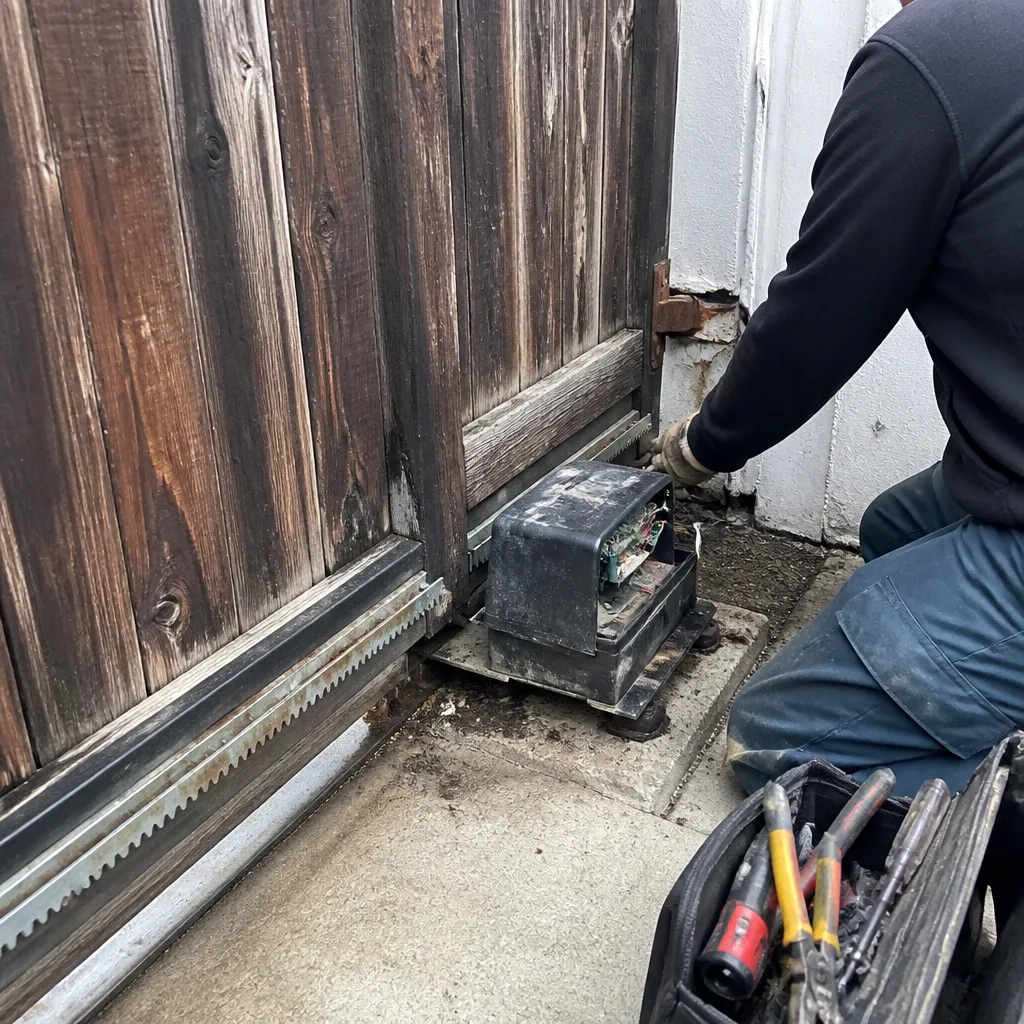 Before
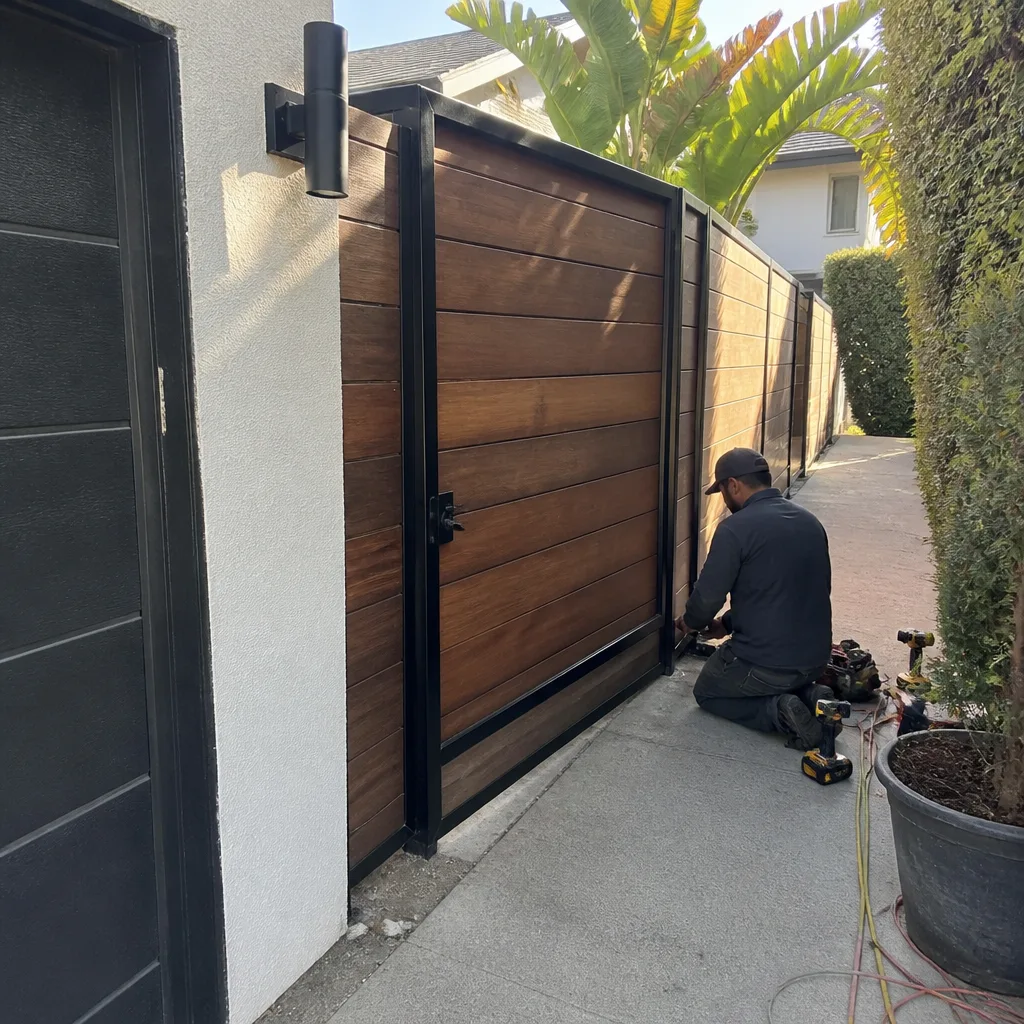 After
After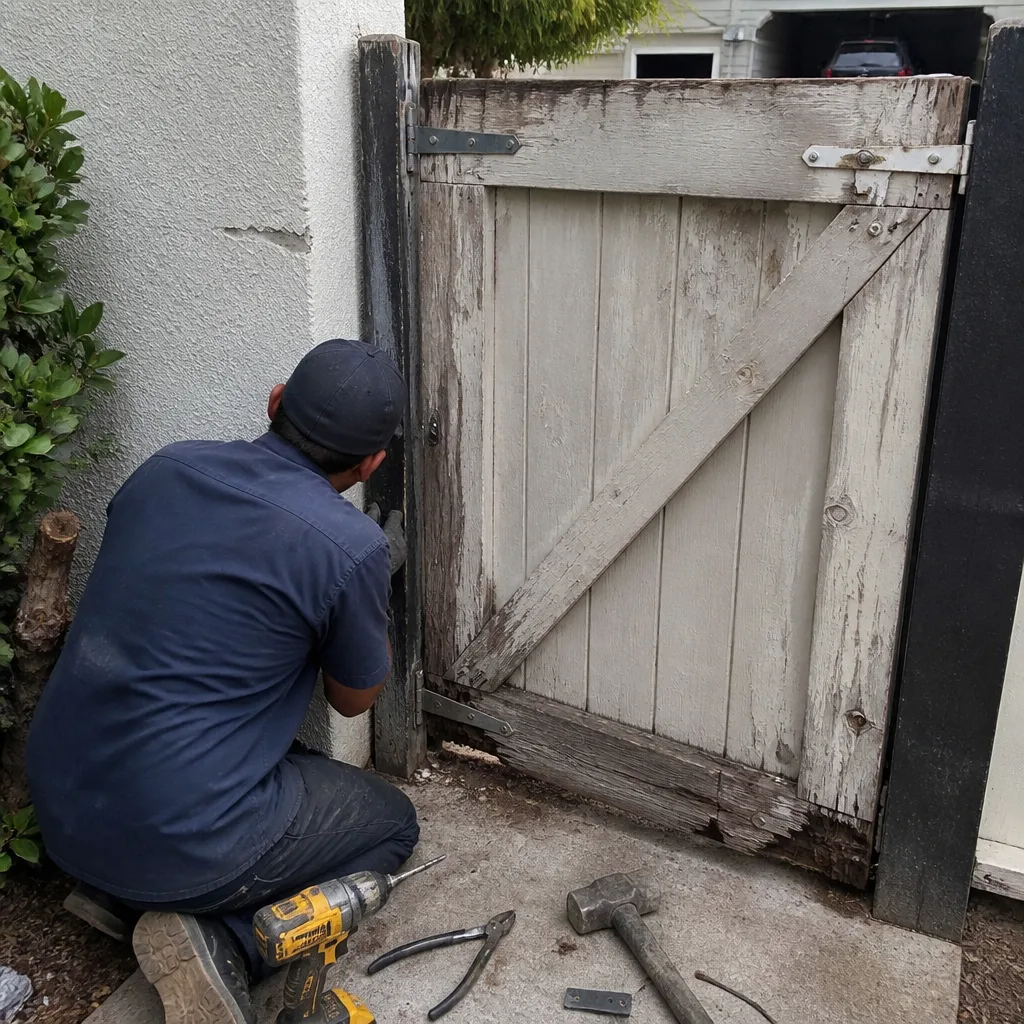 Before
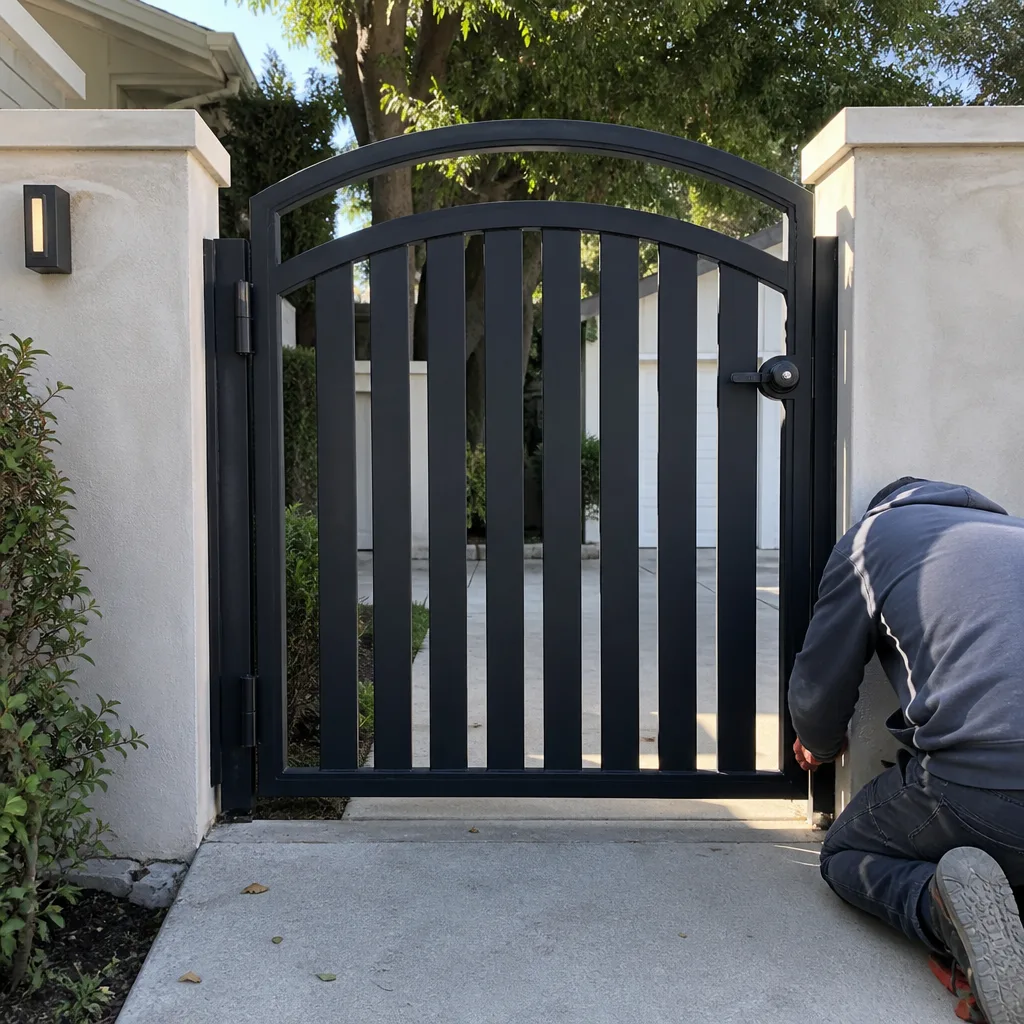 After
After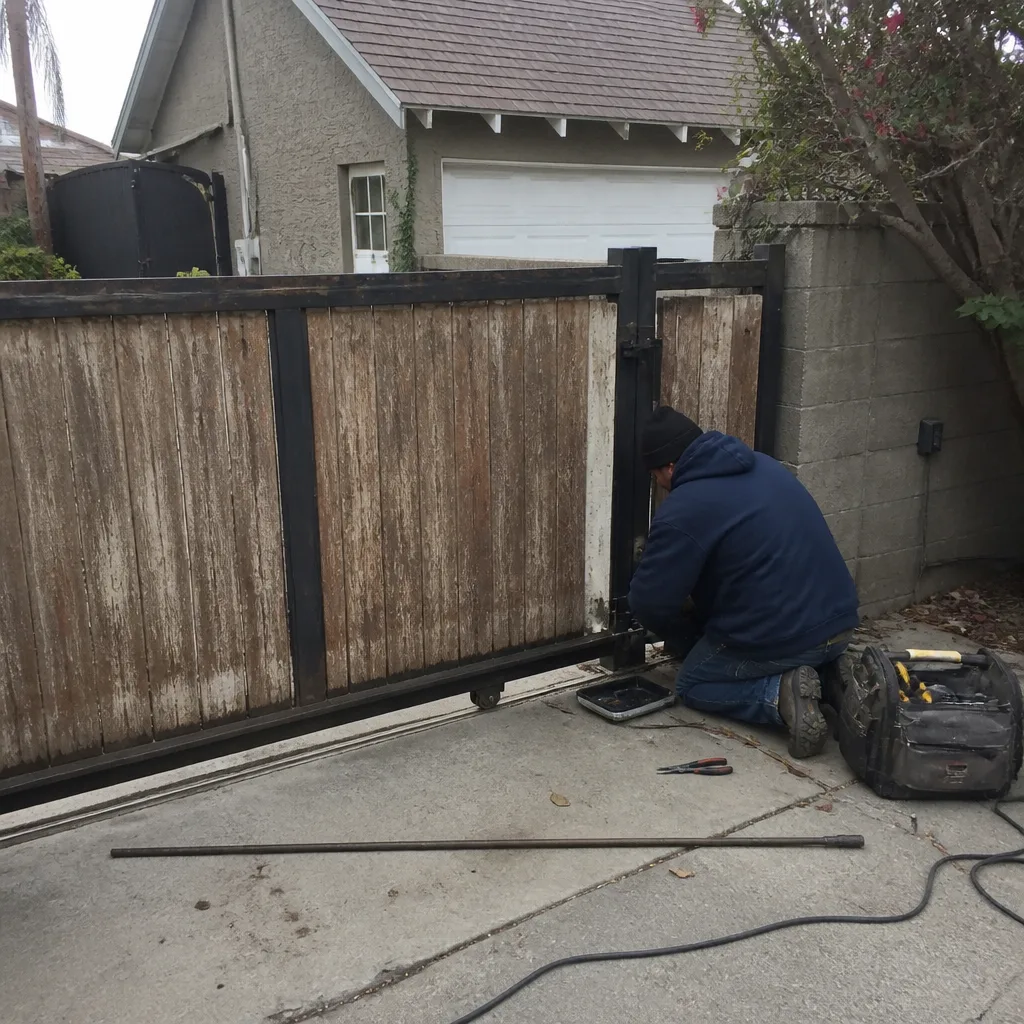 Before
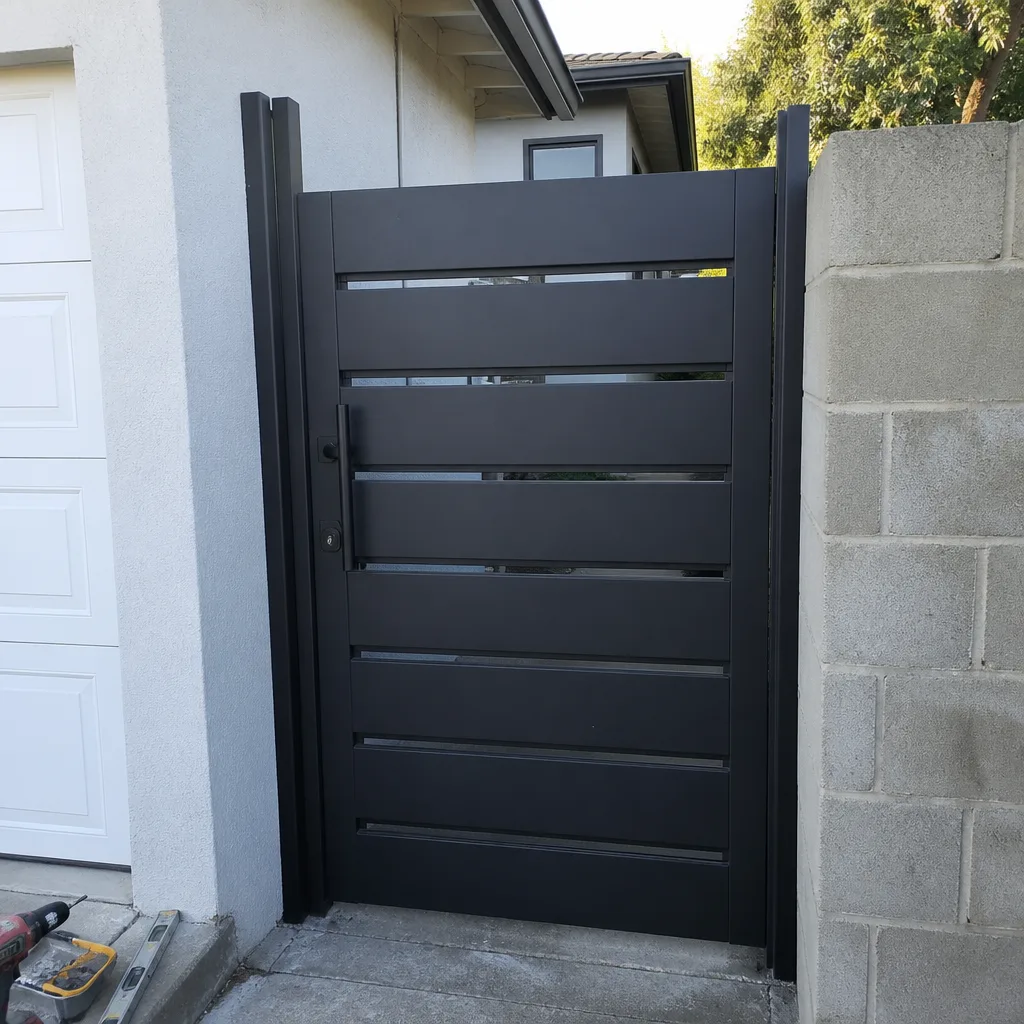 After
AfterGate Repair Maintenance Checklist for Venice Homeowners
A gate technician who tells you “everything looks good” after a maintenance visit has given you an opinion. A technician who hands you a photo of your limit-switch gap measurement alongside last year’s measurement has given you evidence. Those are not the same service. This guide is built for Venice homeowners who want the second kind. We’ll show you exactly what readings to record, what photographs to take, and what tolerances matter on a salt-air gate, so that every maintenance visit produces a documented baseline you can compare against next year.
Quick Answer
A useful Venice gate maintenance checklist records measurable data, not visual impressions: hinge gap in millimeters, limit-switch position, battery float voltage, and loop detector sensitivity. For most Venice properties, a professional inspection every 12 months is enough, but canal-adjacent homes should move to every 6 months because marine-layer moisture accelerates oxidation at conduit entry points and hinge pins. Between visits, homeowners should photograph the gate in both open and closed positions monthly and log any change in sound, speed, or stopping behavior.
Table of Contents
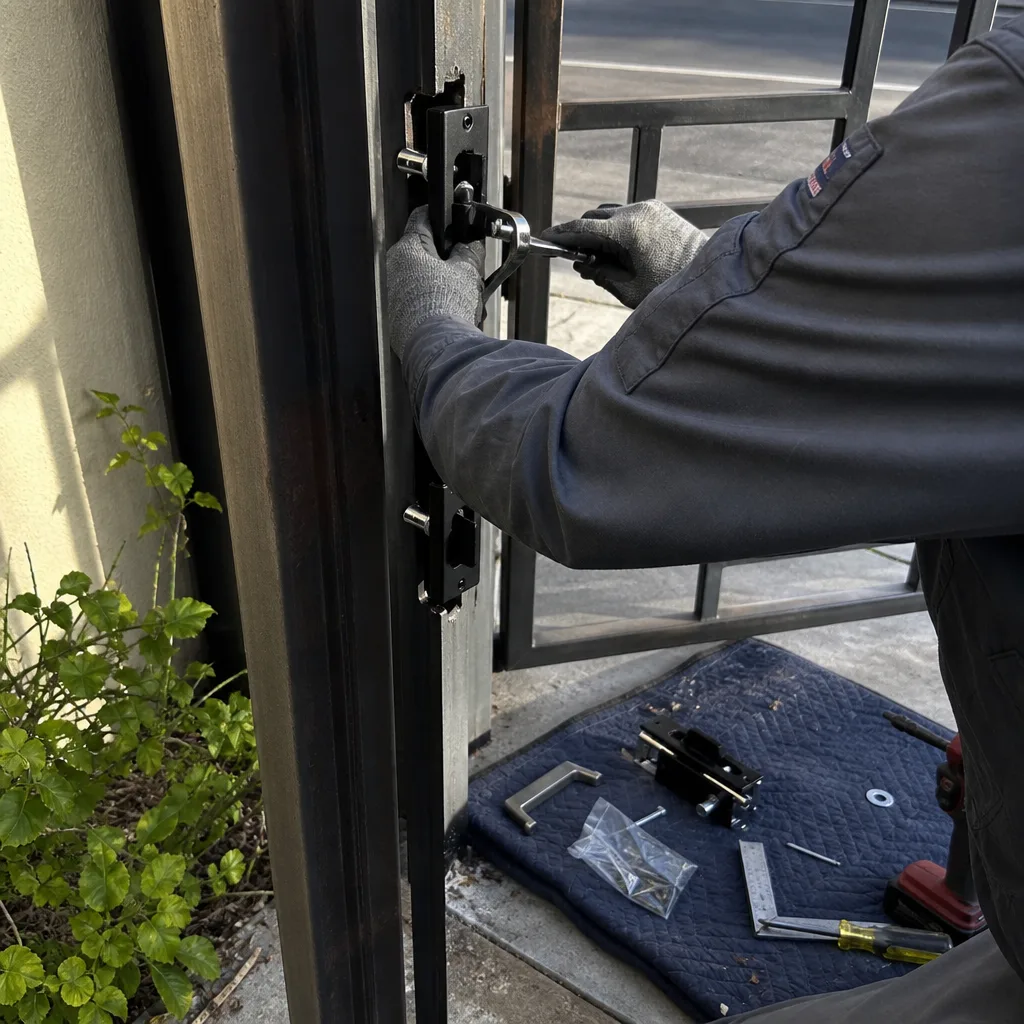
- Why Recorded Measurements Matter More Than Visual Checks
- The Baseline Reading That Starts Everything
- Hinge and Track Wear: What to Measure, Not Just Look At
- Limit-Switch Position: The Number Most Techs Skip
- Battery and Power: When Float Voltage Is the Only Truth
- Loop Detector Sensitivity: A Reading Most Homeowners Never See
- Venice-Specific Issues: Marine-Layer Moisture and Oxidation
- Building Your One-Page Gate Record
- Frequency Guide: Canal-Adjacent vs. Inland Venice
- What Homeowners Can Photograph and Log Between Visits
- Common Mistakes to Avoid
- When to Call a Professional
- Frequently Asked Questions
- The Bottom Line
BeforeAfterWhy Recorded Measurements Matter More Than Visual Checks
Here is the problem with most gate maintenance in Venice: the checklist says “inspect hinges” but never asks for a measurement. So the technician looks at the hinge, sees metal, and marks it OK. Next year, a different technician looks at the same hinge and sees the same metal. Neither one knows the hinge has been wearing at 0.8 millimeters per year because nobody wrote down a starting number. When the gate finally sags and the motor burns out, you pay for a repair that a $0.50 shim would have prevented two years earlier.
We have repaired more than 22,000 gates since 2014, and the pattern is consistent: gates fail slowly, then suddenly. The slow part is measurable. The sudden part is expensive. Hinge pins wear. Limit switches drift. Battery float voltages drop two-tenths of a volt at a time. By the time the failure is obvious enough to see with the naked eye, you are past maintenance and into our Gate Repair services.
A recorded maintenance checklist changes the math. It gives you a trend line. If your hinge gap was 1.2 mm last year and 2.1 mm this year, the hinge is not “still fine,” it is wearing at a rate that predicts failure in eighteen months. That is a maintenance decision you can plan for. Compare that to the homeowner who discovers the problem when the gate drops onto the track at 7:00 on a Tuesday morning and the car cannot get out.
This is why Vance Gate Repair Venice includes a documented photo record on every maintenance visit, as outlined in our Gate Repair Permits, Codes & Inspections in CA: What You Need to Know: what was found, what was adjusted, what was replaced. The record goes to the homeowner and into the job file. Next year’s technician starts from data, not from a shrug.
The Baseline Reading That Starts Everything
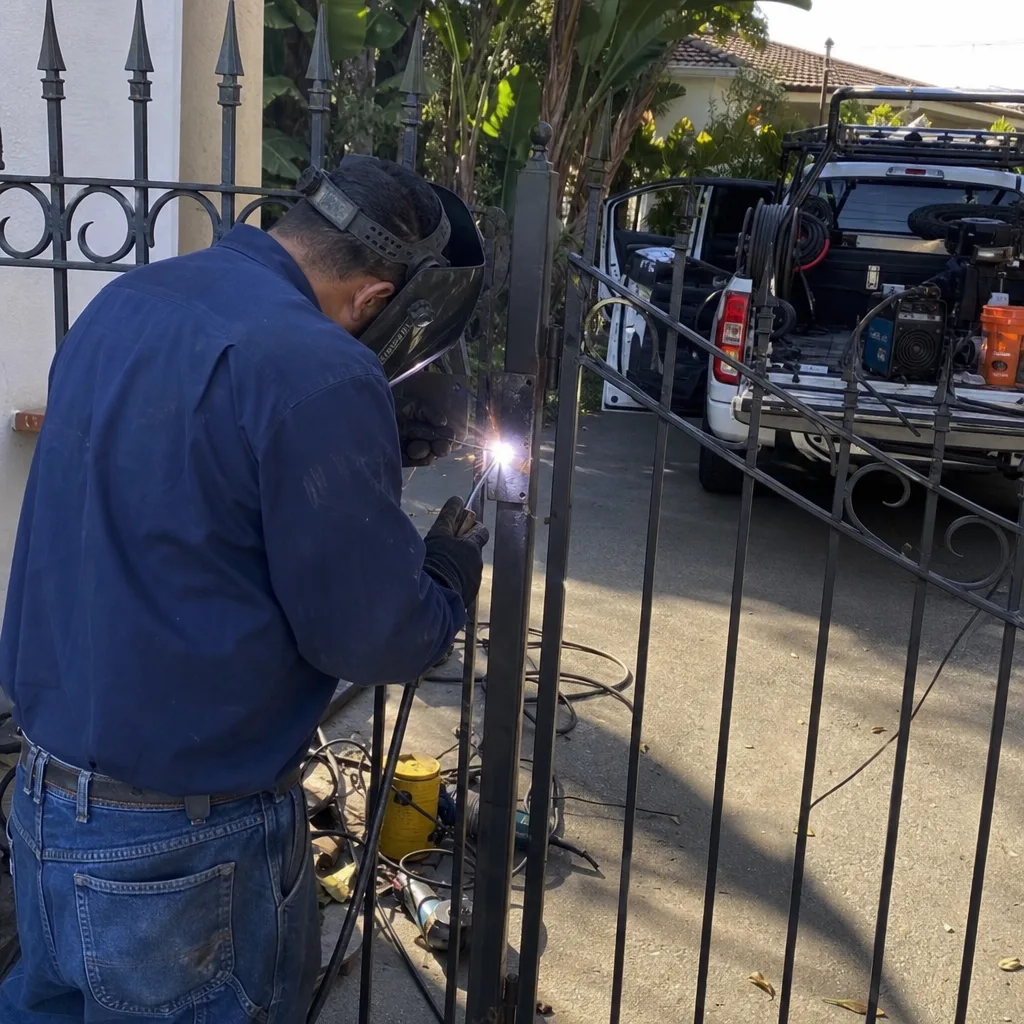
Before you can track wear, you need a starting point. A baseline is a set of measurements taken when the gate is known to be operating correctly, recorded with enough precision that any future change is detectable. The baseline is not “hinges look fine.” It is a written sheet of numbers.
Here is what a proper baseline includes for a typical Vance Gate Repair Venice home gate:
- Hinge gap measurement in millimeters at each hinge point, measured with a feeler gauge between the pin and the bushing
- Limit-switch position recorded as a degree reading or a photographed reference mark, so any drift is visible
- Battery float voltage read at the battery terminals with the charger running and the gate at rest
- Loop detector sensitivity setting, recorded from the detector face as a numeric value or dip-switch pattern
- Gate travel time from full open to full close, measured in seconds with a stopwatch
- Motor amp draw at startup and mid-travel, read from a clamp meter at the control board
- Photo-eye alignment status, documented with a photograph from the receiver’s perspective
Take the baseline when the gate is healthy. Do not wait until something feels wrong. A baseline taken on a worn gate documents a problem, not a starting point. If you do not have a baseline yet, the next maintenance visit is the right time to establish one. After that, every visit compares new numbers against the original sheet.
Store the baseline in the gate control panel box, inside a zippered plastic bag. Future technicians will find it. You will also want a copy in your phone. When we perform maintenance on a Venice gate, the client receives exactly this: a written record of every reading, a photo log, and a note on anything that changed since the last visit.
Hinge and Track Wear: What to Measure, Not Just Look At
Hinges fail from the inside out. The bushing inside the hinge barrel wears, the pin develops play, and the gate begins to sag at the latch end. The sag is visible eventually, but the early wear is not. A feeler gauge is.
Here is the step-by-step for checking hinge wear on a swing gate:
- With the gate in the fully closed position, lift the latch end of the gate vertically by hand. You should feel minimal movement.
- Insert a feeler gauge between the hinge pin and the hinge barrel at each hinge. Record the largest gap measurement in millimeters.
- Compare the reading to the previous maintenance visit. A change of more than 0.5 mm per year indicates accelerated bushing wear.
- If the gate is steel or wrought iron, check for red dust around the hinge pin. That is not rust from neglect; it is bushing material oxidizing as it wears.
- Photograph the hinge with the gap gauge in place, so the measurement is documented, not remembered.
On a sliding gate, the equivalent reading is the gap between the gate’s bottom guide rollers and the track. Use a feeler gauge here too. Venice sliding gates that sit close to the street pick up sand and debris in the track, and the guide rollers wear faster than the load-bearing rollers above. A changing gap at the bottom guide is a leading indicator of track misalignment.
Most swing-gate hinge replacements in Venice run between $280 and $520 per hinge, depending on the gate weight and whether the pin is seized. If the wear is caught before the gate sags, the fix is usually a bushing replacement under $150. The measurement is what tells you which situation you are in.
Limit-Switch Position: The Number Most Techs Skip
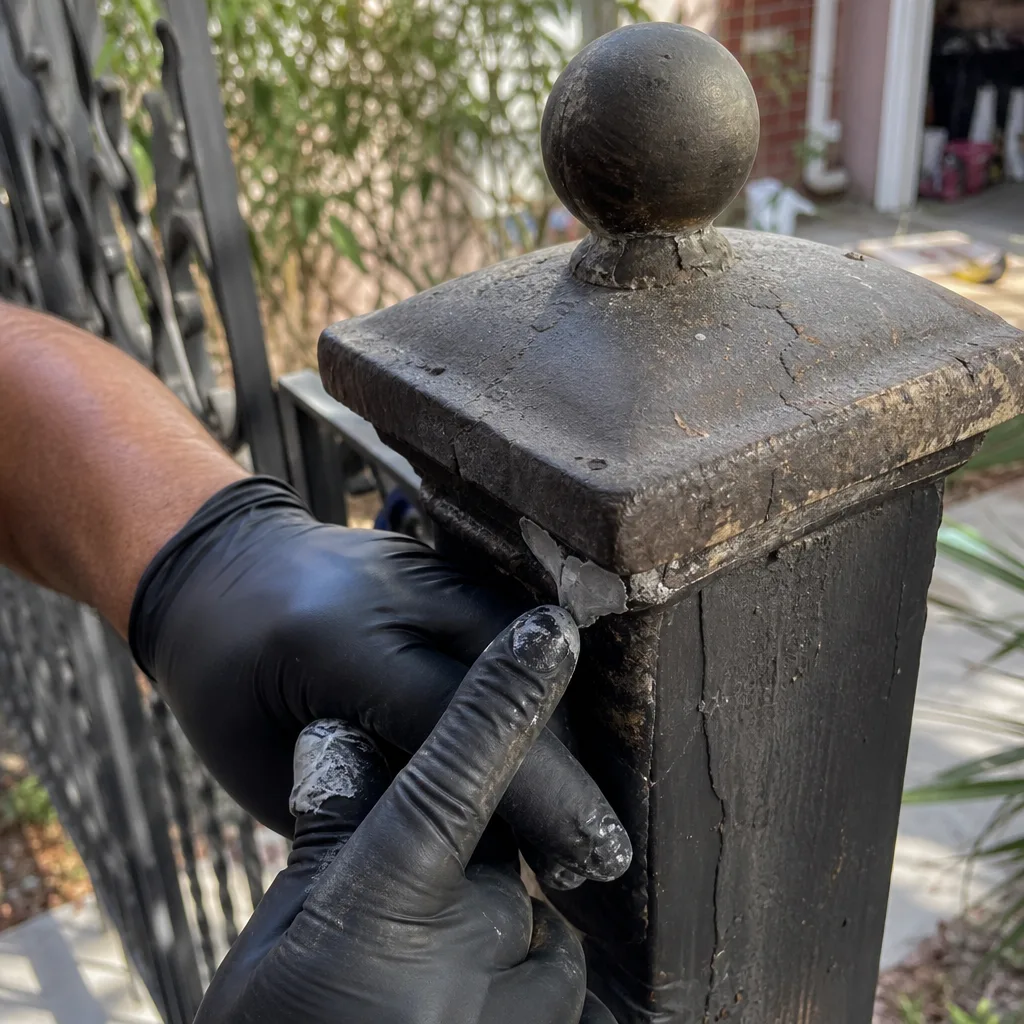
Every motorized gate has a limit switch that tells the motor where to stop. It is the difference between a gate that closes flush with the post and a gate that slams into it. Limit switches drift. They drift from vibration, from bumping, from the slow loosening of the set screw. Most technicians set the limit switch, confirm the gate stops in the right place, and never write down where the switch was set.
Here is why the position matters as a recorded number: when a limit switch drifts, the gate over-travels. At first, it is a quarter inch. The gate still works. A year later, the gate is hitting the post hard enough to pop a weld, and the motor is amp-spiking at every close because it is pushing against structure instead of stopping at the switch. A client in Venice had a swing gate that was closing 4 degrees past its post. The limit switch had drifted, the motor was drawing 9.2 amps at the end of travel instead of its normal 3.5, and the result was a burned control board. The repair cost $690. A five-minute limit-switch adjustment and a written position reading the year before would have cost nothing.
Record the limit-switch position as a photographed reference mark on the switch body, or as a numeric reading if the model provides one. When the next visit shows the mark has moved, you have caught drift early.
The safety note belongs here: limit switches exist to protect people and equipment. A gate that over-travels can injure someone standing at the gate’s closing edge. Do not open the operator housing to inspect a limit switch unless the motor is unplugged or the breaker is off. This is one of those components where the difference between a visual check and a safe check is a lockout, not a flashlight.
Battery and Power: When Float Voltage Is the Only Truth
Most Venice residential gates run on 12-volt DC motors powered by a battery that is kept charged by a trickle charger. The battery only gets called on hard during power outages, but it is the health of the charger and the battery that determines how the gate behaves day to day. A failing battery or a failing charger produces a gate that runs slower over time, sometimes so gradually the homeowner does not notice.
A float voltage reading tells you which component is failing. Here is the test:
- Turn off the AC power to the gate operator.
- Let the battery rest for 5 minutes, then read the voltage at the battery terminals with a multimeter. A healthy 12-volt battery shows 12.6 to 12.8 volts at rest.
- Turn the AC power back on and read the voltage again while the charger is running. A healthy charging system pushes 13.5 to 13.8 volts at the terminals.
- Trigger the gate to open. Watch the voltage during motor run. If it dips below 11.5 volts, the battery is weak or undersized.
Record all three readings: resting, charging, and under load. The pattern tells you what is failing. A low resting voltage with a normal charging voltage means the battery is worn. A normal resting voltage with a low charging voltage means the charger is failing. Both readings normal but a big dip under load means the battery has lost capacity.
For Venice homeowners with a gate motor and opener that runs on a Linear, Viking, Ghost Controls, or DoorKing system, the charging behavior is similar across brands, but the acceptable float voltage can vary slightly. The operator’s manual lists the manufacturer’s specified range. Write down the spec and the reading together.
Battery replacement for most residential gate operators runs between $95 and $220 installed, depending on the amp-hour rating. A failing charger board is typically $180 to $340. The voltage readings are what tell you which one to write on the estimate.
Loop Detector Sensitivity: A Reading Most Homeowners Never See
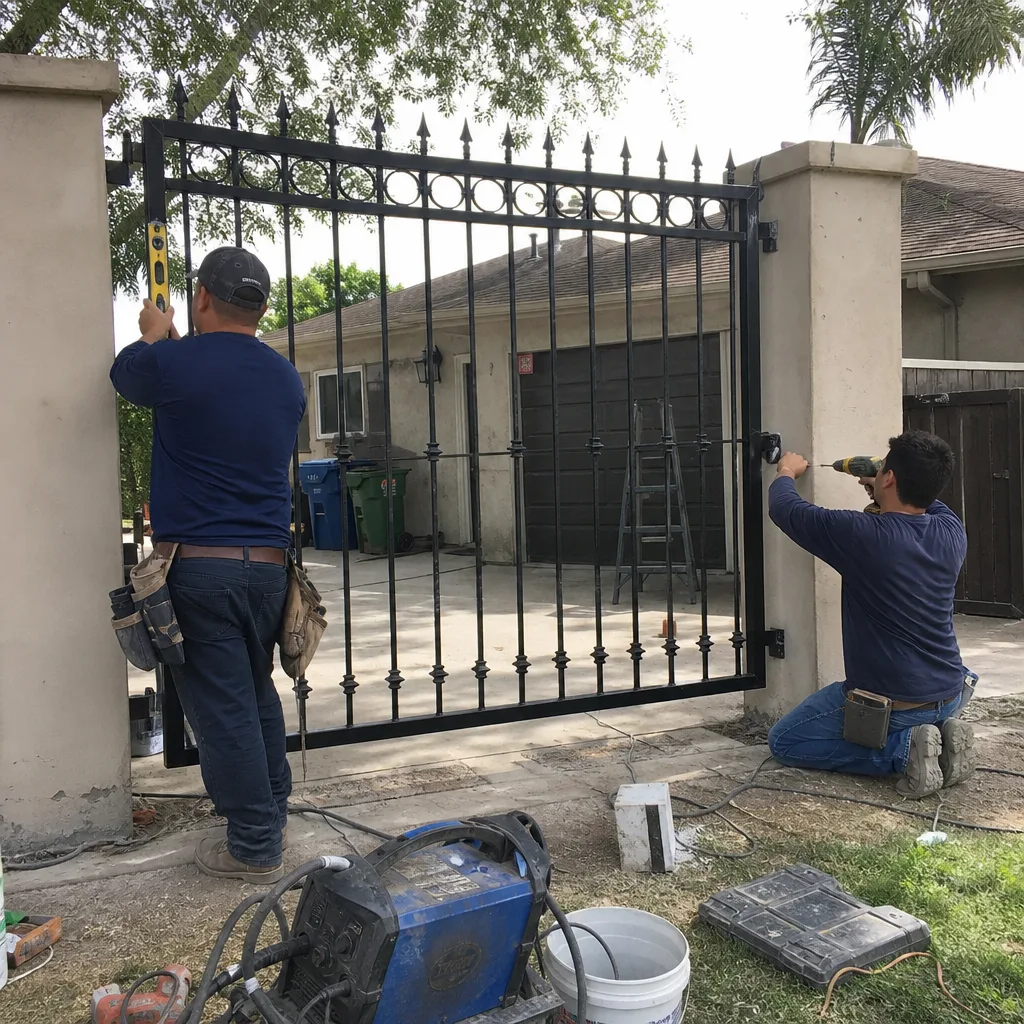
If your driveway gate opens automatically when a car pulls up, there is a loop detector involved. It is a copper wire buried in the asphalt, sensing the metal mass of a vehicle. The detector fires a signal to the operator, and the gate opens. Loop detector sensitivity controls how much metal it takes to trigger the gate.
When the sensitivity is set too high, the gate opens for bicycles, trash bins rolled down the driveway, and sometimes nothing at all. When it is set too low, the gate ignores small cars and the homeowner ends up sitting at the curb pressing the remote. Both conditions are fixable in five minutes, but only if the sensitivity setting is known.
The loop detector sits inside the gate control box, usually a small module with a digital readout or a set of dip switches. The sensitivity is a number, like 4 on a 1-to-10 scale, or a dip-switch pattern like 1-ON, 2-OFF, 3-ON. Record exactly that reading. Next visit, check it against the current setting. If the current setting has been changed, someone adjusted the detector. If the setting is the same but the gate behavior changed, the loop itself may be failing.
In Venice, loop failures happen for a specific reason: the water table is close to the surface, and loop wire jackets develop tiny breaches from soil movement and moisture ingress. A loop that tests fine in August can fail in February after wet weather. The sensitivity reading does not diagnose the loop failure directly, but it tells you whether someone has been compensating for a failing loop by cranking the sensitivity. That compensation is a clue.
Venice-Specific Issues: Marine-Layer Moisture and Oxidation
Venice gates age differently than gates in Sherman Oaks or Culver City. The marine layer is the reason. For months at a time, Venice air is saturated with salt moisture that condenses on metal surfaces every evening. The moisture finds its way into conduit entry points, terminal strips, hinge barrels, and any scratch in a powder-coat finish. Then the salt goes to work.
The single most overlooked maintenance item on a Venice gate is the conduit entry point. That is where the low-voltage and high-voltage wires enter the operator housing, usually through a plastic or metal fitting at the bottom or side of the box. In a dry climate, that fitting stays clean. In Venice, it collects corrosion crust. Over time, the corrosion creeps into the terminal block, and you get intermittent faults: the gate opens but does not close, the remote works from ten feet but not thirty, the gate jerks mid-travel.
Here is what to check at the conduit entry point:
- Corrosion crust around the fitting and where the wire jacket enters the housing. Photograph it. If it is present, clean it and apply anti-corrosion compound to the fitting threads.
- Terminal block oxidation inside the control box. Look for whitish or green powdery film on the screw terminals. Record which terminals are affected.
- Wire jacket cracking near the entry fitting. A cracked jacket is a moisture path. Wrap it with self-fusing silicone tape as an interim fix, then plan replacement.
- Cabinet seal condition. The rubber gasket around the enclosure door is the first line of defense. If it is cracked or flattened, moisture gets in.
- Label the sheet. Write the gate type (swing or slide), the operator brand and model, and the installation date if known. Include your property address.
- List the six core readings. Hinge gap, limit-switch position, battery float voltage, loop detector sensitivity, gate travel time in seconds, and motor amp draw. Each gets a line.
- Record the current reading and the date. This is your baseline row.
- Add a second column for the previous reading. Every future visit moves the current reading to the previous column and writes a new current number.
- Note any component changed. Part number, date, and reason in one line. Example: “Replaced charge board, DoorKing PCB-227, low float voltage.”
- Staple a photo log page. A small printout of hinge gaps, limit-switch marks, and conduit entry condition. Photos do not lie.
- Store the sheet in the control panel box inside a zippered plastic bag to keep it dry. Take a phone photo of the updated sheet every time it changes.
- Canal-adjacent properties (within one block of the canals): professional inspection and maintenance every 6 months. The humidity cycle in the canal zone accelerates corrosion on terminals, hinges, and conduit fittings measurably faster than inland areas. Batteries also charge less efficiently in persistently humid conditions.
- Ocean-side properties (within two blocks of the beach): professional inspection every 6 to 9 months. Salt deposition is the primary risk. Hinge pins and powder-coat edges need attention more often.
- Inland Venice properties (more than five blocks from the beach): professional inspection every 12 months is generally sufficient, with one homeowner-performed visual check at the six-month mark.
- Gates with high daily cycle counts (more than 20 open-close cycles per day): shorten the professional interval by 25 percent regardless of location. Cycle count wears hinges and limit switches faster than time does.
- Photograph the gate fully open and fully closed from the same position each month. The latch side is the most important angle. Compare photos month over month for sag.
- Note the sound. Record a five-second audio clip of the gate running. A growing squeak, grind, or rattle is data. Sound changes before visible changes.
- Time the gate travel. Use your phone stopwatch from full open to full close. A slowing gate is a battery, capacitor, or motor problem starting.
- Photograph the gate’s latch-side gap at the ground. If the gap between the gate bottom and the ground is changing, the gate is sagging or the post is moving.
- Log any remote control range change. If the remote works from the kitchen window this month but only from ten feet next month, write it down.
- Check for new rust blooms anywhere on the gate or operator housing. Photograph any new rust spot with a coin in frame for scale. A dime puts the size in context.
- Accepting a maintenance visit that produces no written readings. A technician who checks the gate, smiles, and says it looks fine has not performed maintenance. They have performed a presence check. Ask for numbers, and if the technician cannot produce them, find one who can.
- Ignoring the conduit entry point on a Venice gate. This is the number one overlooked failure point on ocean-side and canal-adjacent properties. A corroded entry fitting lets moisture into the control board area, and the damage accumulates quietly until the gate stops. Check it monthly and keep it clean.
- Recording nothing about battery voltage. A battery that is slowly dying produces a gate that slowly slows down. Without a voltage reading, you cannot tell whether the gate is slow because the motor is failing or because the battery is dropping. The voltage reading separates those two diagnoses.
- Lubricating hinges and track without measuring wear first. Grease hides hinge wear. If you lubricate before you measure, you cannot get a clean feeler gauge reading, and you have just covered up the one piece of data that would tell you the hinge needed replacement. Measure, record, then lubricate.
- Skipping the loop detector sensitivity check. A gate that opens randomly or ignores small cars is often a sensitivity issue, not a motor issue. If nobody writes down the sensitivity setting, nobody can tell whether the problem is drift, a bad loop, or a failing detector.
- Assuming canal-adjacent and inland Venice gates need the same schedule. They do not. The environment is different by measurable degrees. If your gate sits within a block of the canals, double the inspection frequency.
- Storing the maintenance record somewhere other than the panel box. The panel box is where future technicians will look. A maintenance record in a desk drawer in the house is a maintenance record nobody will ever see.
Canal-adjacent Venice properties get all of this worse. Homes within a block of the canals see standing moisture in the control cabinet during winter months. We have opened boxes in February that had visible condensation on the inside of the door. The fix is not glamorous: a new gasket, a desiccant pack replaced every visit, and a waterproof cord grip at the conduit entry. Total cost, typically $60 to $120 in parts, and it prevents hundreds in terminal and board repairs later.
If your gate operator is a Viking or Ghost Controls unit that has been in service on a canal-adjacent property for more than five years, the control board’s terminal strip is the first part to check at every maintenance visit. We see more corrosion-related intermittent faults on those boards in Venice than on any other component.
Building Your One-Page Gate Record
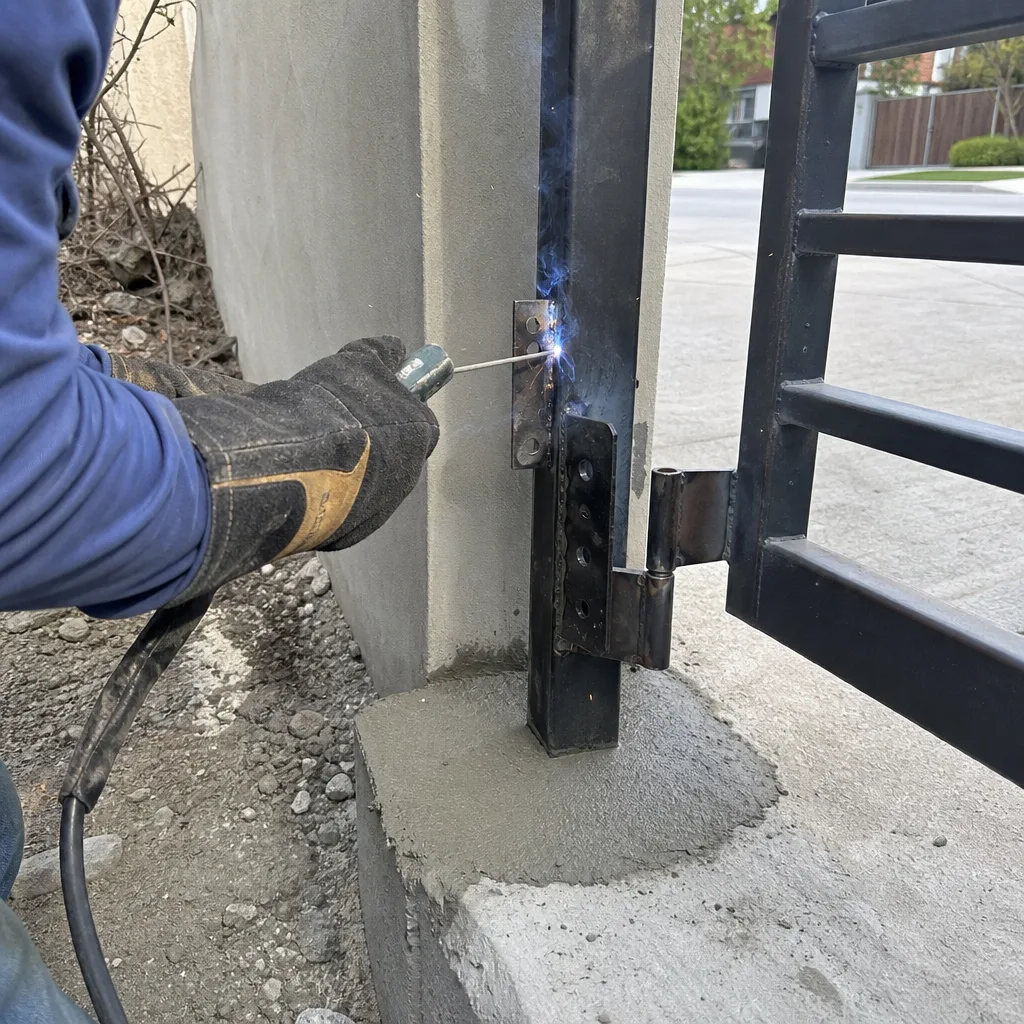
The most valuable thing you can own as a Venice gate owner is a single sheet of paper with every maintenance reading on it. Store it in the control panel box and every future technician, from any company, inherits a complete history. The record is not complicated. It is one page.
Here is the step-by-step to create your one-page gate record:
When we finish a maintenance visit, the homeowner gets exactly this record. It is part of the written documentation under the Haven Standard that Vance Gate Repair Venice follows, with Gate Repair Warning Signs: A Venice Homeowner’s Reference Guide offering additional context: a written scope, a written price, and photographic evidence on every visit. Clause 4 of that standard covers the evidence part. It is not a marketing promise. It is a work habit.
If you already have a maintenance provider, hand them the one-page record at the start of the visit and ask them to fill in the readings before they leave. A technician who is willing to record numbers is a technician who is not guessing. A technician who resists recording numbers is telling you something.
Frequency Guide: Canal-Adjacent vs. Inland Venice
Not all Venice gates face the same environment. A gate on a hill near Abbot Kinney two blocks from the beach sees more salt exposure than a gate five blocks inland. A gate on a canal-front property sees humidity and standing moisture that an inland gate never experiences. Maintenance frequency should be set by exposure, not by the calendar.
Here is the frequency guide we recommend for Venice:
The canal-adjacent recommendation is not conservative caution; it is measured observation. We have seen terminal strip corrosion on canal-adjacent DoorKing operators that was absent on identical units three blocks away. The difference was moisture, not brand, not installation quality, not age. If your gate sits near the canals, the six-month interval is the one that matches the environment. Gate repair in Venice almost always costs more than the maintenance that would have prevented it.
What Homeowners Can Photograph and Log Between Visits
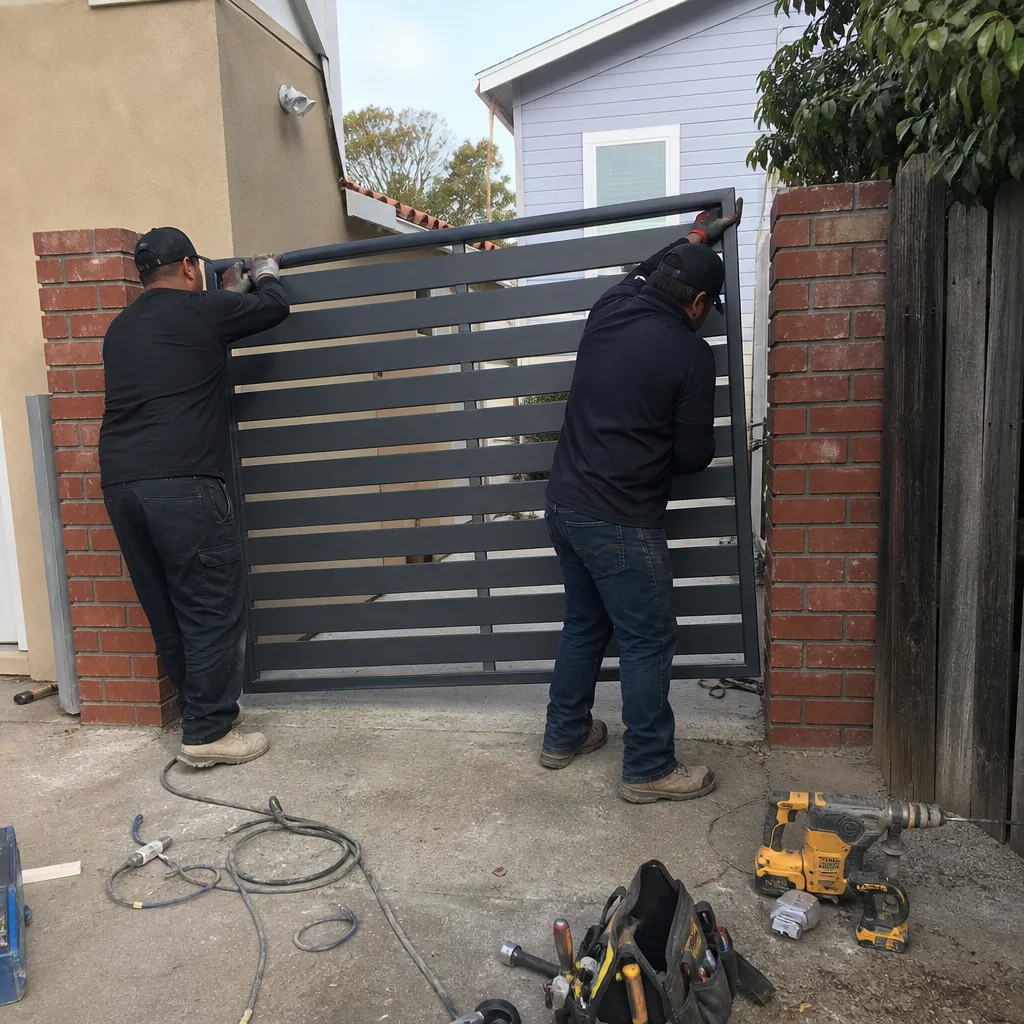
Between professional visits, you should be building a history. The more data points between inspections, the more precisely a future technician can pinpoint when a problem started. You do not need a multimeter or a feeler gauge to gather useful evidence. You need a phone camera and five minutes a month.
Here is the monthly homeowner log:
Keep these logs in a dedicated folder on your phone. When a technician arrives, hand over the folder. The data tells them what changed and when. It turns a diagnosis into a confirmation.
This is the same documentation habit that Adrian Vance brought to residential gate installation in Venice after years of commercial access-control work. On a commercial site, no technician would show up without the last service records. On a residential gate, most homeowners cannot produce a single reading. The monthly log fixes that asymmetry.
Common Mistakes to Avoid
When to Call a Professional
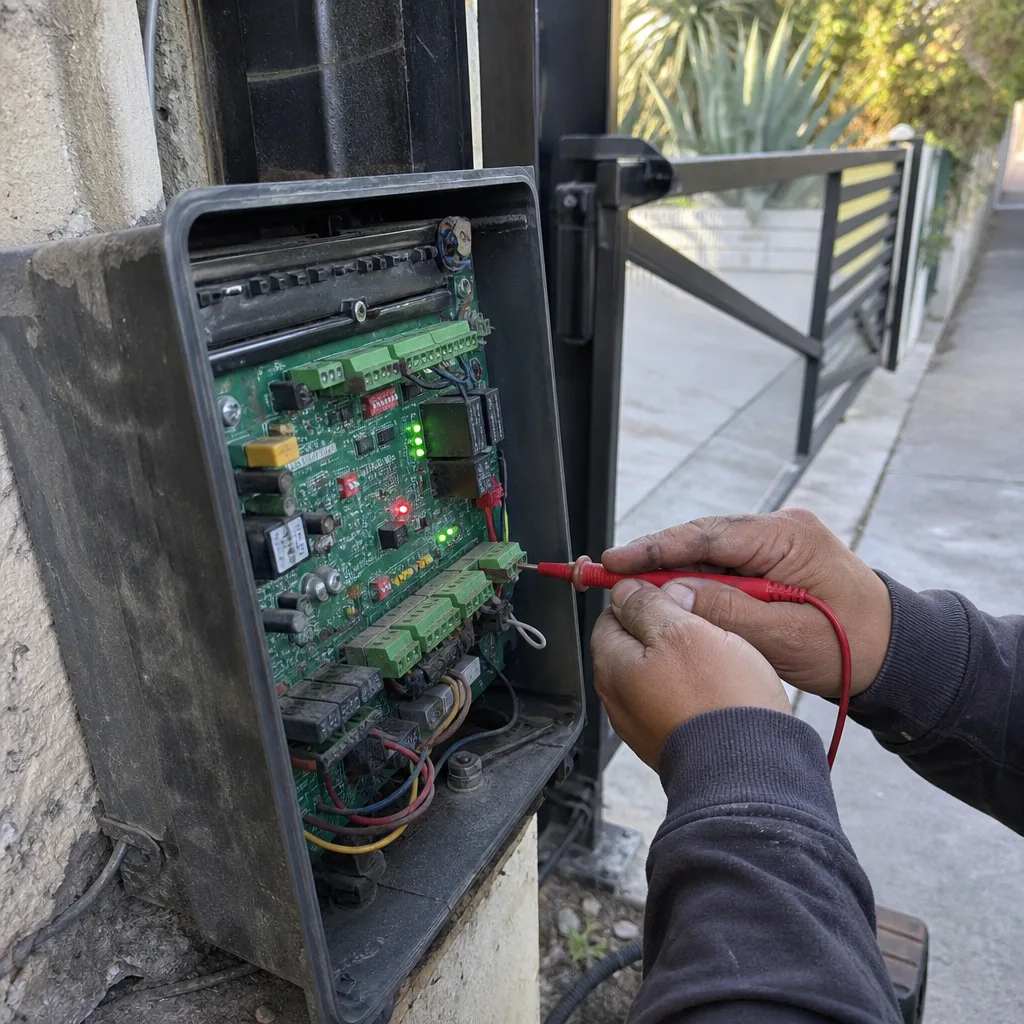
Some items on this checklist are safe for a homeowner to log, and some are not. Do not open a gate operator housing unless the breaker is off and the motor is unplugged. Do not attempt to adjust a limit switch or a loop detector without training. The springs on a swing gate, the tension system on a slide gate, and the pinch points at the gate edge can cause serious injury. When in doubt, the work belongs to a trained technician.
Call a professional when: the gate is sagging visibly, the gate jerks or stutters mid-travel, the remote range has dropped suddenly, the gate reverses unexpectedly, or the control box shows any corrosion at the terminal strip. These are not maintenance items. These are repair items with a safety component.
Vance Gate Repair Venice offers free estimates on gate maintenance and repair in Venice. Call (213) 267-6777 and a live person answers, any time, day or night. The written price comes before any work starts, under the Haven Standard, so there is no surprise invoice at the end.
Frequently Asked Questions
A professional gate inspection and maintenance visit in Venice typically runs between $120 and $240, depending on the gate type, the operator brand, and the number of components adjusted. If parts are required, they are quoted in writing before any work begins. For an exact quote on your gate, call (213) 267-6777. Estimates are free.
For most inland Venice gates, once every 12 months is enough. For canal-adjacent properties within one block of the canals, or ocean-side homes within two blocks of the beach, every 6 months is the correct interval. High-cycle gates that run more than 20 times per day also need more frequent visits regardless of location.
A useful gate maintenance record includes six core measurements: hinge gap, limit-switch position, battery float voltage, loop detector sensitivity, gate travel time, and motor amp draw. It should also include the date of the reading, the previous reading for comparison, and a note on any component changed during the visit. Photos of each measured point make the record stronger.
You can log monthly observations safely: photograph the gate, time the travel, note sound changes, and check for new rust. Anything involving the operator housing, limit switches, loop detectors, or spring tension should be left to a trained technician. The safety risk of opening a powered operator outweighs the money saved.
The most common Venice-specific gate problem is corrosion at the conduit entry point caused by marine-layer moisture. The salt air condenses on metal surfaces at night, the moisture enters through the wire entry fitting, and the terminal strip inside the control box corrodes. Canal-adjacent properties see the worst of it.
Yes. Every Vance Gate Repair Venice maintenance visit includes a documented photo record: what was found, what was adjusted, what was replaced. The record goes to the homeowner and into the job file. The written price is delivered before work begins, under the Haven Standard. Call (213) 267-6777 to schedule a free estimate.
The Bottom Line
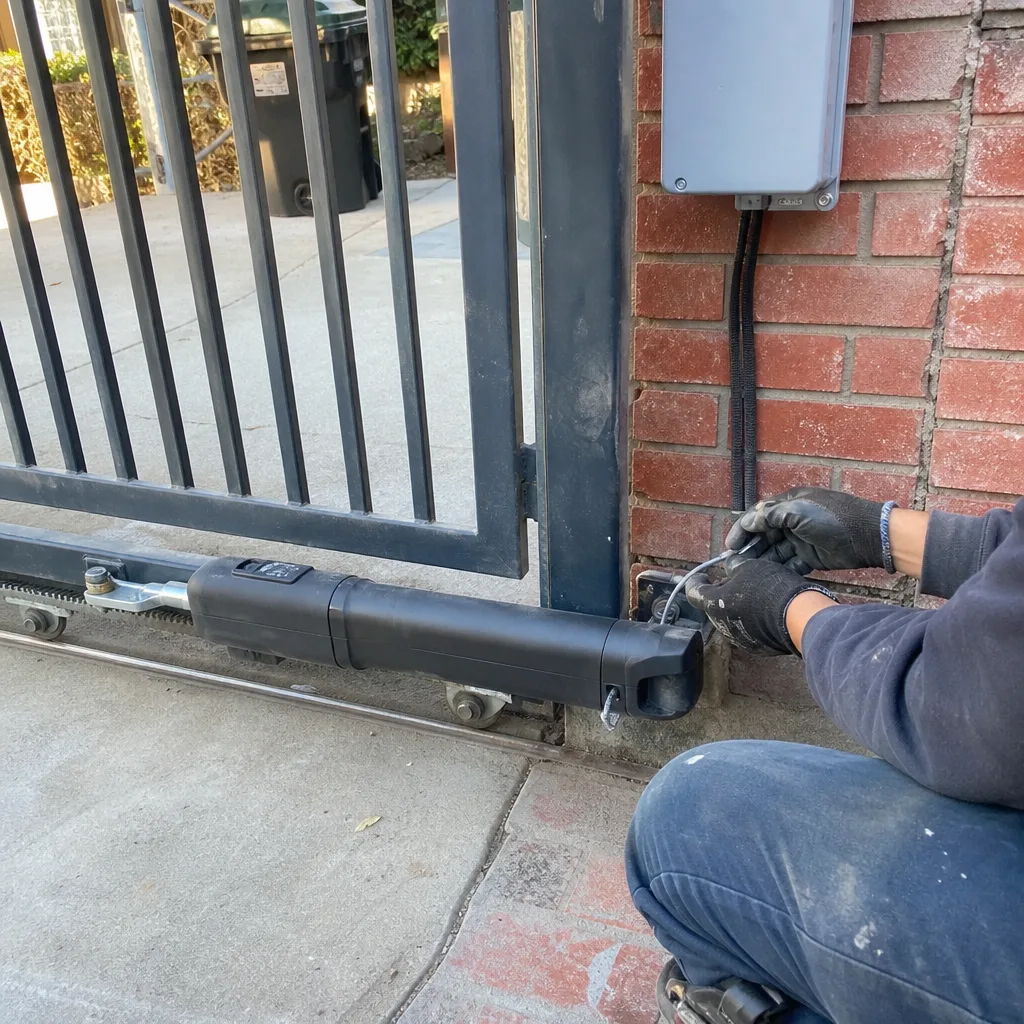
A Venice gate maintenance checklist is only worth the measurements it records. Visual inspections without numbers produce opinions, and opinions do not help you predict failures. Record your hinge gap, limit-switch position, battery float voltage, and loop detector sensitivity. And check the conduit entry point on every visit, more often if you live near the canals. The goal is a one-page record that lives in the panel box and tells any future technician exactly what has changed. When the record exists, maintenance stops being a ritual and becomes a tool. That is the difference between a gate that fails suddenly and a gate that tells you it is failing, months in advance.
Written by Adrian Vance, Owner at Vance Gate Repair Venice, serving Venice since 2014.