
Free on-site gate assessment - hinges, posts, and your LiftMaster or Nice gate operator checked before anything is quoted
The assessment is free and the quote is the invoice.
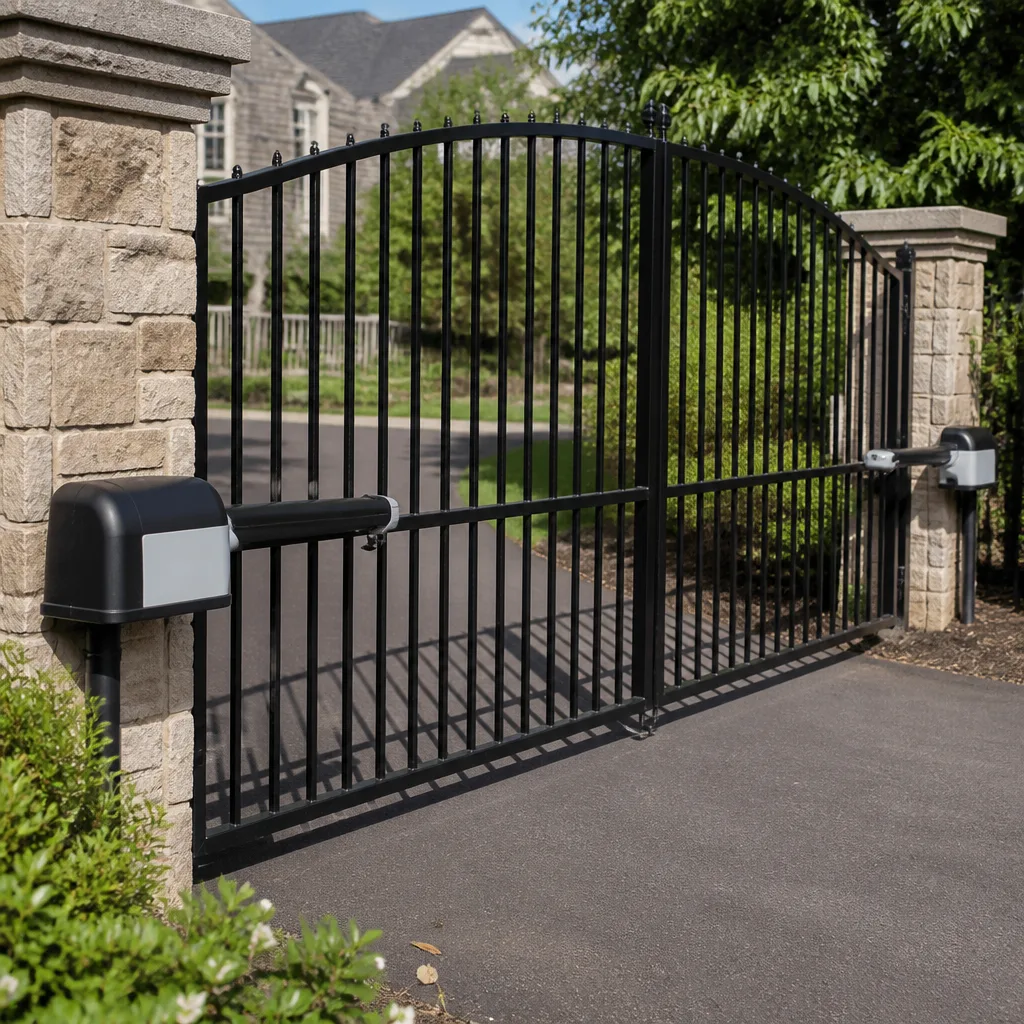
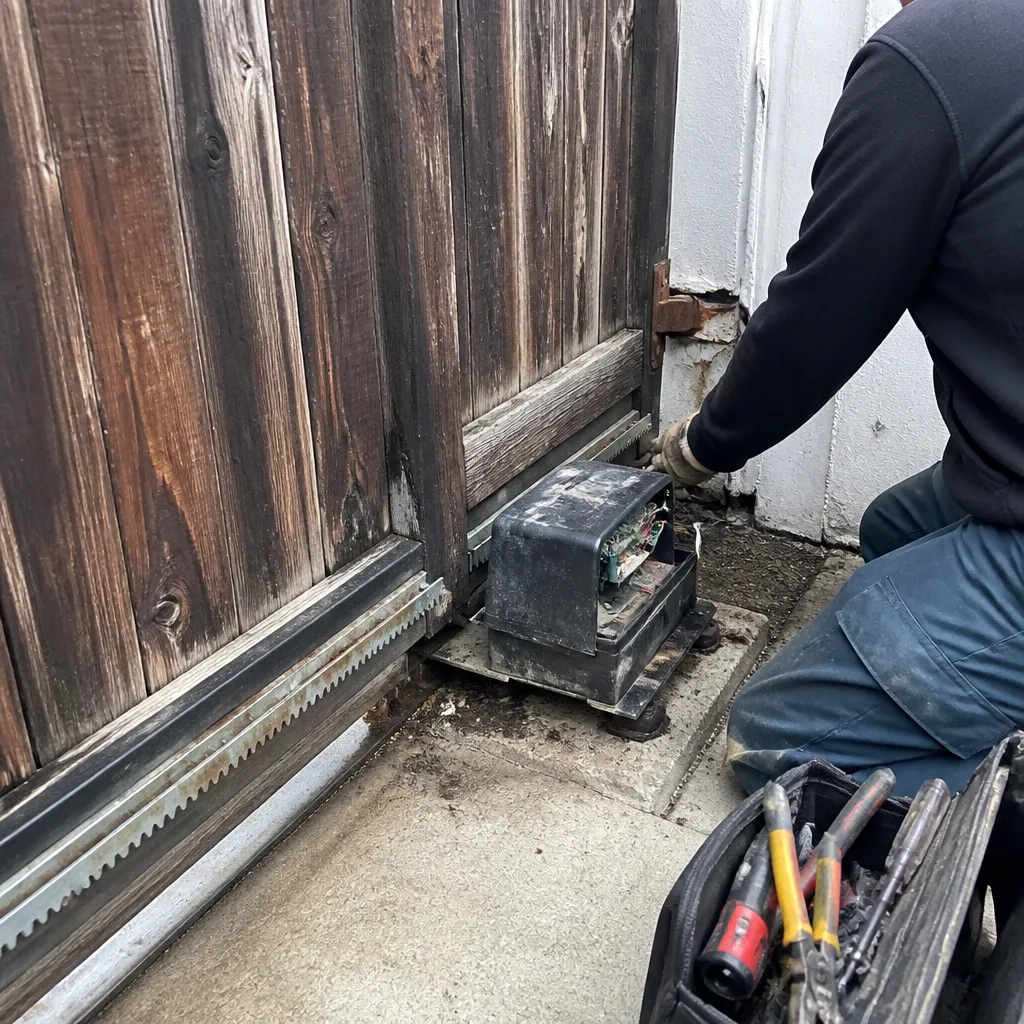 Before
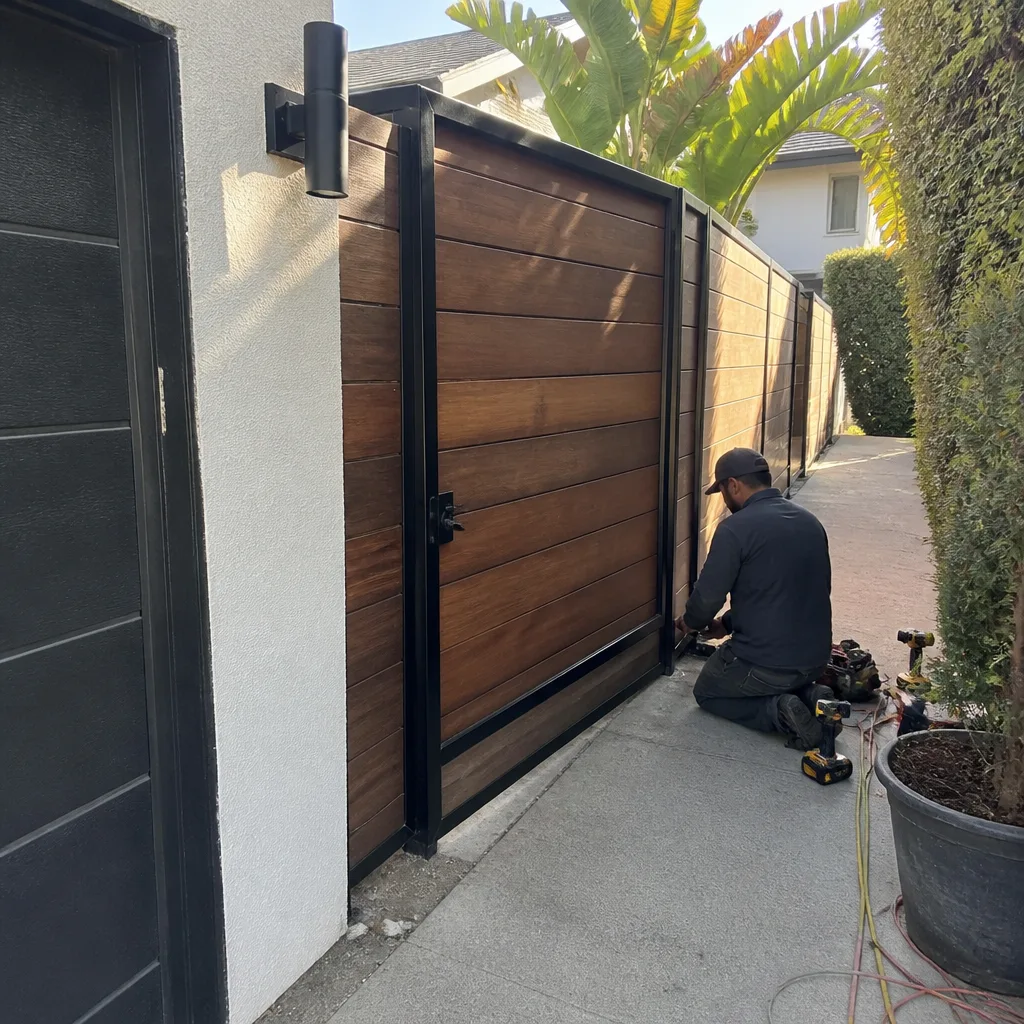 After
After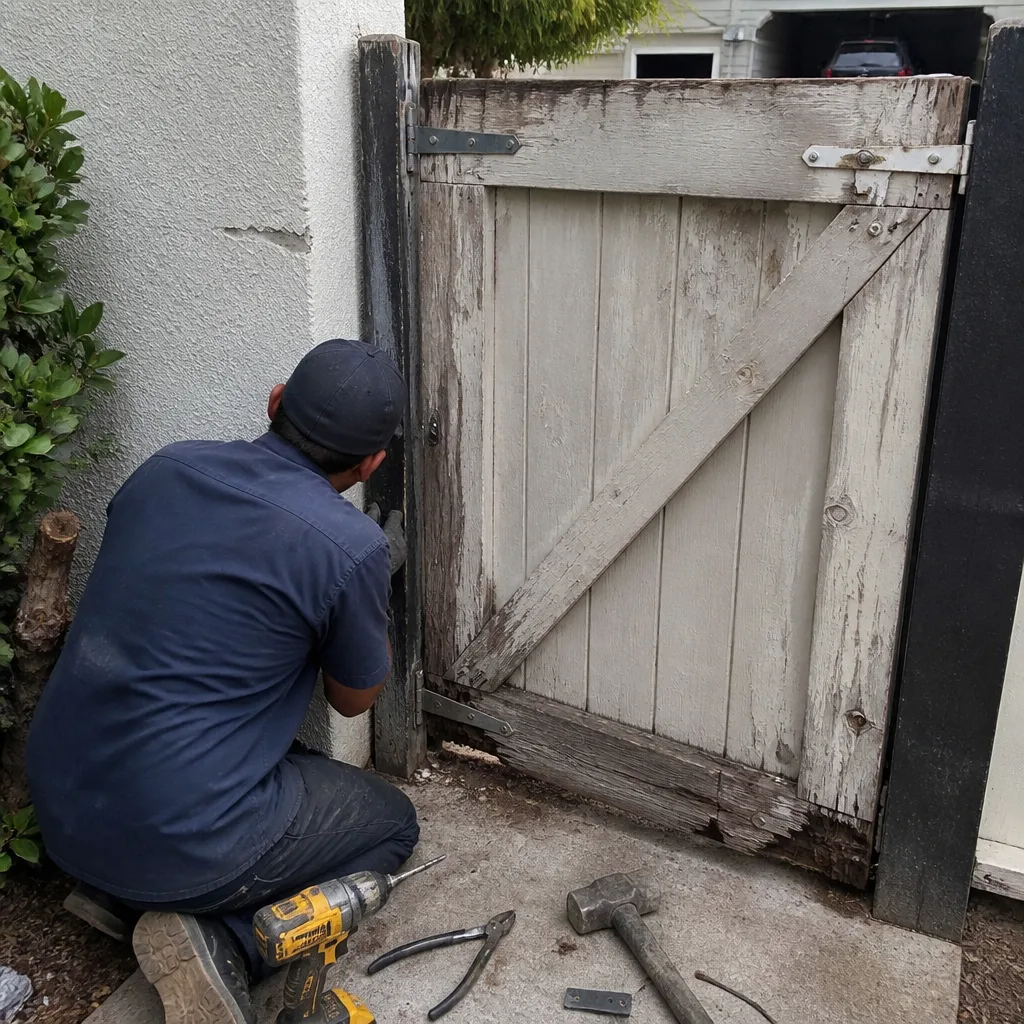 Before
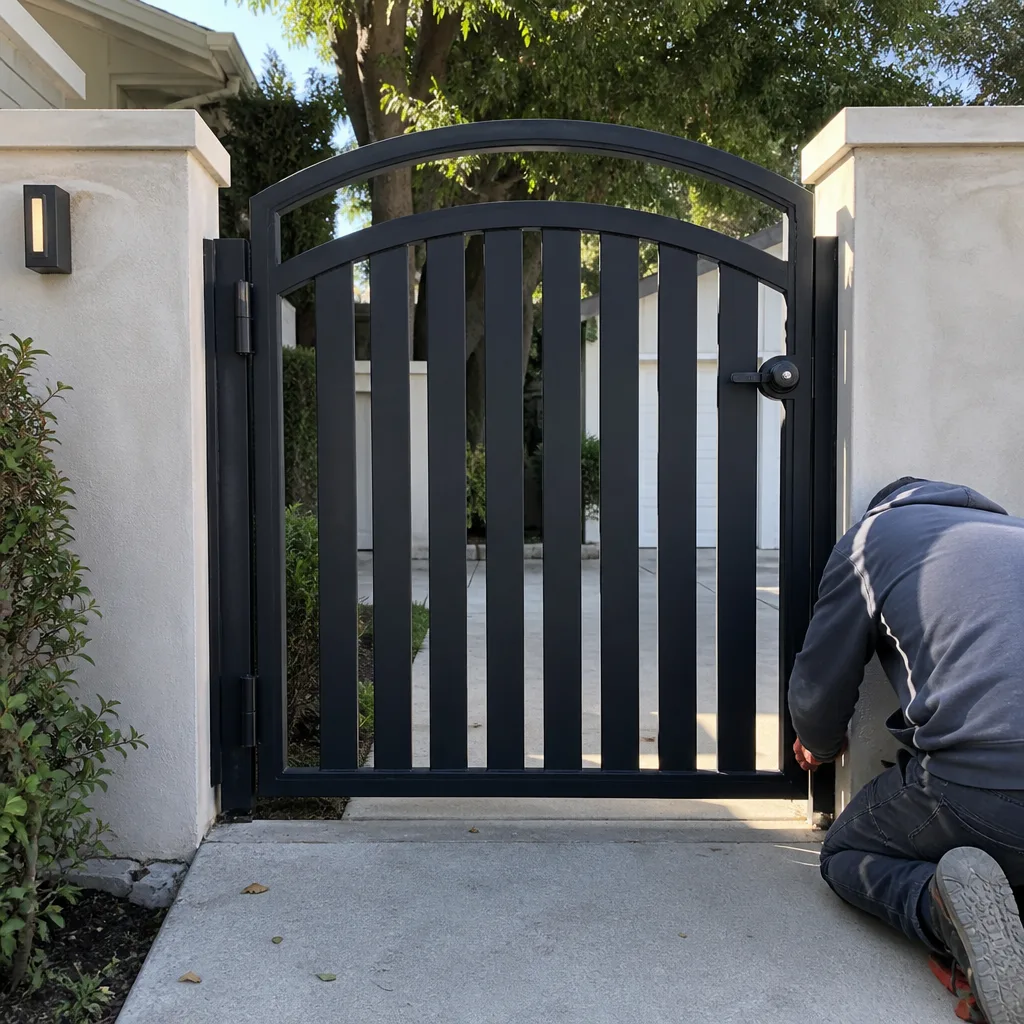 After
After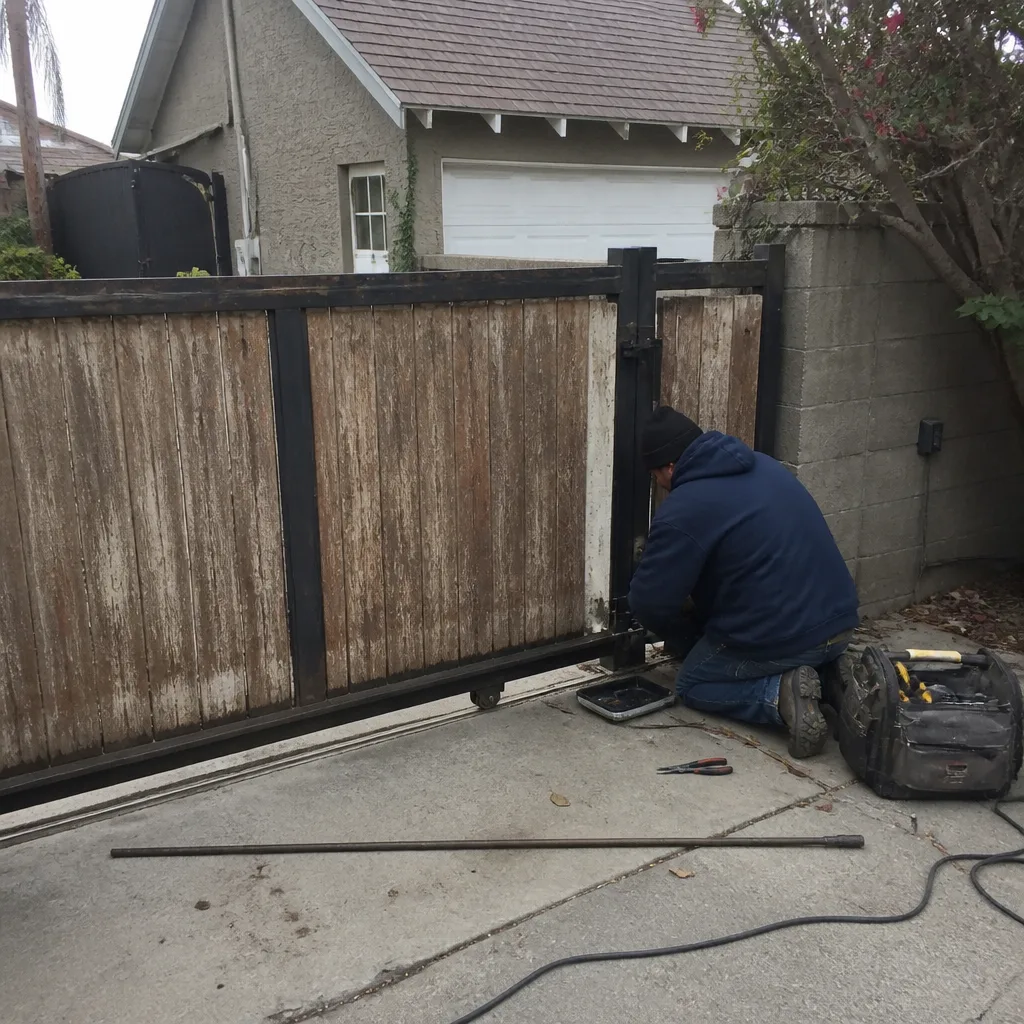 Before
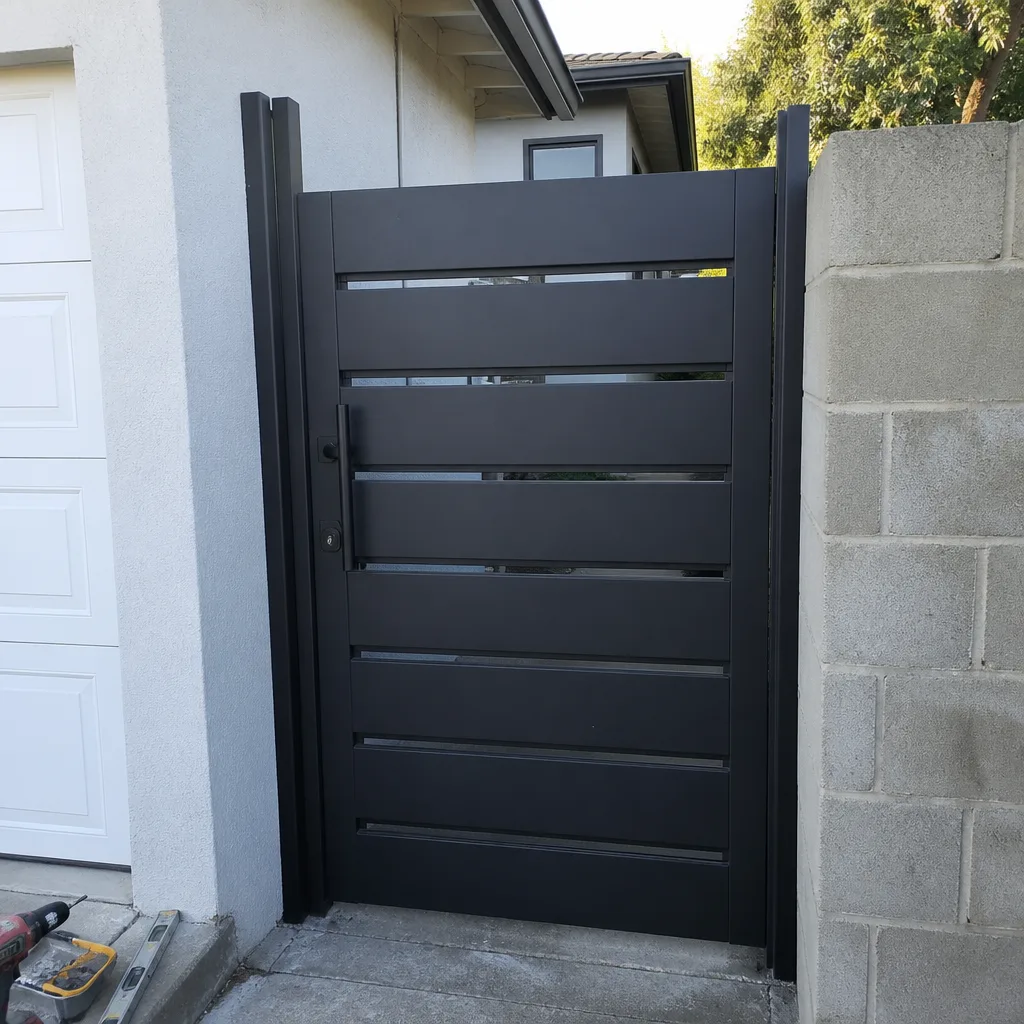 After
AfterLinear Gate Motor Replacement: The Venice Owner’s Guide
A Linear gate motor replacement in Venice typically runs $950 to $2,100 installed, depending on which Linear model is on the property and whether the arm bracket and mounting plate can be reused. We stock Linear-compatible motors and swing-arm assemblies on our trucks, so in most cases we can swap a failed unit the same day we diagnose it. Most people figure out the motor is gone when the gate stops mid-travel, hums without moving, or the control board shows a fault code the manual says means “replace operator.”
The salt air out here is a real factor. Linear motors last years less within a half-mile of the canals than they do up in Mar Vista or inland, because the circuit board and limit-switch contacts corrode faster. We’ll name exactly what failed, show you the photo, and hand you a written price before any part gets ordered.
Which Linear Models This Applies To
We replace motors across the Linear swing-gate line: the LRA actuator series, the APeX commercial swing operators, the older LS series, and the slide-gate operators Linear built their reputation on, including the SL and CSW lines. The important thing isn’t the brochure name, it’s the spec plate. Every Linear motor has a data label with the model number, voltage (most residential Venice gates run 115V or 24V DC), and a serial number that tells us the production year.
Here’s the compatibility gotcha most people don’t catch: Linear changed the mounting bolt pattern on the LRA line in 2018. A motor built before that change won’t drop onto a newer bracket without a steel adapter plate, and a newer motor won’t sit flush on the old one. We measure the plate before we quote, because the difference of half an inch is the difference between a two-hour swap and a half-day fabrication job.
OEM Linear parts matter more on the control board side than on the mechanical motor side. Linear boards and motors speak a proprietary limit-setting language, so a generic aftermarket motor often won’t respond to the existing board’s travel programming. For the motor itself, we stock OEM and quality aftermarket equivalents where they’re genuinely equivalent (same stroke length, same force rating, same duty cycle). If aftermarket means compromising the safety-edge response time, we won’t spec it.
Signs Your Linear Gate Motor Replacement Is Failing
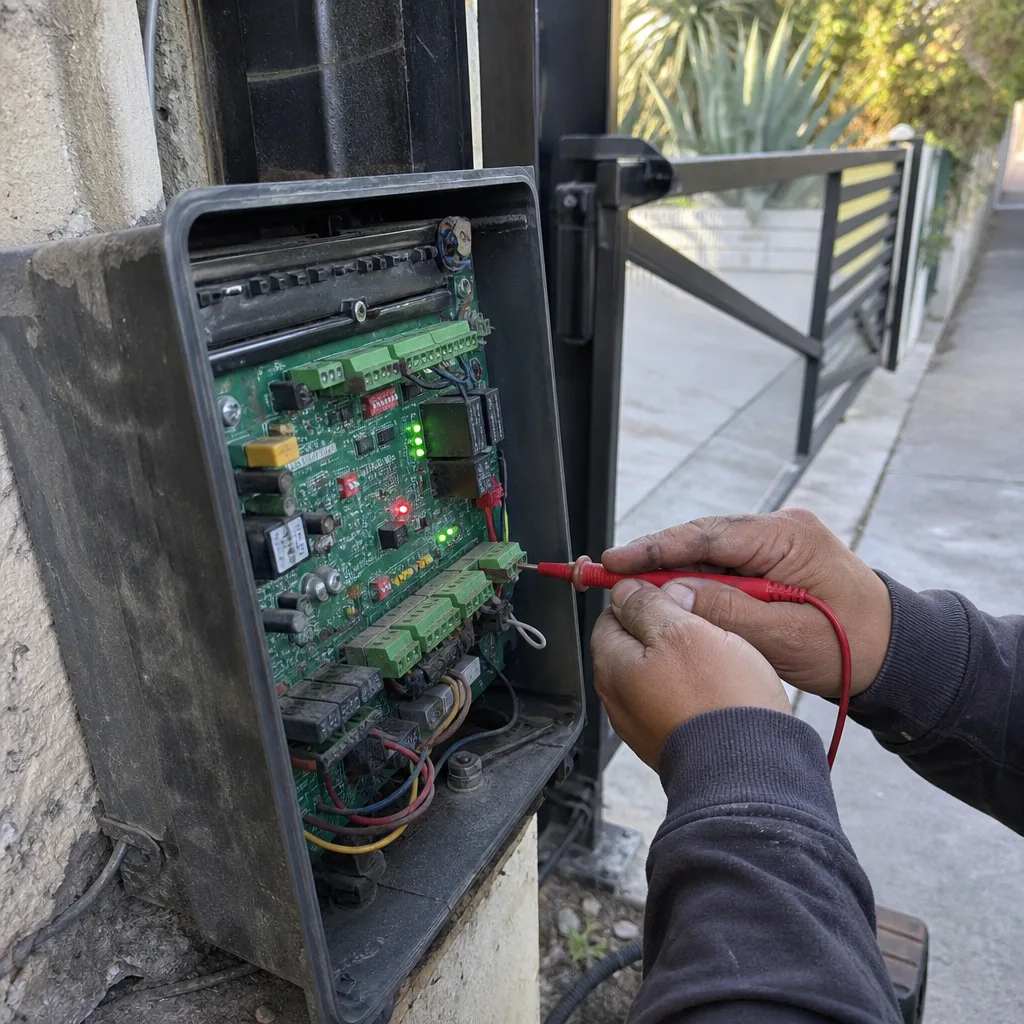
- Humming without movement. The motor capacitor is dead or the internal gear train has stripped. On Linear LRA actuators, the nylon reduction gear is the first thing to fail when the gate gets pushed by wind or a person while it’s moving. This is a motor replacement, not a board issue.
- Gate stops mid-travel and reverses. The current-sensing circuit is tripping because the motor is drawing too many amps. That’s usually a failing bearing or a bent arm causing mechanical drag. The motor is working harder than it was designed to, and it’s burning itself out slowly.
- Erratic limit behavior: gate overtravels or stops short. The limit-switch contacts inside the motor are pitted or corroded. On Venice properties near the beach, we see this constantly. The motor technically still works, but it can’t remember where “closed” is, which is a safety problem more than a convenience one.
- Intermittent operation: works one cycle, dead the next. This is often heat-related. The thermal overload on the motor keeps tripping because the motor windings are degrading. On 90-degree Venice afternoons with a heavy gate, an old Linear motor will overheat and refuse to run until it cools down.
- Board shows a “motor fault” or “overload” code repeatedly. The board is telling you the motor is drawing abnormal current. Reset it, and it’ll come back within days. That’s the motor telling you it’s done.
BeforeAfterReplacement Cost & What’s Included
Here’s the honest range for Venice: most residential Linear gate motor replacements run $950 to $2,100 installed. The spread comes from the motor type (a basic LS slide operator costs less than an APeX commercial swing unit), whether we’re reusing the existing arm bracket or fabricating a new one, and whether the control board needs to be updated to match the new motor.
What you’re paying for, line by line:
- Motor and drive components: $400 to $1,150 depending on the Linear model and whether we’re installing OEM or a proven aftermarket equivalent.
- Labor and setup: $350 to $600. That includes mounting, thrust adjustment, limit-setting, and testing the safety sensors.
- Arm, bracket, or adapter plate work: $100 to $350 if the old hardware can’t be reused or we’re retrofitting across model years.
- Board programming or replacement: $0 to $250 if the existing board is compatible; more if the board has to be replaced to talk to the new motor.
Every quote is written and handed to you before work starts, and the price doesn’t change when the invoice arrives. That’s Haven Standard Clause 1, and we’ve held it through every one of the 22,000-plus gates we’ve worked on since 2014. The work carries our 365-Day Done Right Promise: if the replacement isn’t right within a year, we make it right at no charge.
DIY or Call Us?
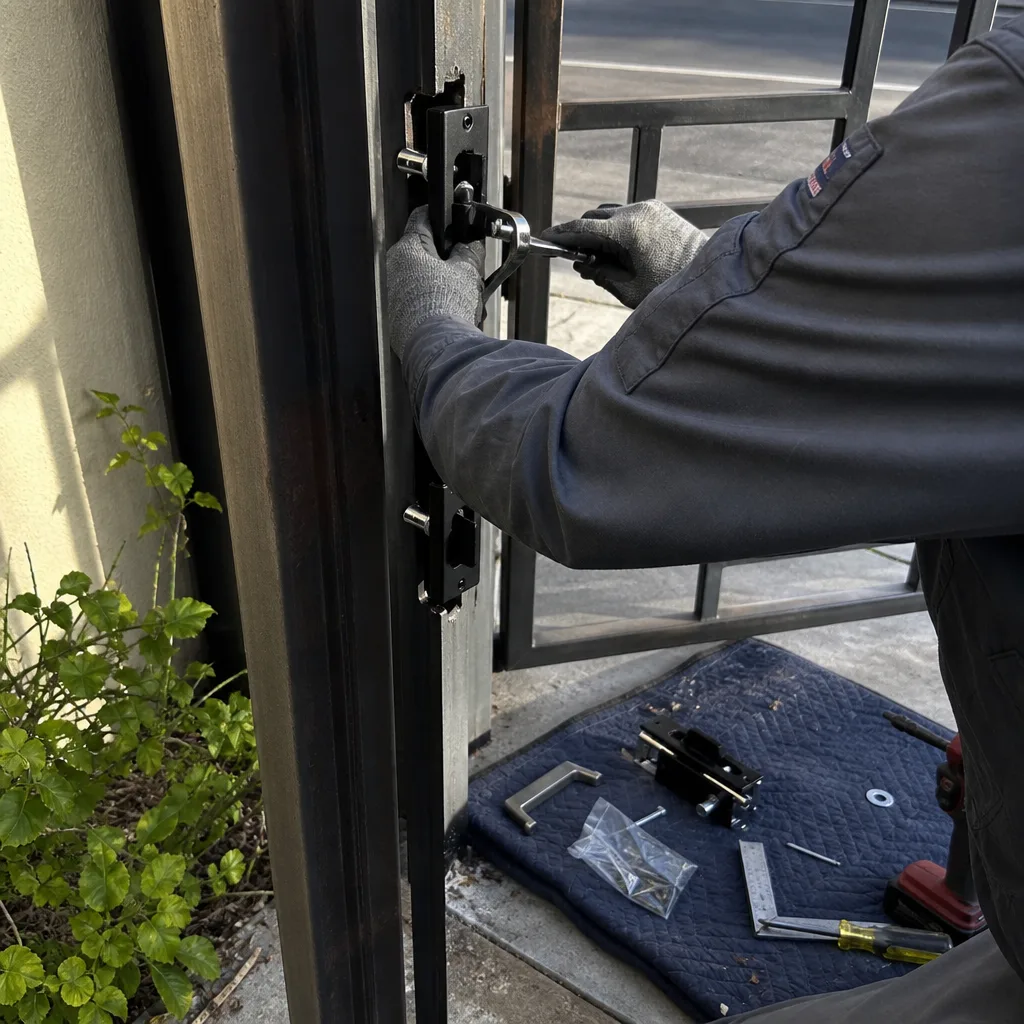
A Linear gate motor runs on line voltage and produces enough force to crush or pin a person. The motor also drives a gate arm that moves under load. If you’re troubleshooting, there are a few things you can safely do: verify the breaker is on, check that the manual release lever (if your model has one) is seated properly, and look for obvious obstructions in the gate path. In Venice, check for sand build-up in the track or crabgrass growing into the hinges this time of year.
What you should not do is open the motor housing. The capacitor inside a Linear motor holds a charge even after power is cut, and the limit-switch adjustment requires the gate to cycle under load while you’re near the moving arm. That’s how people get hurt. If the motor is humming, faulting, or stopping mid-travel, call us at (213) 267-6777. A live person answers 24/7. We’ll tell you what we found and what it costs to fix before a single tool comes off the truck.
FAQs
Between seven and twelve years for a properly installed residential Linear operator, but we’ve replaced five-year-old motors within a half-mile of the Venice Beach salt air line. Corrosion on the board contacts and limit switches is the usual killer out here, not mechanical failure. A motor that runs daily and gets serviced at the first sign of corrosion can go well past a decade.
Some failures, yes: a bad capacitor, a stuck limit switch, or a corroded terminal block can be replaced without swapping the whole motor. But when the gear train strips or the windings burn out, the repair cost approaches 70 to 80 percent of a new motor, and you’re still left with old seals and bearings. We’ll tell you which one you’re looking at and let you decide. Call (213) 267-6777 and we’ll give you the straight answer.
Most residential swaps take two to four hours on-site. If we’re using the existing bracket and the board is compatible, it’s usually closer to two. If we’re fabricating an adapter plate or replacing the board, it can run four hours. You get a written time estimate with the written price, and the photo record of what was installed before we leave.
We keep the most common Linear LRA actuators and slide-operator motors on our trucks, along with the adapter plates for pre-2018 models. If your motor is a less common APeX or specialized unit, we typically have it from our supplier within two business days. We also stock parts for LiftMaster, Mighty Mule, and Ghost Controls, so if your property has mixed equipment we can handle the whole job in one visit. Tell me what it’s doing wrong. I’ll tell you what it costs to make it right. Call (213) 267-6777 for a free estimate.
Written by Adrian Vance, Owner, Vance Gate Repair Venice at Vance Gate Repair Venice, serving Venice and nearby areas.